
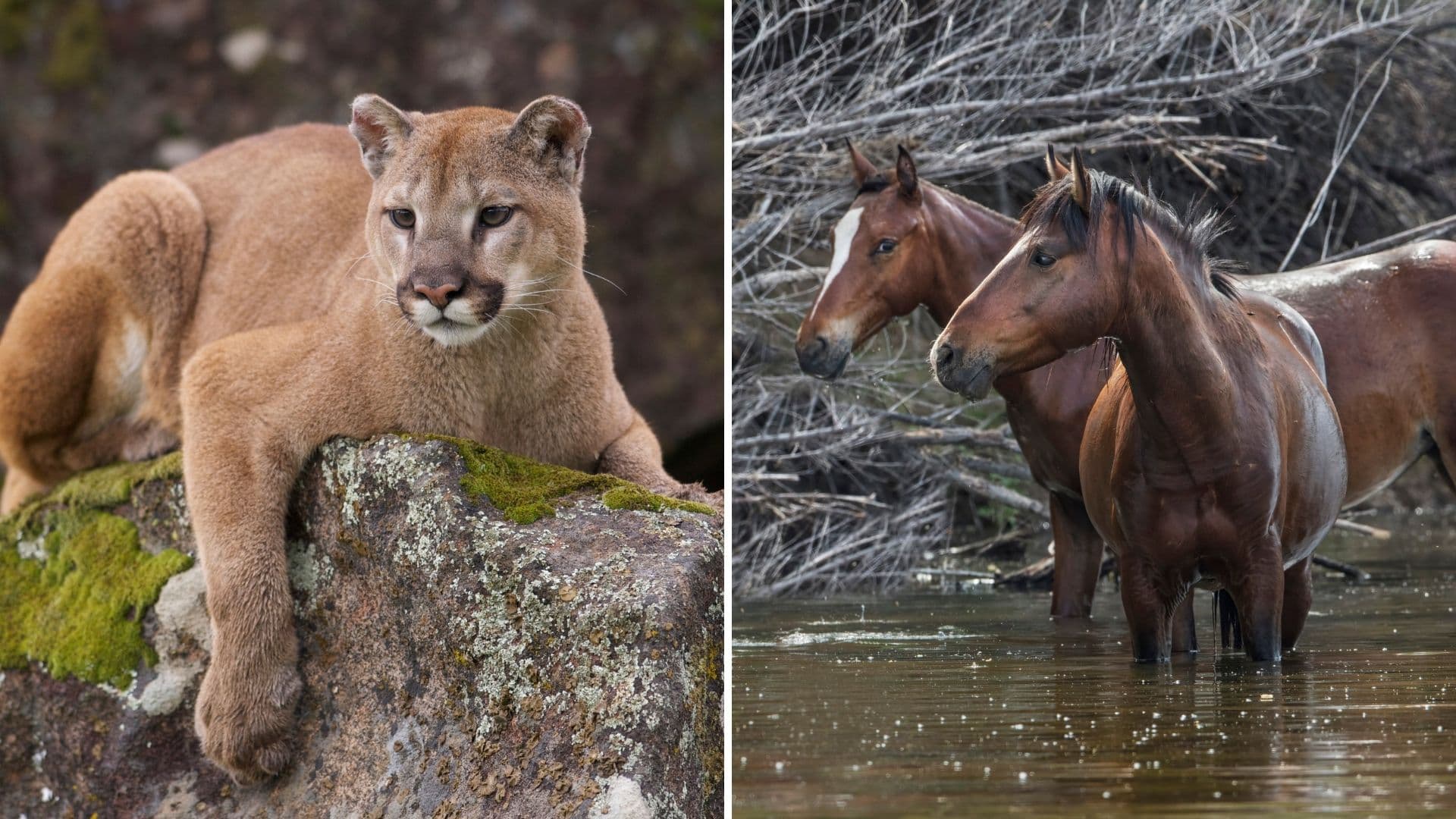
Balancing Wild Horse Ecosystems
Balancing Ecosystems Through Natural Interactions
The relationship between wild horses and their natural predators plays a crucial role in maintaining ecosystem balance.
Understanding predator-prey dynamics helps inform effective management strategies that support healthy populations and sustainable habitats.
Discover how AWHC is studying these interactions to promote ecological harmony.
The Role of Predator-Prey Dynamics
Learn about the importance of natural predator-prey interactions in wild horse ecosystems.
Natural Regulation
Predators such as mountain lions can naturally aid in regulating wild horse populations by preying on the young, old, and weak. This natural selection process helps maintain a healthy and balanced ecosystem, helping ensure those best adapted to those particular conditions will succeed in the long run promoting genetic diversity.
Ecosystem Health
Healthy predator-prey dynamics contribute to the overall health of the ecosystem. Predators help control wild horse populations, which can have effects on vegetation growth, soil health, and water resources. This balance is essential for sustaining diverse and resilient habitats.
Human Impact
Human activities such as hunting, habitat destruction, and predator control programs disrupt natural predator-prey dynamics. These disruptions can lead to imbalances, resulting in small, geographically isolated predator populations where predation levels are extremely low. Protecting predators and their habitats is crucial for restoring ecological balance.
Research and Monitoring
Studying predator-prey dynamics provides valuable insights into the interactions between wild horses and their predators. This research helps inform management strategies that promote coexistence and support the health of both predator and prey populations.
Our Commitment to Understanding Predator-Prey Dynamics
Discover how AWHC is leading efforts to study and promote healthy predator-prey interactions in wild horse ecosystems.
Habitat Protection and Restoration
AWHC is involved in habitat protection and restoration projects that support healthy predator-prey dynamics. These projects include preserving critical habitats, improving connectivity, and ensuring that both predators and prey have access to the resources they need.
- Habitat Preservation: Securing and protecting critical habitats
- Resource Access: Ensuring reliable access to water and forage
- Sustainable Practices: Implementing eco-friendly land management techniques
Advocacy and Education
AWHC advocates for policies that protect natural predators and promote healthy predator-prey dynamics. Through education and outreach, we aim to raise awareness about the importance of these interactions and encourage support for predator conservation.
- Policy Advocacy: Promoting predator protection in legislation and management plans
- Public Education: Informing the public about the importance of predator-prey dynamics
- Community Engagement: Mobilizing support for predator conservation efforts
- Training Programs: Providing education and resources for land managers and volunteers
Stay Informed and Take Action
Learn how AWHC is actively implementing solutions to protect wild horses and burros, ensuring their well-being and preserving their natural habitats.


