
Activists Criticize Plans to Remove Over 750 Mustangs in Nevada
Wild Horse Management
Read time: Four Minutes
Published: December 29, 2014
Written by:
AWHC Contributor
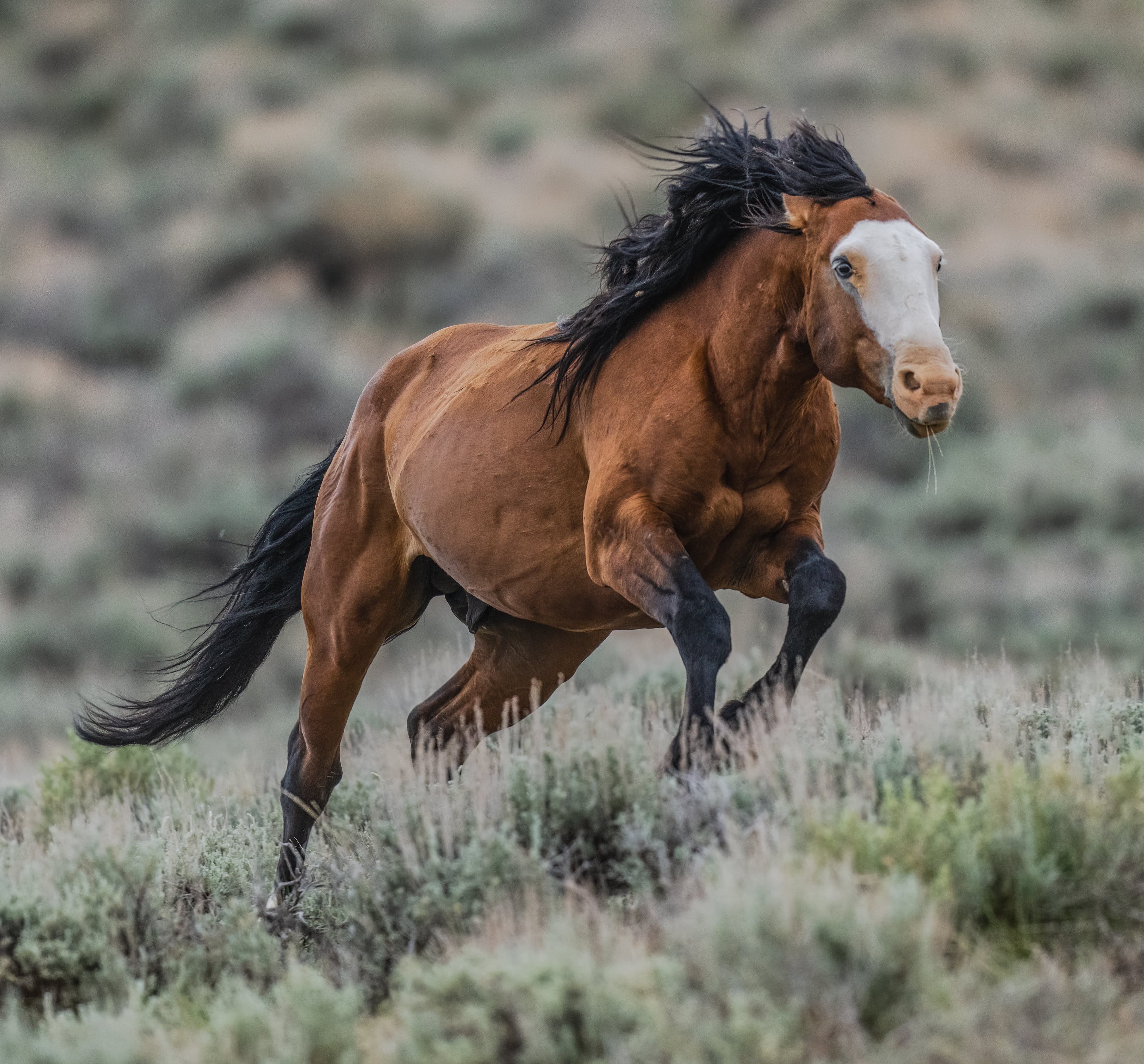
Wild-horse advocacy groups are raising concerns over federal plans to remove more than 750mustangsfrom Nevada's range. The Bureau of Land Management (BLM) intends to start the removal process late next month, citing overpopulation as the primary reason. However, the plan has sparked a debate over the use of fertility-control drugPZP-22 on some mares.
RENO, Nev. — Wild-horseadvocacygroups are criticizing federal land managers' plans to permanently remove over 750mustangsfrom the Nevada range beginning late next month.
But the organizations are split on the Bureau of Land Management's plans to treat as many as 250 mares with the fertility-control drugPZP-22 before releasing them back to the wild.
The agency plans to remove 460 horses from the Pine Nut Mountain, Fish Creek, and Little Fish Lakeherd management areasin its Carson City and Battle Mountain districts and 310 horses from the Humboldt and Wood Hills herd areas in its Winnemucca and Elko districts.
The removals are needed to reduce an overpopulation of wild horses on public lands, said Joan Guilfoyle, division chief of the Bureau of Land Management's Wild Horse and Burro Program. Herds grow at an average rate of 20 percent a year and can double in size every four years, according to the bureau.
"The welfare of wild horses is always a top priority for theBLMand we remain committed to providing humane care and treatment as we and our contractors conduct gather operations in Nevada," Guilfoyle said in a statement.
Though activists are unified in their opposition to the horses' removal, they offer differing opinions on the wisdom of injecting mares withPZP-22.
"PZPshould never be used on wild horses," said Anne Novak of California-based ProtectMustangs. "It's made from slaughterhouse pig ovaries and shouldn't be injected into wild mares because it's risky and sterilizes them after multiple use."
"Injecting them withPZPis taking away their freedom to live as nature intended. Genetic variability is needed for survival butPZPmesses with that ... You shouldn't give a restricted-use pesticide to native wild horses who are underpopulated," she added.
But Deniz Bolbol of the American Wild Horse Conservation (formerly American Wild Horse Preservation) noted the National Academy of Sciences recommended the use ofPZPbirth control in a report to the Bureau of Land Management last year.
"Yes, we strongly believe the BLM could and should use thePZPbirth control vaccine as a proven and humane alternative to removals," she wrote in an email. "(But) the BLM continues to vastly underutilize this cost-effective approach and sadly continues the unsustainable and cruel roundups and removal ofmustangsfrom the wild."
"ApplyingPZPto only 250 mares in populations of horses that number in the thousands is insufficient to control and reduce population growth. It is clear theBLMis dead set on continuing roundups and not to humanely manage horses on the range," Bolbol added.
Advocacygroups say the Bureau of Land Management continues to "stockpile" horses at a growing cost to taxpayers with moremustangsnow living in overflowing holding facilities than on the range. Government-funded pastures hold horses that aren't adopted by the public.
About 47,500mustangsreside in corrals and pastures in the West and Midwest compared with nearly 41,000 horses that lived in the wild as of November, according to the federal agency's latest figures. Nevada is home to over half of the free-roaming horses in 10 Western states.
Budget constraints prompted the bureau to remove 1,863 wild horses and burros from the range during the fiscal year ending Sept. 30, down from 4,176 in 2013 and 8,255 in 2012. The vast majority of animals targeted for removal are horses.
Originally Posted By Associated Press
Subscribe to our newsletter: