
Advisory Board for Wild Horses Meets to Discuss Management of Growing Herds
Press Releases
Read time: Two Minutes
Published: November 4, 2019
Written by:
AWHC Contributor
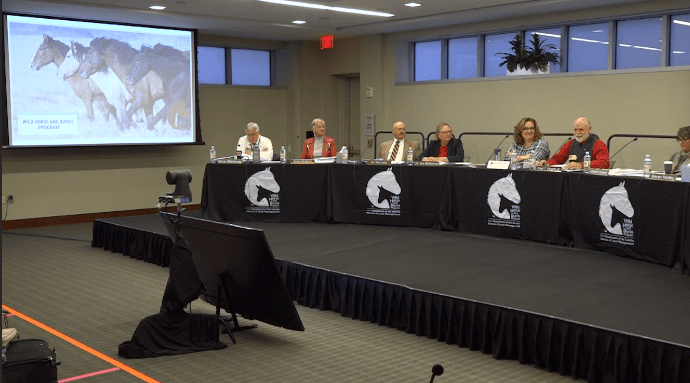
WASHINGTON (Gray DC) --The Bureau of Land Management's Wild Horse and Burro National Advisory Board is meeting in Washington this week to address the growing population of wild horses and burros onfederal lands. With over 90,000 wild horses and donkeys, the board is exploring various management strategies to ensure sustainable ecosystems.
Board Chairman Fred Woehl highlighted the pressing issue, stating that the current population is three times what the land can support. TheBLMreports that manypublic landsare experiencing shortages of grass and water, necessitating immediate action.
"I want every tool used that we have in the toolbox. I don't wantBLMlimited to just one," said Woehl, emphasizing the need for a multifaceted approach, including fertility treatments, spaying, neutering, and physical gathers into holding facilities.
However, wild horse advocacy groups, including the American Wild Horse Conservation (formerly American Wild Horse Campaign), oppose these measures. Suzanne Roy, a spokesperson for the organization, argues that mass gathers will be costly and ineffective. She advocates for holistic solutions to maintain wild horses in viable free-roaming herds.
Roy further criticized the Path Forward plan, describing it as a subsidy for the livestock grazing industry that undermines the conservation of wild horse herds.
During the meeting, the Board also reviewed the success of the Adoption Incentive program, which has facilitated the adoption of over 7,000 wild horses this year. The program offers up to $1,000 to adopters within the first year, significantly reducing the long-term costs of horse management.
"That helps them feed that horse, that helps them train that horse, that helps them care for that horse that first year, which is always tough," Woehl explained. "The benefit is it will costBLM$50,000 over the life of that horse if we put it in some kind of long-term holding, so we are going to save those taxpayers $49,000 per horse by this program."
Woehl reaffirmed the Board's commitment to monitoring the program's success and ensuring that wild horses find good homes. Since the 1970s, more than 235,000 wild horses and burros have been adopted or sold through the general program.
For more information, visit the original post byKALB.
Subscribe to our newsletter: