
>
stories
>
american wild horse conservation proves humane wild horse management is possible even in remote
American Wild Horse Conservation proves humane wild horse management is possible, even in remote Utah areas
Media Publicity
Read time: Three Minutes
Published: March 13, 2024
Written by:
FOR IMMEDIATE RELEASE
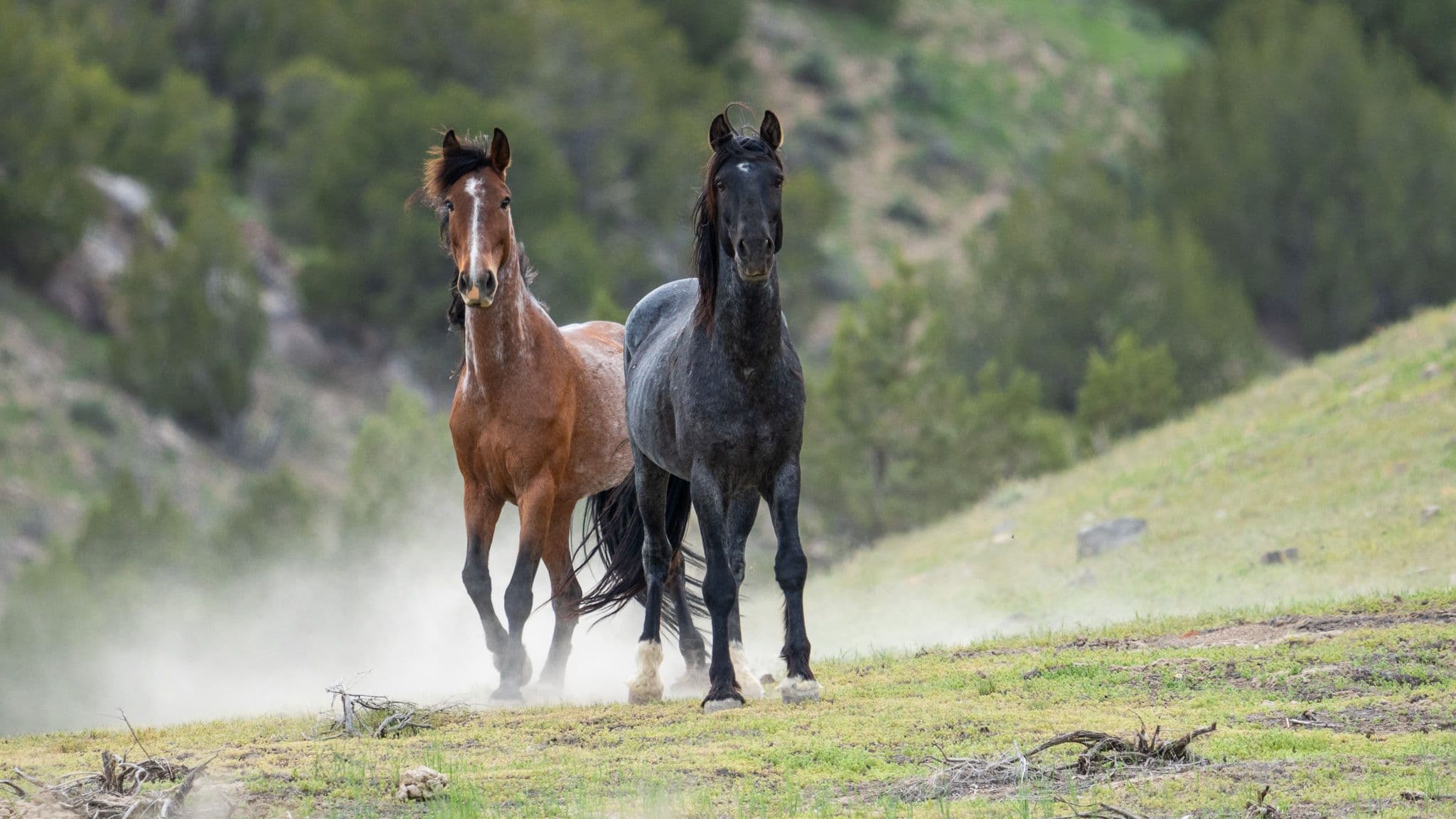
Reno, NV (March 13, 2026) — American Wild Horse Conservation (AWHC), a Nevada-based organization leading efforts for humane, in-the-wild protection of wild horses and burros on U.S. public lands, announced the successful completion and transition of its fertility control pilot program in Utah’s Cedar Mountain Herd Management Area (HMA).
AWHC’s efforts demonstrate that even remote and historically “undartable” wild horse herds can be humanely managed on-range through collaboration, science and persistence.
The program was launched following the signing of a Memorandum of Understanding (MOU) between the Bureau of Land Management’s Salt Lake Field Office and AWHC on February 13, 2023. AWHC was subsequently awarded a federal grant spanning August 7, 2023, through September 30, 2025, to design and implement a fertility control program to assist the BLM in achieving and maintaining a thriving natural ecological balance within the Cedar Mountain herd.
Cedar Mountain has long been considered one of the most challenging HMAs in the country due to its rugged terrain and exceptionally wild horses. Prior to any treatments, AWHC’s Utah Conservation Manager spent months documenting the herd — learning movement patterns, identifying individual horses, and establishing the foundational knowledge required for humane field operations.
"The partnership between AWHC and Wild Horses of America to find a way to deliver fertility control to the Cedar Mountain Herd has proven effective through hard work and collaboration,” said Jan Drake, Range Manager for Wild Horses of America for the Onaqui Herd and now the Cedar Mountain Herd.
“This herd, like many others is very traditional, characterized by elusiveness and wariness of human interaction but this program shows that fertility control for other herds is possible,” Drake said.
That groundwork proved critical. Using innovative strategies including remote access cameras, hunting blinds, night scopes, and night darting, AWHC staff and contract darters from Wild Horses of America successfully administered PZP, a humane, reversible fertility control, to mares on-range. The program was carried out collaboratively with the BLM and a local livestock rancher, underscoring the importance of partnership in effective land and wildlife stewardship.
“This pilot program proves that fertility control is viable in difficult environments,” said Nicole Hayes, AWHC Conservation Scientist. “With the right expertise and collaboration, we can manage wild horse populations humanely on the range, while avoiding costly and traumatic roundups.”
The Cedar Mountain pilot adds to a growing body of evidence that on-range fertility control is a practical, cost-effective alternative to roundups that remove horses from their habitat, place them into off-range holding facilities, and contribute to the growing crisis of tens of thousands of wild horses in long-term holding at significant taxpayer expense.
AWHC is pleased that this successful program will continue under the expert administration of a local Utah organization once a new MOU is finalized, ensuring continuity, local leadership, and long-term stewardship.
“The transition reflects the true goal of pilot programs — proving what’s possible, building local capacity, and changing the way wild horses are managed across the West,” said Tracy Wilson, AWHC Conservation Director.
AWHC remains committed to advancing science-based, humane, and collaborative solutions that protect America’s wild horses while supporting healthy public lands.
# # #
About American Wild Horse Conservation
American Wild Horse Conservation is the nation's leading organization championing humane, in-the-wild protection of wild horses and burros on our public lands. AWHC works to advance ethical and responsible conservation of wild horses and burros. In-the-wild conservation is humane, cost-effective, scalable, and based on rigorous science.
Related Tags:
Subscribe to our newsletter: