
APNewsBreak: Forest Service Constructs Corral Amid Horse Slaughter Concerns
Wild Horse Management
Read time: Four Minutes
Published: January 15, 2019
Written by:
AWHC Contributor
January 15, 2019
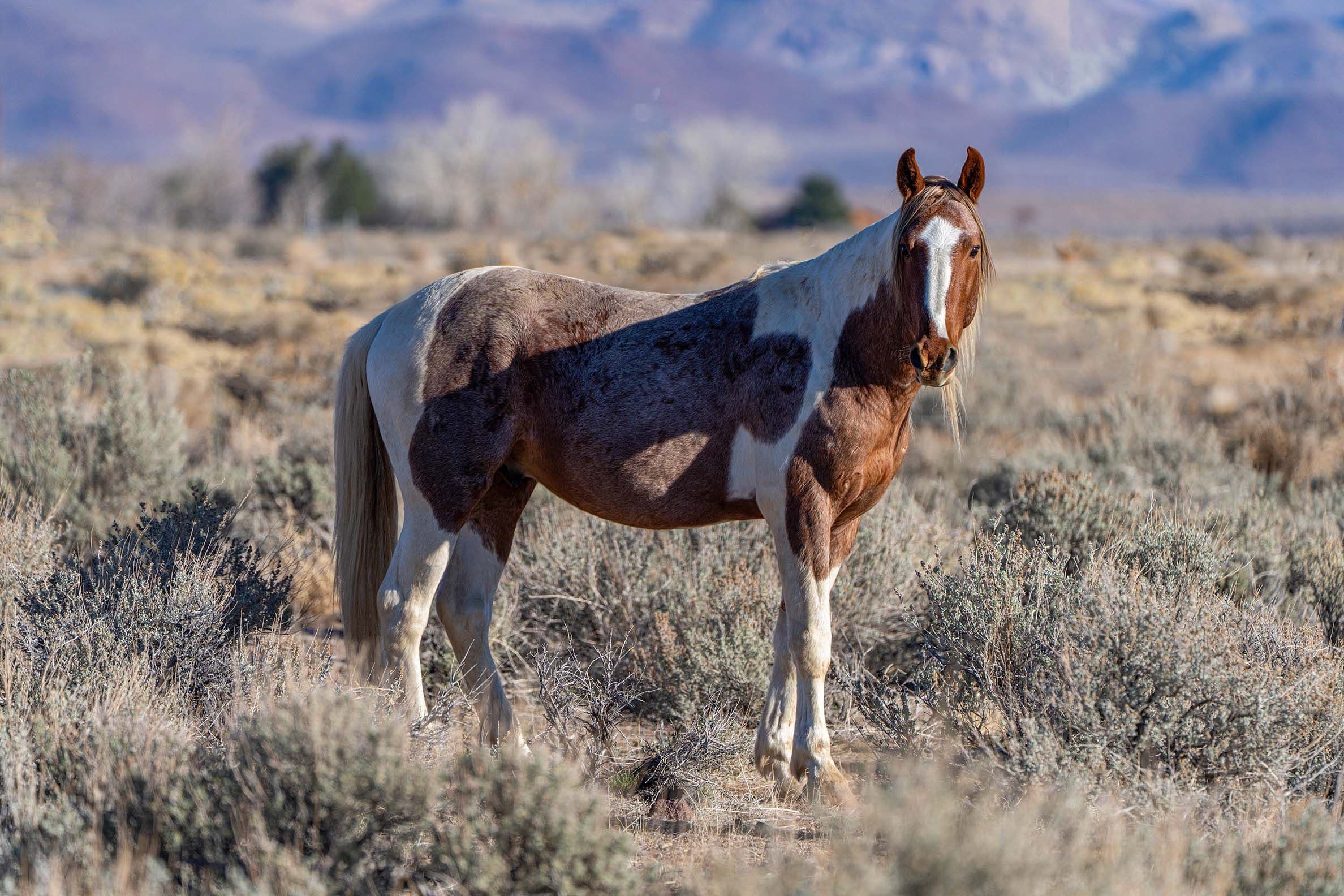
The U.S. Forest Service has constructed its first corral for wild horses, potentially bypassing federal restrictions to sell the animals for slaughter. This development has sparked a legal battle, as horse advocates challenge the agency's intentions and the implications for wild horse protection.
In court filings, the agency admitted to building the pen in Northern California formustangsgathered in the fall on national forest land along the Nevada border. This was due to restrictions on such sales at other federal holding facilities.
The agency denies it has decided to sell the more than 250 horses for slaughter. However, it claims the high cost of housing the animals and the ecological impacts of overpopulated herds on federal rangeland may leave it with no choice.
Horse advocates have been suing the government for two decades over mustangroundups. Private ranchers argue these are necessary to curb growing herds that reduce forage onfederal landsleased for cattle and sheep grazing across the U.S. West, which holds roughly 90,000 wild horses.
A decline in demand for a federal adoption program has left little room in existing corrals. Advocates argue themustangsare federally protected and that taxpayers subsidizelivestockgrazing on U.S. land.
A hearing is scheduled for Jan. 31 in federal court in San Francisco. The Animal Legal Defense Fund and American Wild Horse Conservation (formerly American Wild Horse Campaign) are seeking an injunction to block the sale of horses captured in the Modoc National Forest for possible slaughter. The new pen is located about 170 miles northwest of Reno.
Forest Service Chief Vicki Christiansen announced a postponement of any sales for slaughter until at least Feb. 18.
Protection groups claim it would be the first time in nearly half a century that the government has soldmustangs“without limitation,” including for slaughter.
Horse slaughterhouses are banned in the U.S. but legal in countries like Canada, Mexico, and parts of Europe, where horse meat is considered a delicacy.
The Wild Free Roaming Horse and Burros Act of 1971 prohibits the inhumane destruction of wild horses. A 2004 amendment allows the Forest Service to sell horses without limitations if they’re over age 10 and have been offered for adoption three times unsuccessfully.
However,Congresshas often prohibited the Bureau of Land Management (BLM) from using appropriations for such purposes. President Trump proposed allowing such sales in his 2017 budget, but Congress did not approve.
The Forest Service previously held horses atBLMpens, which manage 385,000 square miles of public lands in the West.
With few exceptions, lawsuits have targeted theBLM, which captures most of the horses.BLMlands hold about 83,000 wild horses, while national forests managed by the Forest Service hold about 8,000.
The Forest Service gathered 932 horses in the Modoc National Forest last year, placing about 260 in the new corral and 650 at aBLMfacility in Susanville, California.
Justice Department lawyers acknowledged that “BLMis not permitted to humanely destroy healthy, unadopted horses or conduct any sale that could result in their destruction, including any Forest Service horse inBLMcustody.”
“What has changed is that the Modoc now has its own short-term holding facility, which is not subject to congressional restrictions,” they wrote. The corral can hold up to 300 horses, with room for expansion to 1,500. Local ranchers generally support these sales due to the horses’ economic impact on leased grazing land.
The attorneys also stated that the opponents’ claim that the horses will be slaughtered “is only speculative, not concrete and imminent.”
Horse advocates argue the government cannot have it both ways.
“It cannot both argue it is harmed by plaintiffs’ delay in bringing this action because of all the time and resources it has expended to allow the sale of horses without limitation, yet also insist to the court that it has not yet made any such decision,” their lawyers wrote. “In short, the record and defendants’ own statements make clear that the decision to sell horses without limitation is final and judicially reviewable.”
Originally posted by AP News
Subscribe to our newsletter: