
BLM Reports Wild Horse Population Growth Amidst Removals and Harsh Winter
Press Releases
Read time: Four Minutes
Published: April 25, 2023
Written by:
AWHC Contributor
WASHINGTON (April 25, 2023)– This week, in light of the recent release of the U.S. Bureau of Land Management’s (BLM) 2023 Wild Horse and Burro Program gather schedule and population data, theAmerican Wild Horse Conservation (formerly American Wild Horse Campaign)(AWHC) is raising concerns about the unsustainable path the agency continues to follow and is reigniting calls to prioritize on-range solutions, including humanefertility control.
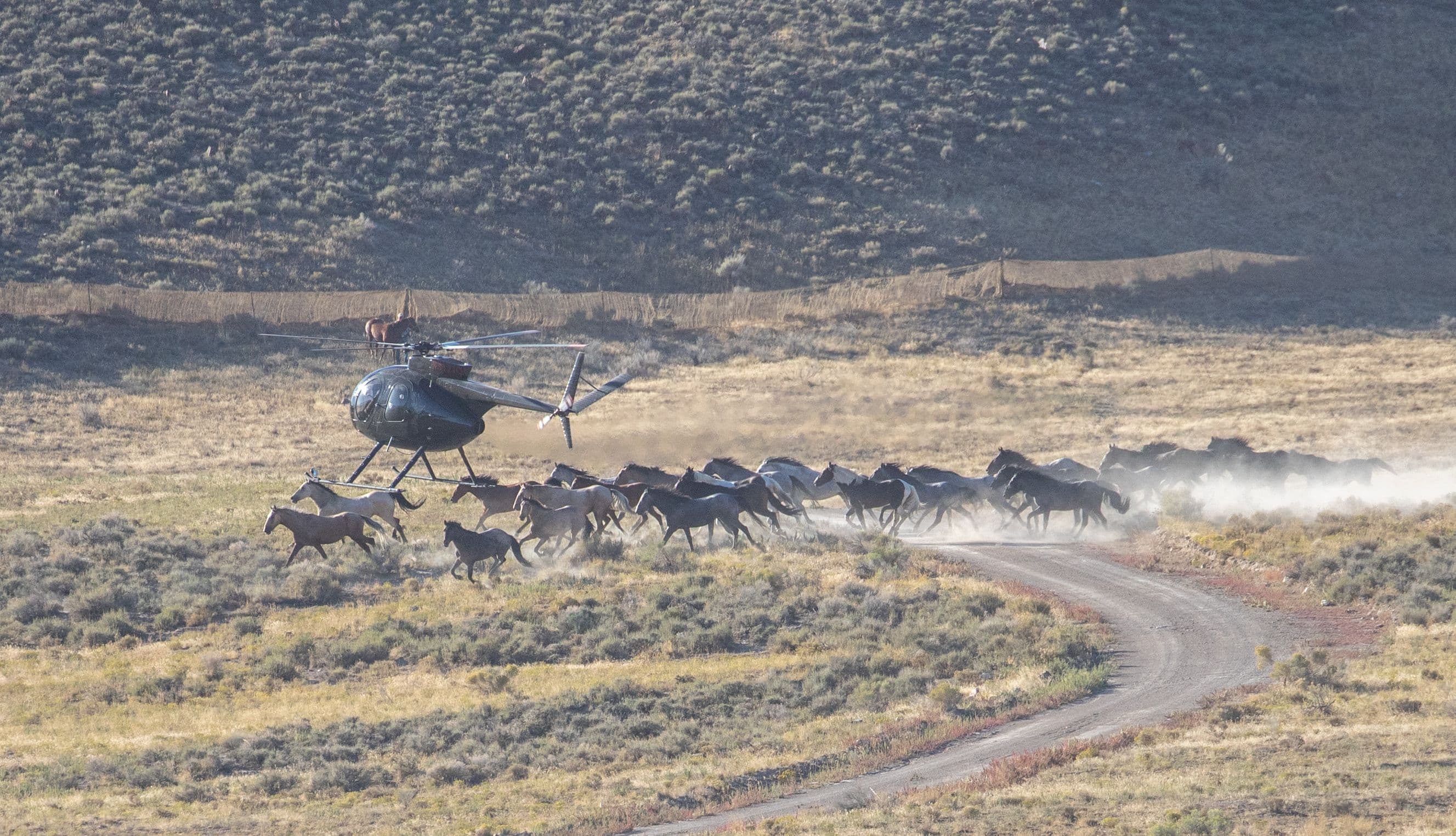
TheBLM, which is charged with managing the vast majority of the West’s wild herds, is planning toroundup more than 7,000 wild horses and burrosand permanently remove 5,857 from federal lands beginning in July. This is a marked departure from the agency’sproposed plansto remove 20,000 animals yearly over the next several years. Yet according to AWHC, theBLMcurrently does not have enough funds to move forward with that plan as there arecurrently over 61,000wild horses and burros in its care.
“It's not as if 60,000 mustangs and burros walked up and let themselves intoBLMholding facilities,” said Suzanne Roy, executive director for AWHC. “TheBLMhas created this crisis by catering to private interests, removing thousands more wild horses than could be placed into private care. It is now more important than ever that theBLMutilize the readily available humanefertility controlat a meaningful scale.”
Last Friday, the agency released itsFiscal Year (FY) 2023 wild horse and burro population datasuggesting a slight increase in on-range population numbers on westernpublic lands. AWHC charges that theBLM’s estimate is questionable not only in light of the large-scale removals last year, but alsoconsidering mortalitycaused by the historically harsh winter in the West.
“If taken at face value, the increase shows that the agency's inhumane wild horse roundups have failed to even create short-term progress toward achieving its population goals,” continued Roy. “Meanwhile, it has created a long-term fiscal crisis by rounding up more than 20,000 animals, skyrocketing the captive holding population to all-time highs.”
In December, Congress included an important bipartisan wild horse protection measure in the final Fiscal Year (FY) 2023 appropriations omnibus. The measure requires theBLM’s Program to utilize up to $11 million for reversible immunocontraceptivefertility controlin FY23 to sustainably manage wild horses and burros.
Despite this directive, theBLMonly plans to implementfertility controlon a mere 1,575 animals. According to AWHC, the agencyspent more than $100 million of taxpayer funds last yearto round up wild horses from public lands and warehouse them in holding facilities, while a fraction was spent on humane fertility control to manage the herds on the range.
“Ten years ago,scientific expertstold the agency that there is a better way to manage wild horses and it's beyond time for theBLMto implement humanefertility controlat the scale necessary to stabilize populations over the long term as an alternative to the current costly and cruel roundup approach,” concluded Roy. “We remain hopeful that theBLMwill soon increase its treatment goals as awards are made under last year’sfertility control grantopportunity.”
About the American Wild Horse Conservation (formerly American Wild Horse Campaign)
TheAmerican Wild Horse Conservation (formerly American Wild Horse Campaign)(AWHC) is the nation's leading wild horse protection organization, with more than 700,000 supporters and followers nationwide. AWHC is dedicated to preserving the American wild horse and burros in viable, free-roaming herds for generations to come, as part of our national heritage. In addition to advocating for the protection and preservation of America's wild herds, AWHC implements the largest wild horsefertility controlprogram in the world through a partnership with the State of Nevada for wild horses that live in the Virginia Range near Reno.
###
Subscribe to our newsletter: