
Callaghan Complex Wild Horse Roundup Reports
Roundups
Read time: 15 Minutes
Published: July 10, 2026
Written by:
AWHC Contributor
Welcome to our roundup reporting page for the Callaghan Complex, where you'll find daily eyewitness reports, photographs, and videos from the field as the Bureau of Land Management (BLM) carries out what is expected to become the largest wild horse roundup in Nevada history.
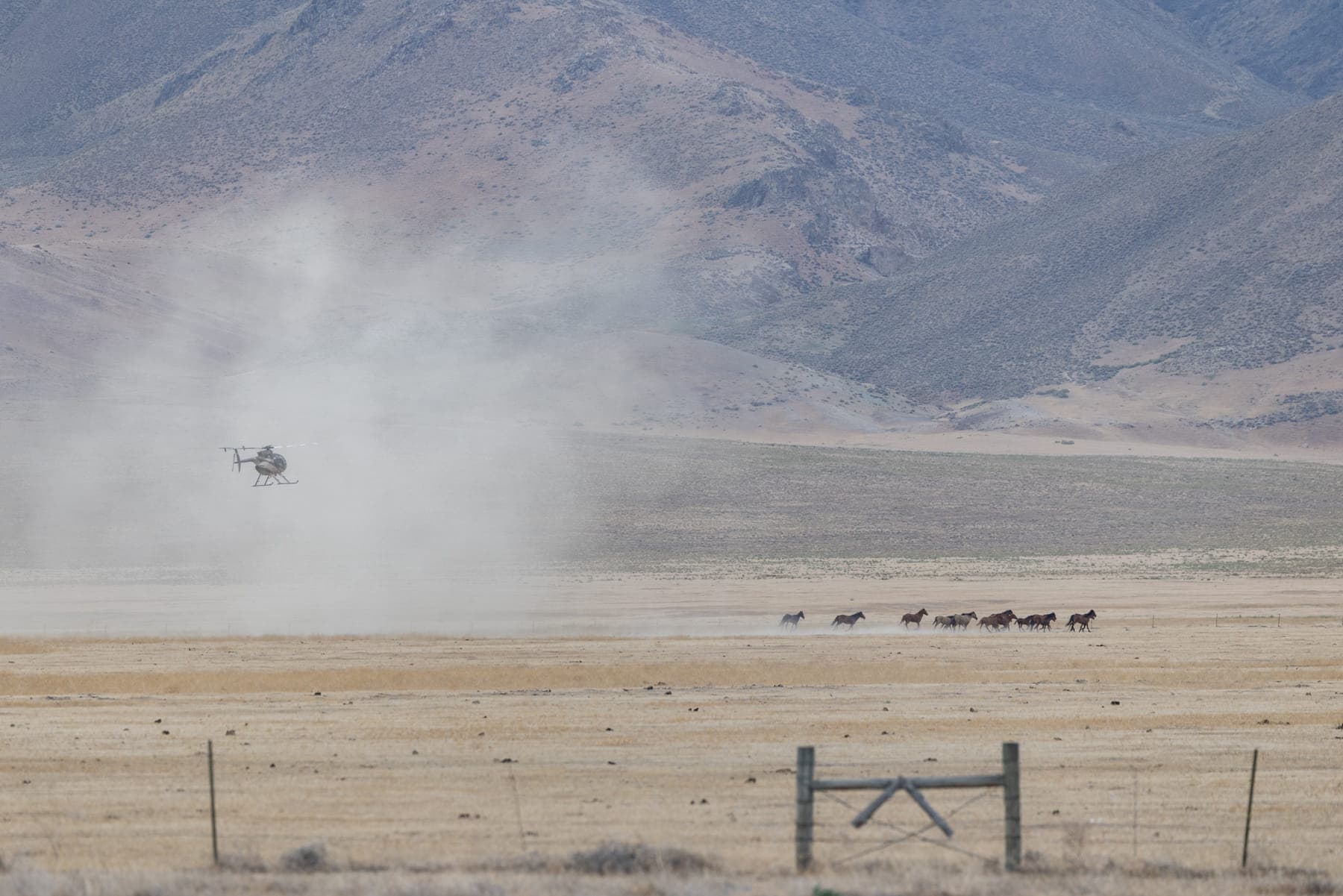
Over the coming weeks, the BLM plans to remove approximately 2,000 wild horses from the Callaghan Complex, the first phase of a broader plan that targets up to 5,000 wild horses for removal from this region. Conducted by helicopter, this operation will permanently separate thousands of wild horses from the public lands they call home, sending many into government holding facilities for the rest of their lives.
These daily reports document what is happening on the ground as it happens. Our field observers are present throughout the operation to witness helicopter drives, monitor horse welfare, record roundup conditions, and provide the public with transparent, independent reporting from an area few people will ever see firsthand.
This page serves as a living record of the roundup. Each day, we'll publish updates directly from the field, including photographs, videos, and observations from our observers so the public can follow the operation as it unfolds.
We hope these reports help shed light on the realities of helicopter roundups, inspire greater public awareness, and strengthen the call for humane, science-based management that keeps America's wild horses where they belong: free on the range.
Roundup Concluded 7/26/26
Totals:
Animals Gathered: 2005 Wild Horses (786 Stallions, 827 Mares, and 392 Foals)
Animals Shipped: 1992 Wild Horses (784 Stallions, 823 Mares, and 385 Foals)
Animals Released: 0 Wild Horses (0 Stallions, 0 Mares, and 0 Foals)
Deaths: 11
-Sudden / Acute: *8
-Pre-existing / Chronic: *3
*reassessed after policy review
16/17 - 7/25 - 7/26
Animals Gathered: 49 (9 Stallions, 24 Mares, and 16 Foals)
Animals Shipped: 7/25- 35 (12 Stallions, 17 Mares, and 6 Foals)
7/26- 58 (13 stallions, 29 Mares and 16 Foals)
Animals Released: 0 (0 Stallions, 0 Mares, and 0 Foals)
Deaths: 1
Sudden / Acute: 1
Pre-existing / Chronic: 0
7 m/o, bay, filly- Died/Unexpected, Undiagnosed
07/24/26
Animals captured: 41 (16 Stallions, 18 Mares, and 7 Foals)
Animals Shipped: 76 (20 Stallions, 44 Mares, and 12 Foals)
Deaths: 0
Euthanasia: 0
Sudden / Acute: 0
Currently no AWHC observers on site
07/23/26
Animals captured: 44 (8 Stallions, 24 Mares, and 12 Foals)
Animals Shipped: 150 (108 Stallions, 26 Mares, and 16 Foals)
Deaths: 0
Euthanasia: 0
Sudden / Acute: 0
Currently no AWHC observers on site
07/22/26
Animals captured: 67 (26 Stallions, 25 Mares, and 16 Foals)
Animals Shipped: 120 (0 Stallions, 78 Mares, and 42 Foals)
Deaths: 2
Euthanasia: 0
Sudden / Acute: 2, 3 y/o bay mare, died: traumatic head injury; 2 y/o bay mare, died: undiagnosed
Currently no AWHC observers on site
07/21/26
Animals captured: 239 (94 Stallions, 104 Mares, and 41 Foals)
Animals Shipped: 46 (15 Stallions, 34 Mares, and 13 Foals)
Deaths: 1
Euthanasia: 0
Sudden / Acute: 1, 3 m/o bay mare, died: chronic, undiagnosed/unknown
Currently no AWHC observers on site
07/20/26
Animals captured: 45 (13 Stallions, 23 Mares, and 9 Foals)
Animals Shipped: 71 (24 Stallions, 34 Mares, and 13 Foals)
Deaths: 0
Euthanasia: 0
Sudden / Acute: 0
Currently no AWHC observers on site.
07/19/26
Animals captured: 74 (27 Stallions, 33 Mares, and 14 Foals)
Animals Shipped: 139 (66 Stallions, 51 Mares, and 22 Foals)
Deaths: 1
Euthanasia:
Sudden / Acute: 1, 3 m/o bay mare, died unexpected, undiagnosed
Observers were in a similar location to the day before, but a little farther north for better parking capabilities. The location offered no better observation, they still had zero visibility of any part of the trap or wings. Due to this lack of visibility the observers requested to watch sorting or loading instead, but those requests were denied. So far during this gather, they have only been permitted to observe part of shipping one day, and have not been allowed to watch sorting.
Due to the location of observation, observing exact numbers of horses brought into the trap was difficult. During one of the runs, one helicopter was moving a group of 6 from the west, but left the group near the trap to join a second helicopter bringing in groups from the mountain canyons. Once both helicopters pushed the horses out of the canyons, they combined the groups in the flats and moved around 21 horses towards the trap. The horses were moving slower and it took about an hour to reach the trap.
They were allowed to see the horses in temporary holding for 15 minutes, the horses had hay and water and appeared calm.
7/18/26
Animals captured: 139 (64 Stallions, 53 Mares, and 22 Foals)
Animals Shipped: 76 (38 Stallions, 27 Mares, and 11 Foals)
Deaths: 0
Euthanasia: 0
Sudden / Acute: 0
There were two observers today. They met BLM and traveled 74 miles to the observation site for the new trap location in the Callaghan HMA. The location was incredibly difficult for observation. There were many ravines in the terrain and they couldn’t see any part of the trap or the wings since it was placed over a hill to our north. The only way they could assume horses went into the trap was when the helicopters moved slower and a cloud of dust rose before he flew off again. There were also very few runs that we could actually fully see the horses coming in. Actually confirming how many runs there were was impossible from the location.
During one ot the early runs, a group of 30 horses were brought in from the west. This was one of the only times they could at least get an idea of the number of horses being moved in the run.
They were allowed to see the horses in temporary holding. They again had food and water and appeared calm.
7/17/26
Animals captured: 62 (23 Stallions, 27 Mares, and 12 Foals)
Animals Shipped: 171 (48 Stallions, 79 Mares, and 44 Foals)
Deaths: 1
Euthanasia: 1, A 3 month old filly with a “Chronic/Pre-existing” respiratory infection
Sudden / Acute:
Observers were in the same place as the day before - a little over ½ mile from the trap, with view of the wings and beginning of the trap, but the rest of the trap out of view behind a hill.
Horses continued trying to evade capture today. The two helicopters both went after groups to bring in The first group bypassed the wings and ran up the hill behind. Meanwhile, the second helicopter brought a different group into the wings and into the trap.
The group that bypassed the wings was brought back down and into the wings, but “it was a battle to get them in the trap.” A few horses jumped the jute wings and ran up the hill. “The rest turned around and attempted to escape but the helicopter sunk low to block their exit. At this point, both helicopters were trying to move them in, but this group of horses was determined not to. They turned around time and time again and one horse in particular kept running back at the helicopter forcing him to rise up. But each time the helicopters pushed them
back and ultimately after about 10 minutes being in the wings, they went into the trap.”
There were three runs total with both helicopters flying the runs. They were done very early and plan to move the trap tomorrow. They met again at 2:00pm and traveled to view temp holding. All horses had hay and water and appeared calm.
7/16/26
Animals captured: 189 (66 Stallions, 79 Mares, and 44 Foals)
Animals Shipped: 70 (7 Stallions, 63 Mares, and 0 Foals)
Deaths: 2
Euthanasia: 2 - two mares, a 10 y/o and a 3 y/o, were euthanized due to having a missing eye.
Sudden / Acute: 0
Observers were placed a little over ½ mile from the trap and could see all of the wings an the beginning fo the trap. The rest of the trap was behind a hill out of view. They were positioned below a mine, so haul trucks were coming in and out all day.
There were 8 runs today. There were 20 horses grazing nearby, and the pilot went after them first. A couple of horses ahead of the group jumped the wings once close, while the rest of the group went in and turned and ran out. The helicopter tried to turn them back but they continued running north and he left them.
During a run bringing horses a group of horses in, “they entered the wings, got half way up, and tried to turn around. The helicopter got very low trying to make them go in, blocking any escape backwards. They didn’t budge forward. They stood there for a couple minutes not being able to go backward due to the helicopter, and not wanting to go forward knowing it was a trap. They finally ran back toward the helicopter to force him up higher and they ran back out underneath him. The helicopter left them to go find other horses.” (Quote from our observer, Darlene Smith.)
During the 5th run about 25 horses with a very small foal was brought in. About 5 of that group got out of the jute wings and escaped up the hill.
The last two runs continued the chaotic day, with part of a large being brought in splitting into smaller groups when they reached the open area. About 30 horses went into the trap while the rest dispersed in the valley running every which way. Two helicopters couldn’t turn them around. Two smaller groups that came in the direction of the observers were drenched in sweat. The final run brought about 30 more into the trap.
Observers waited about 2.5 hours for the horses to be loaded and moved to holding and were then able to view the trap. They then waited at a rest stop to be taken to temporary holding. There were some foals that were estimated to be less than a week old. When asked if there were any injuries or deaths, our observer was told it would be in the daily report.\
7/15/26
Animals captured: 0
Animals Shipped: 257 (149 Stallions, 68 Mares, and 40 foals)
Deaths: 0
Euthanasia: 0
Sudden / Acute: 0
They were moving the trap to a new location today, so there was no gather operations. Instead they allowed observers to view part of the shipping from temporary holding.
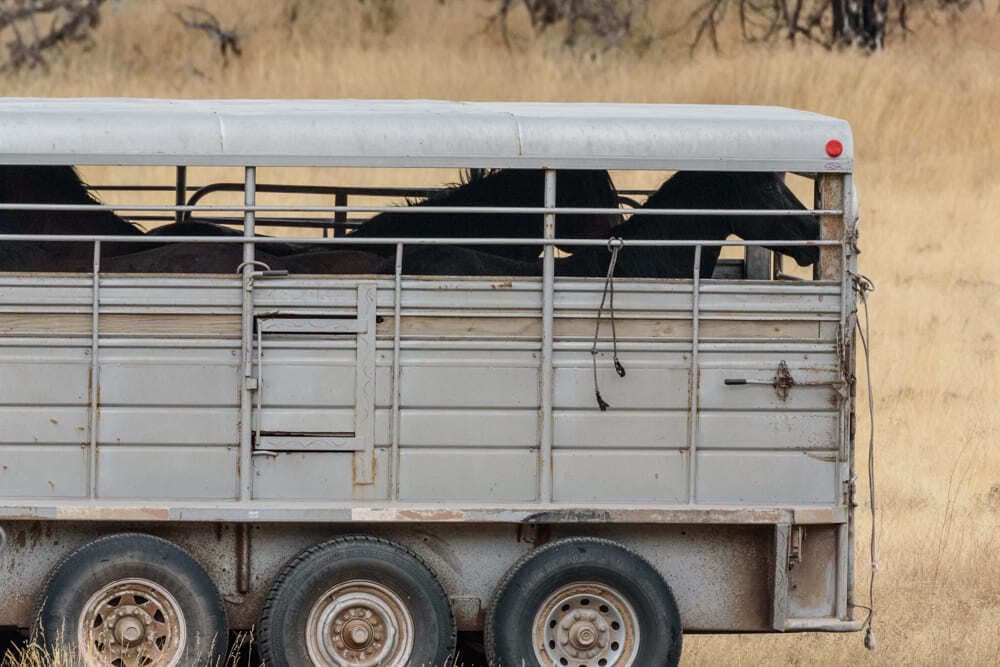
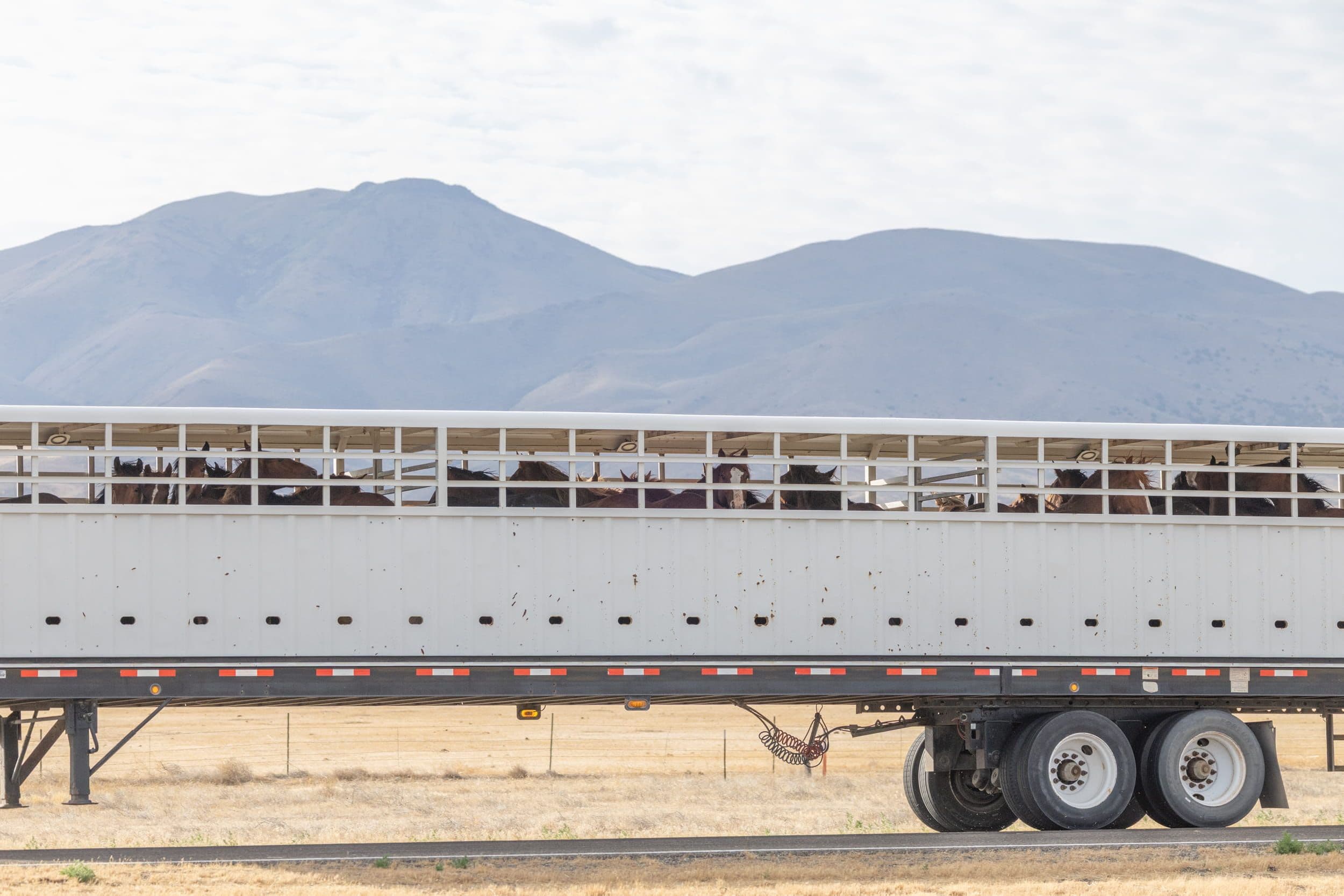
When they arrived, one semi-truck was already loaded and the second was nearly full. Those left for holding. They watched two more semi load plus one small trailer. They were down the hill from the operation a bit so did not have a very clear view. They were done shipping by 7:33am.
There will be a new trap site on July 16, 2026.
7/14/26
Animals captured: 245 (114 Stallions, 91 Mares, and 40 Foals)
Animals Shipped: 242 (110 Stallions, 78 Mares, and 54 Foals)
Deaths: 0
Euthanasia: 0
Sudden / Acute: 0
The observation site has been the same for five days - a rest stop along the highway, three miles from the trap. They cannot see the trap itself from the observation site, and per our observer, with two helicopters operating, it is difficult to keep track of what is going on. The observers requested to view shipping instead of the gather when they found out they would be in the same location, but that request was denied.
There were 11 runs today. **During a run bringing horses in from the north, there were two foals walking very slow. The pilot stayed back and let them walk, however they were visibility exhausted and one of the foals kept laying down and getting up, and even rolling at times. (While we cannot diagnose a foal that far away, this is a flag that is concerning as the behaviors are a classic colic presentation.) A request was made to stop pursuing them, but it was ignored. They did finally make it to the trap and go in.
They were done flying by 11:00am, and observers waiting 3.5 hours until they could view the horses at temporary holding. The horses were vocal calling out, but otherwise calm and had food and water. Darlene asked about the foal that was up and down and was told it was fine.
7/13/26
Animals captured: 259 (104 Stallions, 102 Mares, and 53 Foals)
Animals Shipped: 156 (37 Stallions, 77 Mares, and 42 Foals)
Deaths: 0
Euthanasia: 0
Sudden / Acute: 0
Horses from the previous day were see on trucks being shipped out. Viewing continues to be difficult, as the observation site is near the highway approximately 3 miles from the trap site.
There were still 2 helicopters and they made 7 runs bringing horses in. The second run came in from the north with over 100 horses. They were visibly tired and moving at a slower pace. About 20 straggled behind so the pilot left those and moved the bulk of the group into the trap.
During the third run a foal did not go in and was left in the wings. The helicopter tried to move it but it didn’t move. Our observer told the BLM that the foal was still standing in the wings 10 minutes later. She was concerned the next group coming in would injure the foal. A short time later the foal was on the ground - 26 minutes after being left behind. The next group of horses came in and went into the trap but the foal did not get up. Finally a man walked out to the foal and it did get up and he slowly walked the foal toward the trap. A rider came and joined them and they disappeared behind the knoll out of view.
Observers waiting nearly 5 hours at observation before they were allowed to go to temporary holding.
Upon inquiry about the status of the foal that had been down in the wings of the trap, our observer was told that they walked it in, he was fine and was reunited with his dam.
A stud was accidentally put in the mare corral and was taking full advantage of it. They decided to leave him rather than cause chaos trying to get him out.
7/12/26
Animals captured: 213 wild horses (83 Stallions, 89 Mares, and 41 Foals)
Animals Shipped: 112 (75 Stallions, 37 Mares, and 0 Foals)
Deaths: 0
Euthanasia: 0
Sudden / Acute: 0
The contractor did 5 runs. The last run was a large group that appeared visibly tired. The two pilots worked together to move that group and allowed the horses to move at a slower pace.
After waiting 3 hours, at 1:00pm, the observers were on their way to temporary holding when they were asked to stop as a contractor truck came quickly down the hill. Our observer could see a fire on the road near where they had left the observation area. It was a vehicle fire and was extinguished, however by 1:48pm they were told they were not going to temporary holding due to the circumstances. We hope everyone was safe.
7/11/26
Animals Shipped: 213 wild horses (71 Stallions, 101 Mares, and 41 Foals)
Deaths: 2 (A 3 year old mare with a broken neck, A 3 month old filly with colic symptoms.)
Helicopters did not fly, no roundup occurred while they moved the horses caught the previous day to short term holding at Palomino Valley Center. (There was also a heat warning in effect for much of Northern Nevada.)
7/10/26
Animals captured: 329 wild horses (145 Stallions, 140 Mares, and 44 Foals)
Animals Shipped: Not Shipped Yet
Deaths: 1
Euthanasia: Our observer was told 1 filly was euthanized for a broken leg after being kicked in temporary holding
Nine people were there for public observation. Observers met at 4am to travel to where they were placed at a rest stop roughly 3 miles from the trap site, which was behind a knoll and completely out of view. The trap site also served as temporary holding to minimize the need to move the horses more than necessary in the heat, according to BLM. Two helicopters were used. The contractor focused on horses from South Shoshone HMA and outside those boundaries.
“As we waited for the helicopter to arrive, we could see over 200 horses grazing in fields just north of the trap,” said AWHC’s onsite observer. (Darlene Smith)
During a run at 7:50am, one helicopter was bringing horses into the trap when a group broke off and ran up to a fence line. One horse appeared to try to jump the fence and its hind legs got tangled in the barbed wire. Our observer (Darlene) notified BLM, who radioed the trapsite to watch for injuries. The horse was able to free itself and rejoin its band. Later she was told they did not see any fence injuries on the horses that came in.
At 9:00am, they were told they were done gathering for the day and would be sorting before it got too hot. They would be able to visit temp holding, but not until after sorting was completed.
Nearly 6 hours later, at 2:35 PM they were allowed to travel 4 miles to the trap/temp holding, where they were notified there was video surveillance and to follow protocol. They were allowed to observe from a distance for about 40 minutes.
The horses were separated into pens with studs, younger studs, mares with foals, and younger mares/yearlings. The pens were full, the horses had food and water and appeared calm at that time.
BLM confirmed that the majority of the horses were healthy with 10 or less with a body score of 3.
Related Tags:
Subscribe to our newsletter: