
Carson City Neighborhood Grieves as BLM Traps Local Wild Horses
Roundups
Read time: Four Minutes
Published: February 28, 2013
Written by:
AWHC Contributor
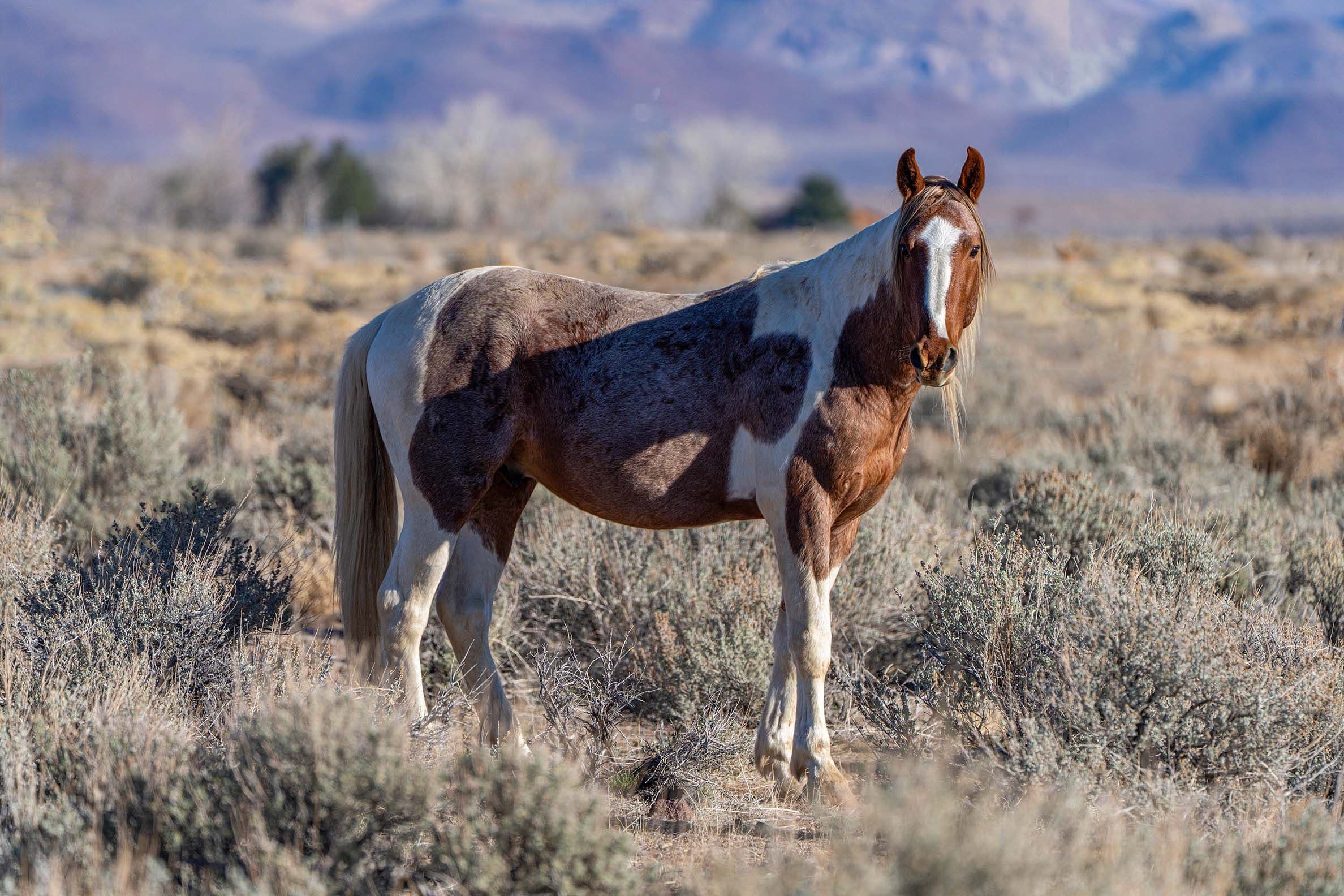
LAS VEGAS – A grass-roots community group in northern Nevada watched helplessly as federal officials removed most of what remained of a band of wildmustangswith which residents say they have peacefully coexisted for years.
About two dozen residents of a subdivision called Deer Run outside Carson City say they have tried unsuccessfully to negotiate the fate of 11mustangswith the Bureau of Land Management (BLM), which governs public lands in Nevada and elsewhere and has purview over the wild horses.
On Wednesday, residents watched as four horses were lured into a trap by officials using a bucket of alfalfa and barley.
Jantzen said themustangswere mild-mannered and tolerant of visitors, sometimes even nuzzling them.
The debate over wild horses has raged across 11 Western states.BLMofficials say the horses overgraze and damagepublic lands. Animal advocates and others sayBLMofficials are intent on removing as many wild horses as possible, without considering such alternatives asbirth control.
“We put forth a comprehensive proposal, but they wouldn’t work with us,” Jantzen said. “We offered to pay for a fence and for birth control and just about everything else you could ask for; that’s how much thesemustangsmean to us. But theBLMignored us.”
BLMofficials in Reno and Washington did not respond to requests for comment from The Times.
But the agency’s website says the horses had become a problem that drew complaints from some neighbors after themustangswandered from their domain, the so-called Pine Nut Mountains herd management area.
Activists say the band numbered nearly 50 several years ago, but federal officials recently reduced the number to 11. A few weeks ago, five more were trapped, leaving just six.
“These horses have caused intermittent problems along the urban edge by harassing domestic horses, visitors in nearby parks, equestrians and homeowners and present a hazard for vehicle drivers by crossing paved roads,” theBLMsaid on its website, adding that the animals would be put up for adoption. The agency already has more than 50,000 wild horses in long-term captivity.
Jantzen and others from the Deer Run Protection Group painted a different picture: The local community accepted sharing its park with the wild animals, leaving them in peace to sometimes graze in the popular park. They said the boundaries for the Pine Nut Mountains herd management area run right along the park, and the animals were being penalized for taking a few steps across an imaginary line to seek green grass there.
A wild horseadvocacygroup blasted theBLMon Wednesday, saying the agency had already removed 50,000 wild horses from the Western range and put them in long-term holding.
“We are outraged that, at a time when theBLMhas stockpiled an astounding 50,000 wild horses in captivity, this agency is unwilling to work with the community to prevent the removal of more horses by keeping one small family of cherished horses wild and free,” said Deniz Bolbol, communications director of the American Wild Horse Conservation (formerly American Wild Horse Preservation), with offices in San Francisco and Washington, D.C. AWHC has been working with the Deer Run community on a plan for the horses.
Nevada state Sen. Mark Manendo was also dismayed with theBLM’s activities in Deer Run. "As an advocate for Nevada and its animals, domestic and wild, I encourage theBLMto exhaust all efforts to work with Carson City citizens dedicated to keeping our wild horses on their native land,” he said, according to theadvocacygroup’s news release.
On its website, theBLMsaid the community’s alternative plan for the horses was not workable.
“The proposals received represent thoughtful insight on how to deal with the issue of this Deer Run band of wild horses on the urban edge. Though portions of the proposal might be effective, nothing in the proposals is 100% effective in eliminating theBLM’s liability of having horses in areas they do not belong,” the website said. “Without the removal of this band, complete resolution to the problems will never be achieved.”
Laura Leigh, a photographer and founder of the nonprofit Wild Horse Education, said several residents cried when the horses were removed. She said theBLMhad warned advocates not to interfere or they would “face consequences later.”
At day’s end Wednesday, only two horses remained. One mare was still in theBLMtrap eating hay, as a decoy for the last remaining mare, Jantzen said.
“At the end of the day, she stood there, smelling the air, looking around the range. You could almost feel what she was thinking: This is the last time for me. People here are inconsolable.”
Originally Posted By The LA Times
Subscribe to our newsletter: