
Center for Biological Diversity Loses Second Lawsuit Against Salt River Wild Horses
Press Releases
Read time: Five Minutes
Published: August 27, 2024
Written by:
amelia perrin
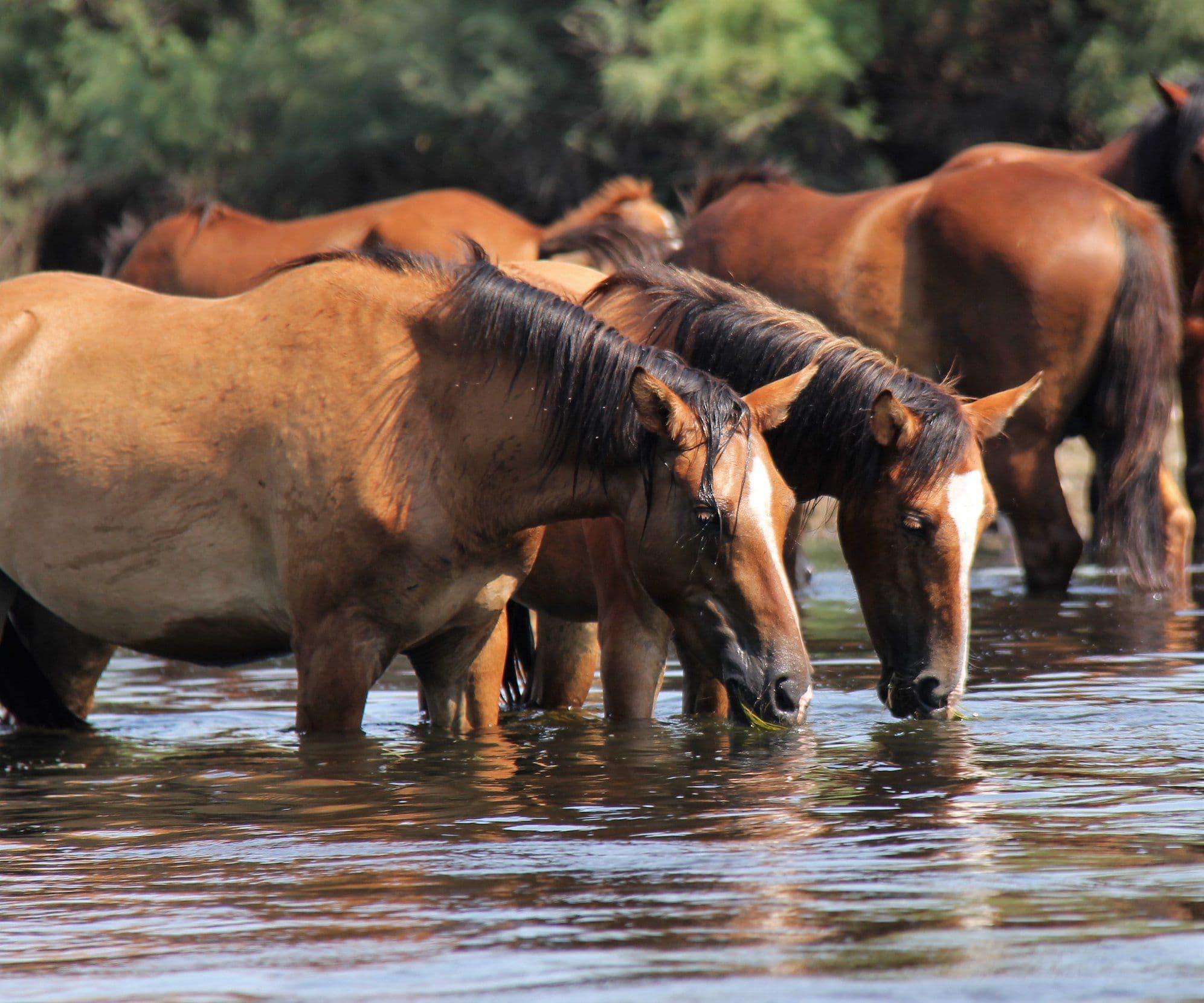
United States Forest Service’s Motion to Dismiss was Granted by Federal Court with Prejudice
(PHOENIX, A.Z., August 27th, 2024) –Salt River Wild Horse Management (SRWHMG)andAmerican Wild Horse Conservation (AWHC)welcome thedismissal of a second lawsuit, filed by the Center for Biological Diversity and trophy hunting groups against the US Forest Service (USFS) as a major win for theSalt River wild horses.
The lawsuit, filed in January of this year, targeted theSalt River wild horsesin the Tonto National Forest. It alleged the Forest Service’s signing of a Cost Share Agreement with the Arizona Department of Agriculture to fund a Salt River Horse Liaison position violated the National EnvironmentalPolicyAct (NEPA) and the Endangered Species Act (ESA). On August 26th, 2024, Judge James Teilborg for the Federal District Court of Arizona, dismissed all three claims in the case.
SRWHMG and AWHCfiled a motion to intervene in the case, in order to support the Forest Service and added details about the horse population size andhumane managementprograms. The groups also filed a motion to voluntarily reassign the case to Judge Teilborg, who hadpreviously dismisseda similar lawsuit by the Center for Biological Diversity last year.
On May 2nd, 2024, theUSFS filed a motion to dismiss the case, highlighting among other things, the ESA analysis on the recently updated Tonto National Forest Land Management Plan (LMP), which includes the Salt River horse management area.
In granting the dismissal of all three claims, Judge Teilborg referenced the ESA analysis stating that the LMP “is likely to result in net beneficial effects to federally-listed species.”
He also mentioned the fact that overturning the Cost Share Agreement would not redress plaintiffs’ concerns about the current long-termwild horse managementplan, as the Salt River horse liaison is not likely to change that plan.
"We welcome this decision as a major step forward in the battle to protect wild horses on our public lands. TheSalt River wild horsesare beneficial to the environment. They spread the seeds that create the mesquite forests, which are vital to all birds and wildlife. They also reduce the risk of wildfires by eating the dry weeds under those trees. If CBD and its sport hunting allies wish to improve the environment, we invite them to help us clean up the Tonto National Forest, because the human impact is the primary threat to the lower Salt River ecosystem,” said Simone Netherlands, president of the Salt RiverWild Horse ManagementGroup.
“It's unfortunate that the Center for Biological Diversity keeps wasting the Court’s time with lawsuits challenging the successful Salt Riverwild horse managementprogram, which is humanely reducing population numbers while protecting these Arizona national treasures,” said Suzanne Roy, Executive Director of AWHC. “We are grateful to the Court for again dismissing the Center’s misguided legal action aimed at upending this popular and successful partnership between the state, federal government, and the nonprofit Salt RiverWild Horse ManagementGroup.”
TheSalt River wild horsesin the Tonto National Forest are protected under theSalt River Horse Actpassed by the Arizona State Legislature and signed into law in 2016. The law was passed overwhelmingly in response to public opposition to a plan to eliminate theSalt River wild horsesfrom the forest. The horses are managed by SRWHMG under contract with the Arizona Department of Agriculture (AZDA), through a humane fertility control program.
“We are grateful for the successful partnership with the Tonto National Forest and the AZDA. This is a model for collaboration across Western states. By humanely reducing the population, we’re demonstrating that we can protect wild horses while also conserving the environment,” said Netherlands.
The horse advocate groups were represented by attorneysWeiner & Cordingout of Boulder, Colorado.
The case was dismissed with prejudice, eliminating any possibility of refiling.
The Salt River Wild Horse Management Group (SRWHMG)is an Arizona non-profit organization dedicated to protecting and humanely managing theSalt River wild horses. SRWHMG has secured protections for the horses and partners with the State of Arizona for the day-to-day management of the herd, including a highly successfulfertility controlprogram that has reduced the population humanely, without ever removing one horse.
American Wild Horse Conservation (AWHC)is the nation’s leading nonprofit wild horse conservation organization, with more than 700,000 supporters and followers nationwide. AWHC is dedicated to preserving the American wild horse and burros in viable, free-roaming herds for generations to come, as part of our national heritage. In addition to advocating for the protection and preservation of America’s wild herds, AWHC implements the largest wild horsefertility controlprogram in the world through a partnership with the State of Nevada for wild horses that live in the Virginia Range near Reno.
Subscribe to our newsletter: