
Current Developments: Ft. McDermitt Tribal Horse Roundup
Roundups
Read time: Five Minutes
Published: December 5, 2018
Written by:
AWHC Contributor
Update, December 7, 2018:We spoke with theUSFS, and they informed us that no traps will be placed on public land during the first roundup of McDermitt horses. The snow has prevented the agency from moving the traps as originally planned. TheUSFSis currently rounding up tribal horses that are close to the border between public and tribal lands, and they report that no wild horses have been caught as a result of this roundup to date. Traps may be placed onUSFSland in 2019, when the otherroundupsare to take place. We will update you when a plan is finalized for those actions.
December 5, 2018: Yesterday, the U.S. Forest Service (USFS) began aseries of roundupsin cooperation with the Fort McDermitt Paiute and Shoshone Tribe, to roundup and remove 500 horses from the Humboldt Toiyabe National Forest in northern Nevada. The Forest Servicemaintainsthat the horses are domestic, belong to members of the tribe, and have been illegally grazing in the national forest.
Over the past 30 years, theUSFShas allowed for domestic tribal horses to illegally graze onpublic lands. According to theUSFS, their population number has now grown to 2,500. To remove what theUSFShas designated “unauthorized domestic tribal horses” from public lands, the Service will work with the tribe to conduct a series of removals, each lasting four to fourteen days.
Previous McDermitt Roundups
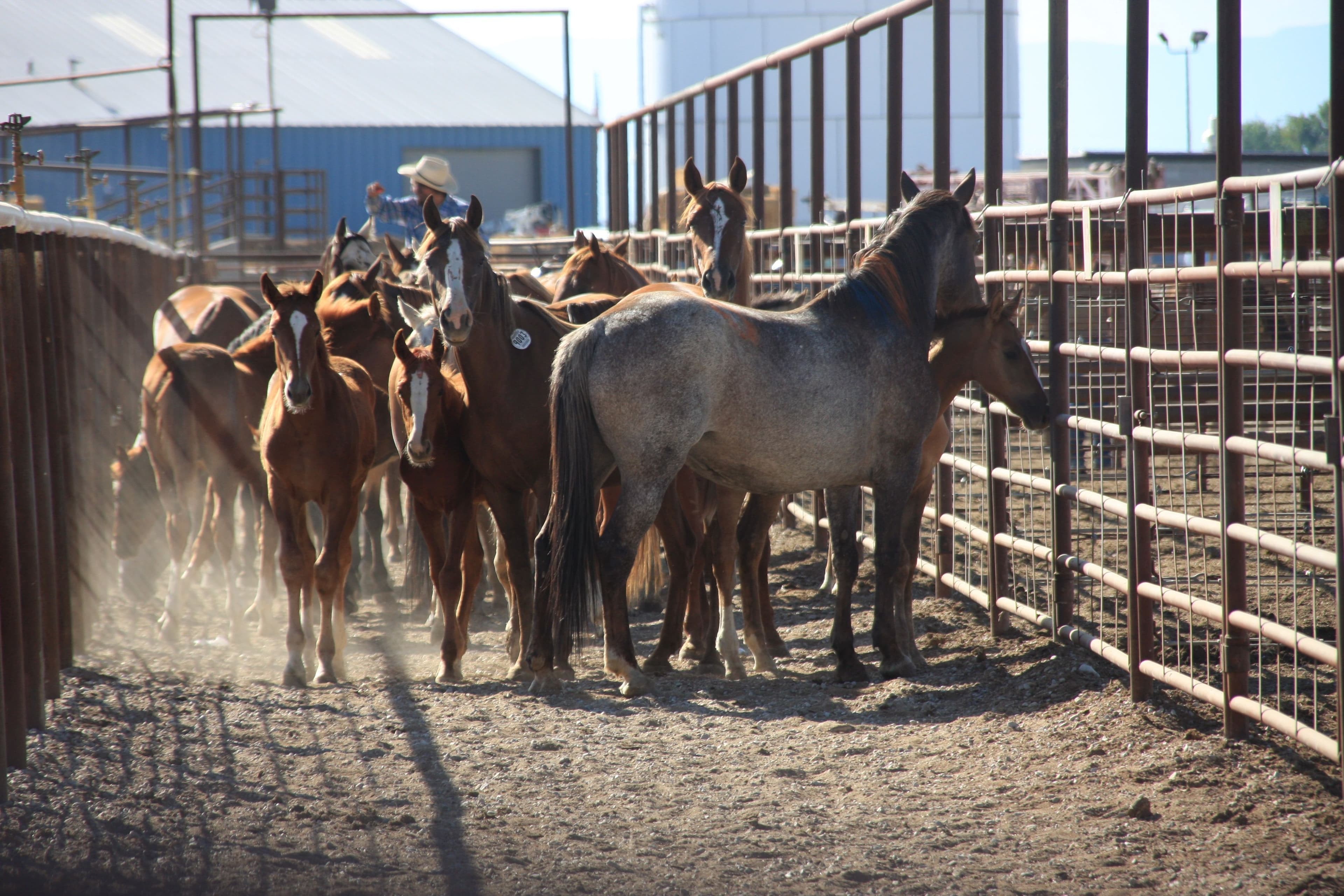
Captured McDermitt horses in 2013
AWHC has long been concerned about this situation, both for the fate of the horses being rounded up with our tax dollars, and about the possibility that suchroundupsto remove domestic horses will also ensnare federally-protected wild horses from nearby Bureau of Land Management (BLM) Herd Management Areas (HMAs).
In previous roundup attempts to remove McDermitt tribal horses, the capture zone abutted the boundary of the Little Owyhee HMA, where federally protected wild horses reside. In 2013, the Forest Service rounded up 467 horses from this area and delivered them to the FallonLivestockExchange, an auction frequented by kill buyers who purchase horses and transport them across the border to Canada or Mexico for slaughter.
Due to the proximity of the capture zone to the HMA, the Forest Service could not ensure that no wild horses were caught up in the roundup and at risk of being sold at auction. In response, AWHC, joined by wild horse and conservation groups,filed a lawsuitto keep unbranded wild horses from being auctioned off. As a result, we were able to save 149 unbranded horses from slaughter. These horses were placed via arescue operationthat involved multiple organizations and sanctuaries.
In 2015, theUSFSproposed another roundup for this area, again with a capture zone abutting federally-protected wild horse habitat areas, butcancelled itafter receiving a legal letter from AWHC outlining our concerns that federally-protected wild horses would be captured.
2018 McDermitt Roundup
McDermitt mares in 2013
For the current capture operation that begins today,theUSFSmodified the roundup plan in response to AWHC’s past challenges. Now, it will include a buffer of at least 10 miles between the capture zone and any federally designated HMA.
As with previous plans, theUSFSandBLMwill have wild horse specialists at all the trap sites to make sure that there are no wild horses caught during the operation. How they will identify wild horses and distinguish them from tribal horses is unspecified and unclear. However, should any wild horses be identified, theUSFSsays they will be sorted and taken to the Little Owyhee Herd Management Area and released.
We confirmed that there will be trap sites on tribal andUSFSland. When the traps are on tribal land, public access will be extremely limited. Observers will be allowed to observe horses from a travel center roughly ¼ mile away from the fairgrounds where the horses will be held. However, public observation will also be allowed when the traps are onUSFSland.
In our conversation with theUSFS, they stated that they are “almost certain” that no wild horses will be ensnared in these operations because of the distance that this area is from the closest HMAs and due to the fact that theBLMconducted a roundup in Little Owyhee earlier this year. They noted that it is rare for wild horses to venture that far from their designated habitat, and stated that theUSFSdoes not want to see wild horses caught up in this operation either.
Fate of the Horses
McDermitt Horses at Fallon, NVlivestockauction in 2013
After being captured, theUSFSwill turn over captured horses to the tribe, which will house them at their rodeo grounds. The tribe has stated that it will make the horses available for owners to reclaim. The tribe has not specified what it will do with unclaimed horses, but based on past experience, most of the horses will likely be sold for slaughter.
This has been an ongoing situation in this area, and a distressing one in which our tax dollars will be used to round up hundreds of horses who will then be turned over to the tribe, most likely to be sold for slaughter. It’s a scenario that keeps recurring and will only end if the Forest Service enforces grazing restrictions on the National Forest, including penalties for illegal horse grazing, which is something theUSFSinformed us they intend to do.
However, just as in 2013, this is a very sad situation for the tribal horses, and since members of the Fort McDermitt Paiute and Shoshone Tribe own these horses, we do not have a legal way to stop their sale for slaughter.
2018 Capture Site
2015 Capture Site
Subscribe to our newsletter: