
Debate Over Wild Horse Legislation in New Mexico Legislature
Legislation
Read time: Five Minutes
Published: March 15, 2017
Written by:
AWHC Contributor
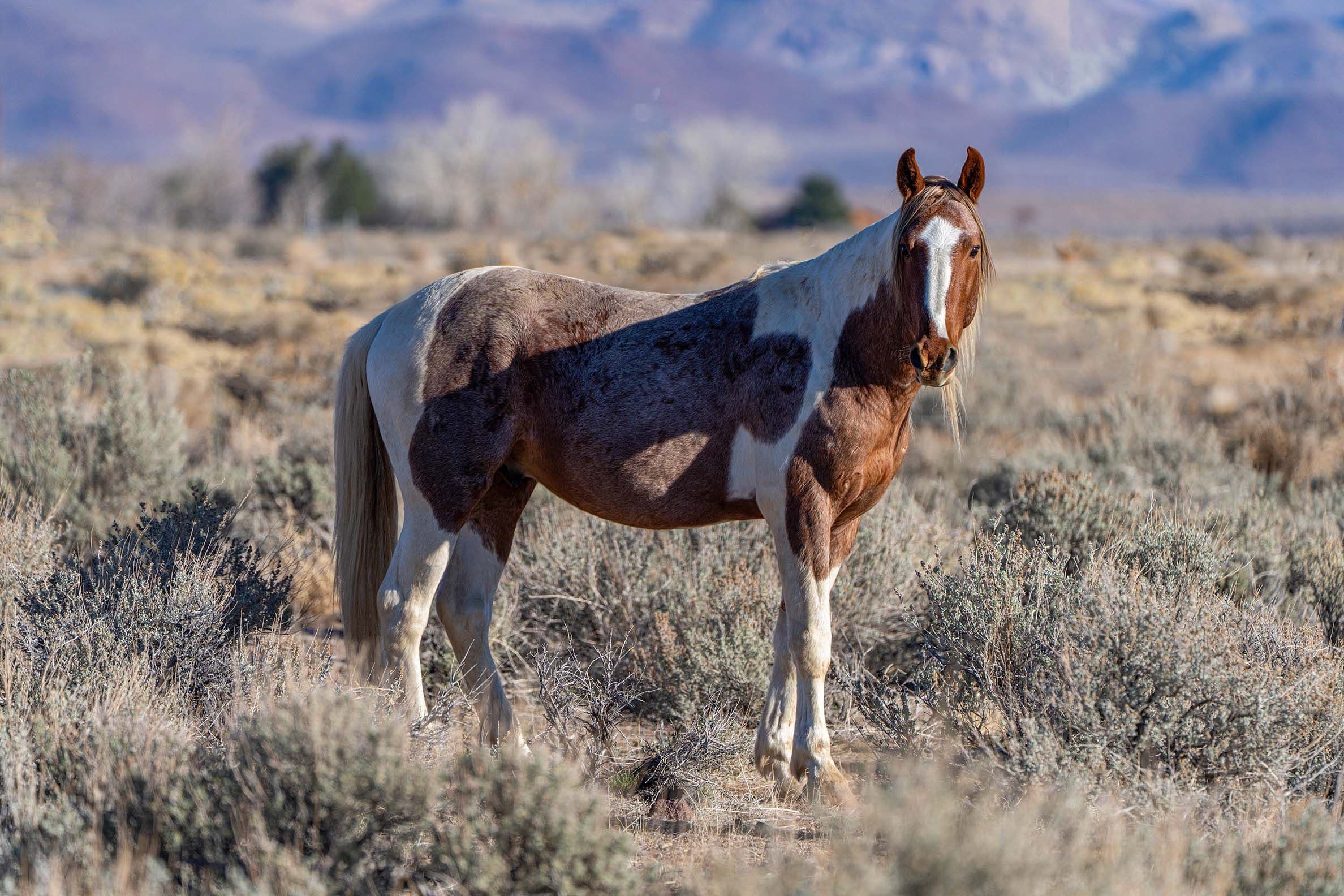
The 2017 session of the New Mexico Legislature is nearing its end, and the debate over wild horses in Lincoln County and other areas is intensifying. Various stakeholders are advocating for bills and memorials that aim to clarify the status of these herds, which roam areas like Alto and Ski Run Road.
One faction emphasizes the protection of private property rights, while another focuses on safeguarding the horses and their freedom.
House Memorial 102, introduced by State Rep. Joanne J. Ferrary, a Democrat from District 37, with input from Patience O’Dowd of the Wild Horse Observers Association, is the latest legislative proposal. Her organization secured a temporary injunction against the sale of a dozen wild horses, which were initially removed and then returned to Lincoln County by the New MexicoLivestockBoard. The case is ongoing in district court. The memorial acknowledges the conservation division of the state Department of Game and Fish's role in wildlife habitat protection and requests an interim study to provide recommendations for the protection and maintenance of wild horse herds and their habitats.
The memorial highlights that the state has not managed wild horse populations through immunocontraception in the past decade, despite publicpolicy. It argues that management would be more effective if a specific state agency had jurisdiction. Several tribes and pueblos, along with two nongovernmental organizations, are already managing wild horse populations using immunocontraception. The memorial notes that fewer than 300 wild horses exist on federal and state grazing lands in New Mexico, compared to half a million cattle.
Stakeholders in the well-being of wild horses include artists, outfitters, horse rescue groups, rural economic development organizations, and the state tourism department.
The New MexicoLivestockBoard has historically controlled the state's wild horses, considering them estraylivestocksubject to capture and disposal. However, the conservation services division is deemed better suited to assess the status, needs, and habitat requirements of wild horses, as well as issues of human interaction, according to the memorial. Advocates for wild herds have expressed distrust in thelivestockboard's intentions, particularly after disputes over horses in Alto and Placitas.
The legislature's website indicates that the memorial has been referred to the House State Government, Indian and Veterans Affairs Committee.
O’Dowd argues that those advocating for wild horse welfare cannot supportSenateBill 126, introduced by State Sen. Pet Woods, a Republican from District 7, if they oppose horse slaughter. The amended bill passed theSenate32-2 and was sent to the House State Government, Indian and Veterans Affairs Committee.
The bill classifies horses aslivestockbut defines a wild horse as unclaimed, without obvious brands or evidence of private ownership, and determined by the board to originate from public or federal land. Exceptions include horses under federal jurisdiction per the Wild Free-Roaming Horses and Burros Act and those identified as Spanish Colonial horses.
Captured horses could be relocated to a preserve, adopted, or humanely euthanized. A herd could be removed from a range if the New Mexico State University's range improvement task force recommends it after evaluating the rangeland condition in response to alivestockboard request.
A key player in the Alto herd situation argues that the origin of the horses, whether from a reservation or a national forest wilderness area, is irrelevant since both arefederal lands.
She contends it is “highly unlikely” anyone will complain about horses on public land unless someone is injured on the highway.
She also noted that the state fence-out law does not require a person to have a fence, but if an owner does not erect a fence andlivestockenter the property and cause damage, the owner cannot file a legal claim for damage reimbursement.
Genetically verified Spanish Colonial horses are considered valuable by breeders, although few have been verified in New Mexico.SenateBill 126 also addresses testing to determine if a captured horse is of Spanish colonial heritage and, if so, to relocate it to a state or private wild horse preserve created to protect Spanish colonial horses.
“If not, (the bill reads that) it shall be returned to the state public land, relocated to a public or private preserve or put up for adoption by the agency on whose land the wild horse was captured,” she said. Thelivestockboard is the proper agency to manage wild horses andlivestock, she contended.
Other pending legislation includes House Bill 390, introduced by State Rep. Nathan Small, a Democrat from District 36, which would allow an equine rescue group the first chance to purchase an unclaimed estray horse or it will be euthanized, later amended to allow public bidding. Advocates argue that bidding could include buyers headed to a slaughterhouse. The amended bill passed the House 50-17 and was referred to theSenateConservation Committee. The bill's initial aim was to prevent cruelty tolivestock, advocates say.
House Bill 284, also introduced by Woods, remains in theSenateConservation andSenateJudiciary Committee. This bill addresses trespass on private land by horses, giving theLivestockBoard jurisdiction and clarifying procedures for handling wild horses in the board's custody, including adoption, relocation to a preserve, or euthanasia.
Originally posted by Ruidoso News
Subscribe to our newsletter: