
Emergency Roundups: Necessary or Just Appeasing Ranchers?
Roundups
Read time: Five Minutes
Published: September 1, 2020
Written by:
AWHC Contributor
(September 1, 2020) We are currently in the midst of the Bureau of Land Management’s (BLM) summer roundup season. The agency is increasingly using “emergency” as an excuse to permanently remove wild horses and burros from the range, enabling them to skirt in-depth analysis and proceed without providing the opportunity for public comment. At the end of July, theBLMhad announced five emergencyroundupsthat the agency planned to conduct in the following areas: Saylor Creek (ID), Triple B/Maverick-Medicine (NV), Antelope Valley (NV), Nevada Wild Horse Range (NV), and Montezuma (NV). By the end of August, theBLMannounced one more emergency operation in Jakes Wash (NV). In total, by the end of these actions, the agency will remove roughly 726 wild horses and 25 burros.
Roundup Operations
TheBLMhas now concluded operations in the Antelope Valley, Nevada Wild Horse Range areas, Triple B/Maverick-Medicine, and Montezuma areas. On July 28, 2020, theBLMannounced that the Antelope Valley action concluded with 54 wild horses permanently removed. On August 8, 2020, theBLMannounced that the Nevada Wild Horse Range action concluded with 126 wild horses permanently removed. On or about August 17, 2020, theBLMconcluded the Montezuma operation with 48 wild horses permanently removed. Finally, on August 20, 2020, theBLMannounced that the Triple B/Maverick-Medicine concluded with 390 wild horses permanently removed.
Livestock Use
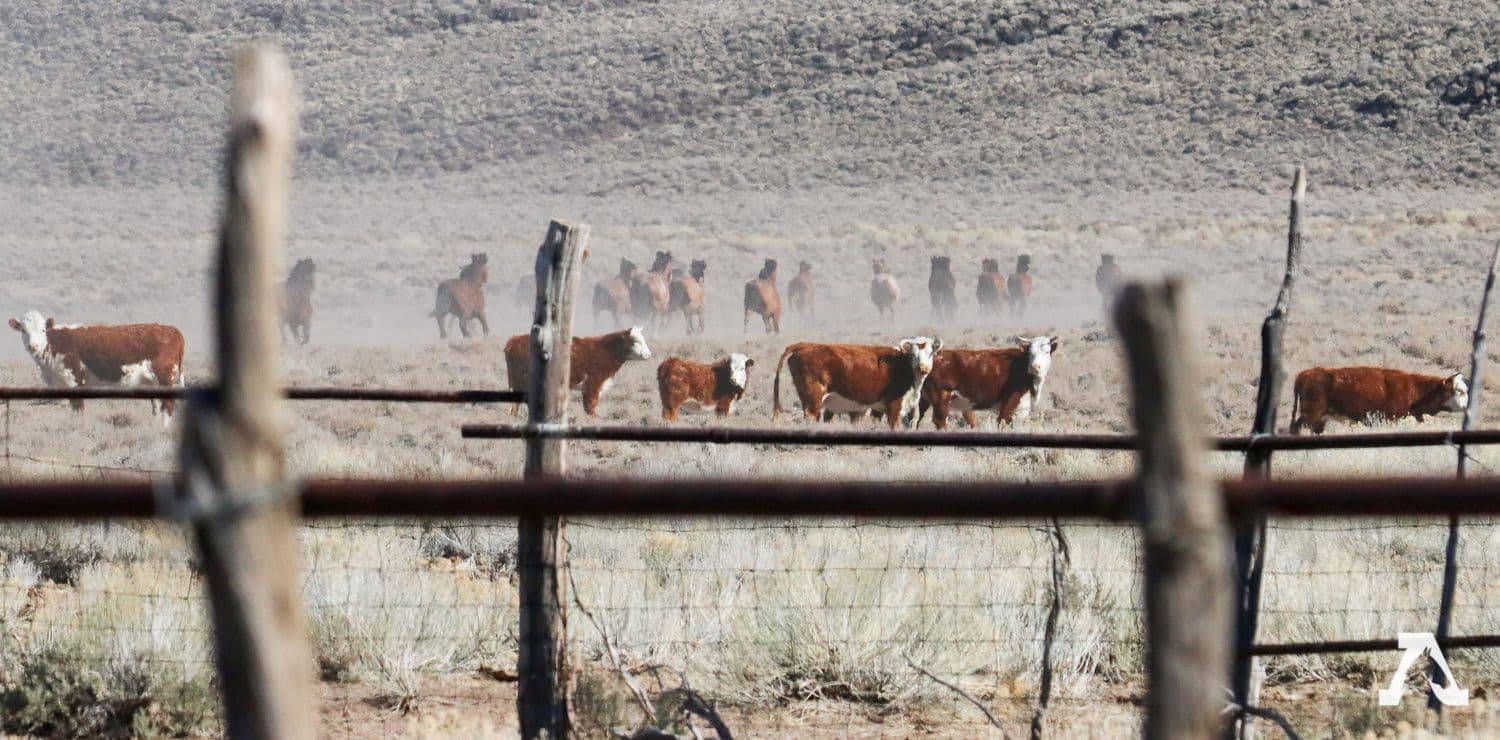
TheBLMcommonly notes that the wild horses must be reduced to unscientifically low population levels in order to manage for a thriving natural ecological balance. For example, in the agency’s press release for the Antelope Valley emergency roundup, theBLMnoted that the action would “help make progress toward restoring a thriving natural ecological balance and multiple-use relationship on public lands.” If theBLMwas really interested in restoring and maintaining this balance, it would enforce grazing restrictions and analyze and implement ways to reduce harmfullivestockgrazing on public lands. But instead, the wild horses remain the scapegoats.
Here is a breakdown oflivestocknumbers allowed to graze in some of these areas:
- Saylor Creek: As of 2019, the BLM permitted 1,345 cow/calf pairs to graze and authorized an additional 846 temporary cow/calf pairs to graze as well.
- Antelope Valley and Triple B/Maverick-Medicine: Both of these operations are taking place in an area that the BLM manages together in two Complexes, or larger groups of Herd Management Areas managed together. As of the 2017 Environmental Assessment (EA), the BLM permitted 10,358 cow/calf pairs and sheep to graze in the Antelope Complex and 7,283 cow/calf pairs and sheep to graze in the Triple B Complex. The BLM does not clarify in the EA which allotments fall within the specific two areas where they conducted these emergency operations, but the livestock grazing numbers in the Complexes are startling.
- Montezuma: As of 2010, the BLM allowed 230 cow/calf pairs to graze.
Additionally,BLMNevada is planning to increase the amount oflivestockgrazing across much of the state with its targeted grazing program. TheBLM’s proposed program will greatly impact the management of federally protected wild horses and burros on public lands. In the project area, wild horses and burros share roughly 17,684,542 acres with subsidized livestock grazing. By allowing increased livestock grazing under the guise of fire abatement, a theory unsupported by science, theBLMis blatantly favoring livestock use over other grazers in the project area. Such overgrazing will undoubtedly lead to the need for more “emergency” roundups due to lack of forage; a dim prediction that AWHC is monitoring closely.
Cost
Taxpayers pay for these, and all, roundup operations. For example, for the operation in the Nevada Wild Horse Range, the Department of Interior awarded CattoorLivestockRoundup Inc. $74,250 (roughly $589/horse). For the Antelope Valley operation, the Department of the Interior awarded the Cattoors $24,750 (roughly $458/horse). Adding insult to injury, the prices only go up for regularly scheduled roundup operations where the price per horse averages to approximately $1,000.
On top of that, the taxpayer foots the bill for federally-subsidizedlivestockgrazing onpublic landsas well. In 2019, the federal grazing fee was reduced yet again to a historic low of $1.35 per animal per month. That’s a steep discount, thanks to the taxpayer subsidies that prop up this federal entitlement program. (Estimates indicate that the overall cost to taxpayers for the federal grazing program could be as much as $500 million annually.)
Solutions
While AWHC understands and agrees that some areas of the range have seasons where there is truly a water, forage, or fire emergency, theBLM’s systematic removal of wild horses through the practice of emergencyroundupsis not helpful to long-term, humane and sustainable management. Instead,BLM, the horses, and the taxpayers would be better served by the agency implementing humane, reversible fertility control to the horses that come into the trap. Such management would stabilize the populations and save taxpayers money over the long-term. Frankly, even a plan to haul water and hay to the “imperiled” wild horses would be less costly than running emergency action after emergency action.
Additionally, if the range is really in such poor condition that theBLMfeels the need to go and remove wild horses through an emergency action, then the agency must also remove and further limit discretionarylivestockgrazing use of the same habitat.
Subscribe to our newsletter: