
Federal Budget Proposal Threatens Permanent Sterilization of America's Wild Horses
Press Releases
Read time: Three Minutes
Published: March 14, 2024
Written by:
amelia perrin
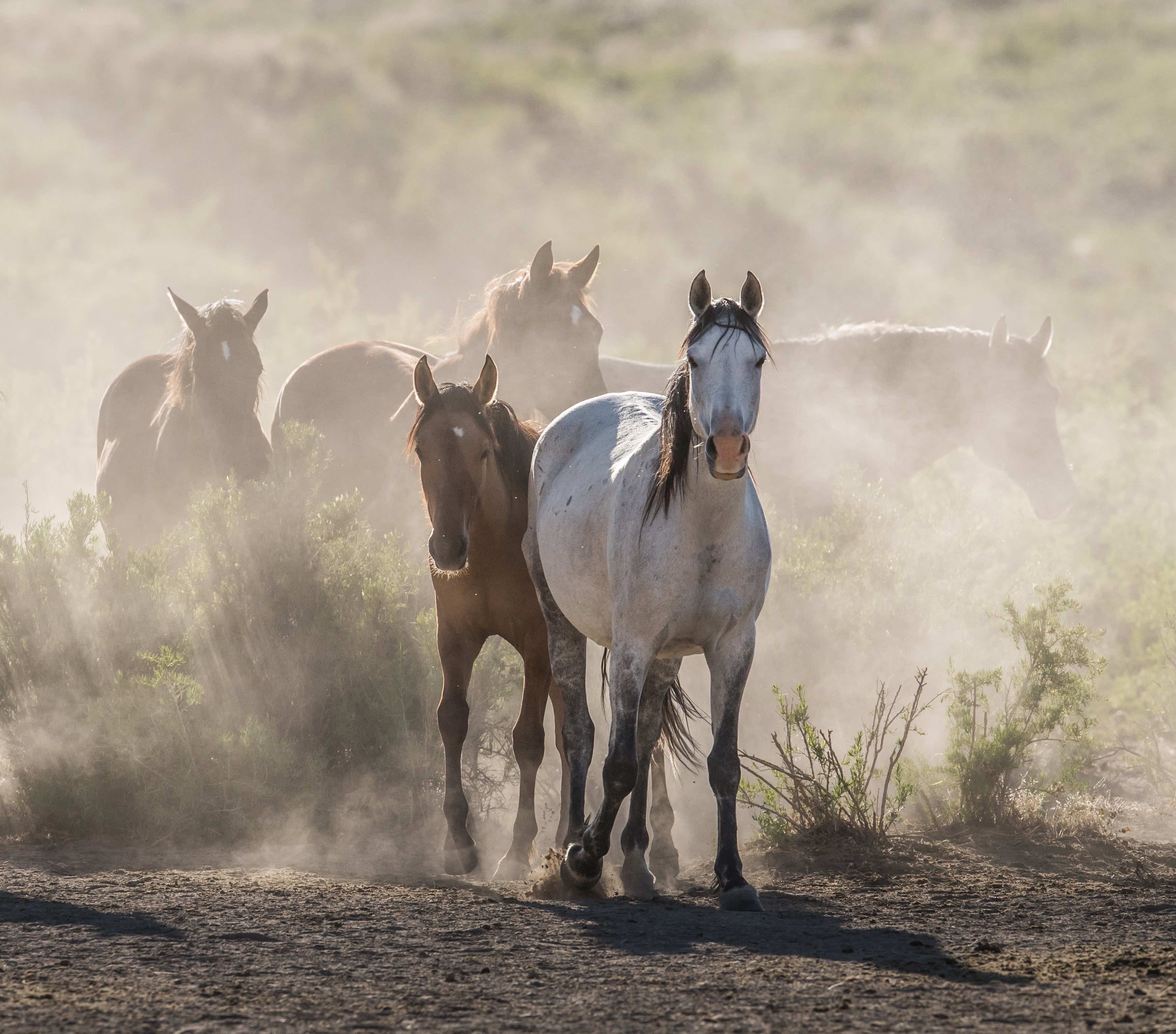
WASHINGTON, D.C. (March 14, 2024)– Today,American Wild Horse Conservationis sounding the alarm over the Bureau of Land Management’s (BLM) Fiscal Year 2025 budget request seeking $170,917,000 to fund itsWild Horse and Burro Program. This marks a $29 million increase over FY 24 appropriated levels, with $15 million allocated toward a mass permanent sterilization program, including 20 new full-time employees for its implementation.
The proposal, outlined in theBLM’s Budget Justification for FY 25, was released days after Congress cut theBLM’s FY 2024 budget by $5.9 million while preserving $11 million in 2024 funding for reversible, humanefertility controlimplementation.
“Permanent sterilization contradicts theBLM’s legal mandate to protect America’s wild horses in self-sustaining, free-roaming herds. It also disregardsCongressional directivesto implement a robust and humane fertility control strategy of reversible immunocontraceptive vaccines,“ said Suzanne Roy, Executive Director of AWHC. “TheBLMshould deliver on existing commitments to expand humane fertility control, rather than waste Congress’ time and taxpayer resources on a far-fetched scheme to destroy the nation’s wild horse and burro populations by mass sterilization.”
Roy highlighted the absence of details regarding the sterilization methods proposed. AWHC has been litigatingBLMproposals to sterilize wild horses through invasive surgical procedures such as castration and removal of ovaries (ovariectomy) for over a decade. These high-risk procedures not only disrupt natural behaviors by eliminating the reproductive hormones but also jeopardize the social structure and stability of wild herds.
“This proposal could have far-reaching, extinction-level consequences for the entire wild horse and burro population and requires far more transparency beforeCongresscan even consider this unapproved plan,” Roy concluded. “There are humane alternatives, including the robust implementation of reversiblefertility controlvaccines, that preserve natural behaviors and keep wild horses in healthy and genetically sustainable herds.”
In January 2024, apeer-reviewed paper, published in Vaccines, affirmed the viability and efficacy of a PZP immunocontraception darting program for managing large wild horse populations across extensive habitats. The study, based on data from theworld’s largest humane fertility control programmanaged by AWHC in Reno, NV, for four years, reported a 66% reduction in foaling rates.
In its2013 report, “Using Science to Improve theWild Horse and Burro Program: A Way Forward,” the National Academy of Sciences evaluated several permanent sterilization methods. The report cautioned against castration due to its adverse effects on social organization and band integrity and highlighted the inappropriateness of ovariectomy in field settings due to the risk of hemorrhage and other severe complications.
AWHC urges a reevaluation of the proposed budget allocation to ensure the long-term preservation of America's wild horse and burro populations through scientifically sound and humane management practices.
###
Subscribe to our newsletter: