
Grazing Cattle: The New Invasive Species Threatening Ecosystems
Public Lands
Read time: Eight Minutes
Published: September 5, 2014
Written by:
AWHC Contributor
Grazing cattle have become a significant ecological concern, impacting native ecosystems and biodiversity. This article explores how cattle grazing contributes to habitat destruction, species extinction, and environmental degradation, earning them the label of 'invasive species.'
Grazing has its place in just about every agricultural system that involveslivestock. This includes cows bred to produce “organic” dairy products, or those set to become “grass-fed beef,” who will graze for two to three years before slaughter, or cows bred for their flesh or milk in the factory farming system who will graze for up to one year before being transported to feedlots.
However the particular breeding, feeding and killing operation is conducted, humans are introducing large numbers ofgrazing cattleinto areas where cows were not previously found. This has an enormous impact on native ecosystems – so much so that grazing cattle now have the character of an invasive species.
After habitat loss, which is caused by clearing and consuming natural resources for human use, invasive species are listed as the second largestthreat to biodiversityin North America. In the continental United States, 41 percent of all land is currentlygrazed by livestock.
Operations that seek to protect the interests of thecattle industryare responsible for the mass extermination of wolves, the roundup of wild horses, deforestation, and shocking loss of biodiversity, while the act of grazing itself contributes to desertification and erosion of soil and land. Let’s take a look for a moment at the many ways the introduction and proliferation of grazing cattle has earned them the title of “invasive species.”
The Mass Extermination of Wolves
Wolvesare often portrayed as the “invasive” species, a predator that is capable of wiping out entire populations of prey when introduced to a new region. However, in their current state wolves don’t fit this criteria.
TheCenter for Biological Diversitynotes that some populations of grizzly bears and wolves have already beendriven extinctby thelivestockindustry, while anadditional 175 speciesare currently threatened or endangered. The Mexican Grey Wolf has alreadygone extinct in southwestern ecosystemsdue to “predator control systems” crafted to protectlivestock.
So what threat do wild wolves and other large carnivores pose tolivestock? For one, they compete for scarce resources made more scarce by overgrazing. Second, they threatenlivestockdirectly, in large part because their natural prey has been eliminated.
Despite the widely held belief that wolves pose a significant threat to animal agriculture’s bottom line,criticssuggest that wolves pose arelatively low risktolivestock. Nevertheless, they’ve been targeted in a mass extermination campaign sponsored by the U.S. Fish and Wildlife Service in order to make way for cattle interests.
Hunterswere hired to killwolvesen masse prior to 1930, leading some populations to become extinct. It wasn’t until the Endangered Species Act of 1973 that conservationists began working hard toward rehabilitation. But these efforts were met with a changed landscape, degraded by decades of grazing. The imposition of huge numbers of cattle resulted in the destruction of watersheds and vegetation; grasslands were turned into eroded deserts.
This remains the situation today, where the conflict continues to take place on 270 million acres of public land, wheregrazing rightshave been cheaply purchased by the industry. These rights are granted by theBureau of Land Management(BLM) and the U.S. Forest Service and, despite being for-profit operations, are subsidized by taxpayers.
The Roundup of Wild Horses
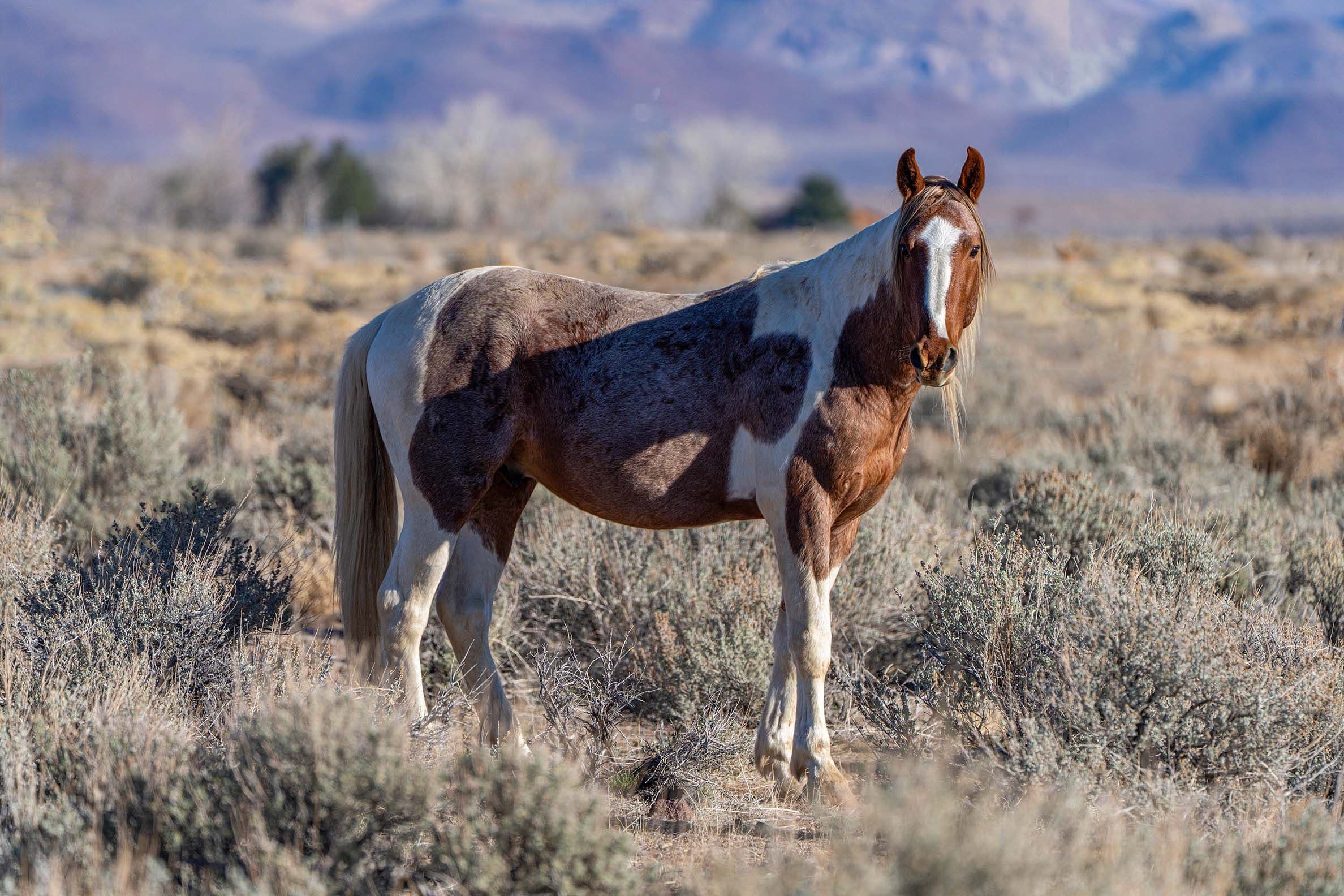
The wild horse is another alleged grazinglivestockcompetitor beingdevastatedin the name of industry. The wild horse population (despite being only tens of thousands relative to millions of cattle) had been decimated so heavily by the cattle industry that theWild Free-Roaming Horses and Burros Act(WFRHBA) wasestablished in 1971an attempt to protect them from impending extinction. However, despite this relative “protection,” wild horse numbers have dwindled down to40,000. Their situation is so dire that advocates are petitioning the U.S. Fish and Wildlife Service toprotect wild horsesunder the Endangered Species Act.
Notwithstanding the act’s attempt to protect horses from capture and slaughter, and the fact that cattle outnumber horses fifty to one, theBLMcontinues to perform roundups of wild horses. Cattle ranchers argue that this ostensible “maintenance” of the wild horse population is needed to keep theirpopulation in check. Meanwhile, theBLMdoesn’t want to miss out on thelivestock grazing taxit collects from cattle ranchers. Wild grazing horses just aren’t profitable.
Deforestation Driven by Grazing
Outside of the United States, the world’s biodiversity takes another hit dealt by the cattle industry in the form ofrainforestdeforestation. Cattle ranching is responsible for80 percent of deforestationin the Amazon, and Latin America’s other rainforests are also under siege. In a double-hitter, the cattle industry is responsible for deforestation in these areas to make room for grazing cattle and to make room to grow crops that will be turned to animal feed. Between 40 and 60 acres of rainforest areclear-cut every minuteto graze cattle and grow monocropped soybeans to be used in animal feed.
This staggering amount ofclear cutting, which destroys the oxygen-producing, carbon-storing giants of the planet, results in one football field of tropical rainforest being destroyed every six seconds to produce the equivalent of 257 hamburgers.
To put this into perspective, the average car produces three kilograms of carbon dioxide per day, while clearing rainforest to produce justone hamburgercreates 75 kilograms of carbon dioxide – not to mention theadditionalnon-rainforest related carbon footprint of about 25 kilograms of carbon dioxide per one pound of burger meat.
This means that eating just one hamburger has the same carbon footprint as driving a car everyday for a month. In just24 hours, deforestation releases as much carbon dioxide into the atmosphere as eight million people flying from London to New York.
The total negative cost of deforestation includes the loss ofbiodiversity; the loss of carbon-storing trees, which contributes to global warming; water depletion and pollution; and soil degradation and erosion.
Grazing Land Vulnerable to Soil Erosion
In anarticlepublished inEnvironment, Development and Sustainability, David Pimental establishes soil erosion as one of the most serious environmental and public health problems facing human beings today. This is because soil is being degenerated 10 to 40 times faster than the rate of renewal, “imperiling future human food security and environmental quality.”
Approximately half of the earth’s land surface is used for agriculture.Twenty-six percentof this is devoted to grazinglivestock, while33 percent is devoted to growing cropsused to feed tolivestock. Of all grazing land in the U.S.,more than half is now overgrazedand subject to high erosion rates.
Erosion significantly impacts biodiversity. When the organic matter in soil is diminished, the overall biomass decreases, as does its potential to produce more life. This impact is felt on plants, animals, and microbes or, in short, on the entire ecosystem.
These erosion rates also affect world food production. The Food and Agricultural Organization of the United Nations reports that food availability per capita has beendeclining for two decades, measured in cereal grains that comprise 80 percent of the world’s food. Although some would like to believe this is not an issue since productivity yields per hectare are increasing, the fact is that while some areas of productivity increase, the soil is eroding, causing irreparable damage alongside a growing human population that is placing higher demands on a finite and diminishing amount of arable land.
So, Which is the Invasive Species?
According to the Center for Biological Diversity, theecological costs of grazing livestockare greater than any other form of land use in the West. In the arid Southwestern United States,livestockgrazing is the leading cause of species endangerment, while also contributing to desertification and soil erosion.
While the industry tries to paint an idyllic picture of pastures of ranchersraising livestockin a traditional and sustainable manner, while merely protecting their livelihood by “maintaining” other invasive species, further investigation reveals that it is in fact the grazers who are the invasive species. It turns out that the purported threats are not ecologically invasive, but financially invasive for the pockets of theBLMand the cattle industry.
Originally Posted By One Green Planet
Subscribe to our newsletter: