
Is the University of California Complicit in Promoting Horse Slaughter?
Policy
Read time: Four Minutes
Published: June 19, 2019
Written by:
AWHC Contributor
California's Historic Ban on Horse Slaughter
In 1998, California made history by passing Proposition 6, the first statelegislationin the country to ban the export and slaughter of horses* for human consumption. However, more than 20 years later, the University of California seems to have overlooked this significant legal and ethical stance.
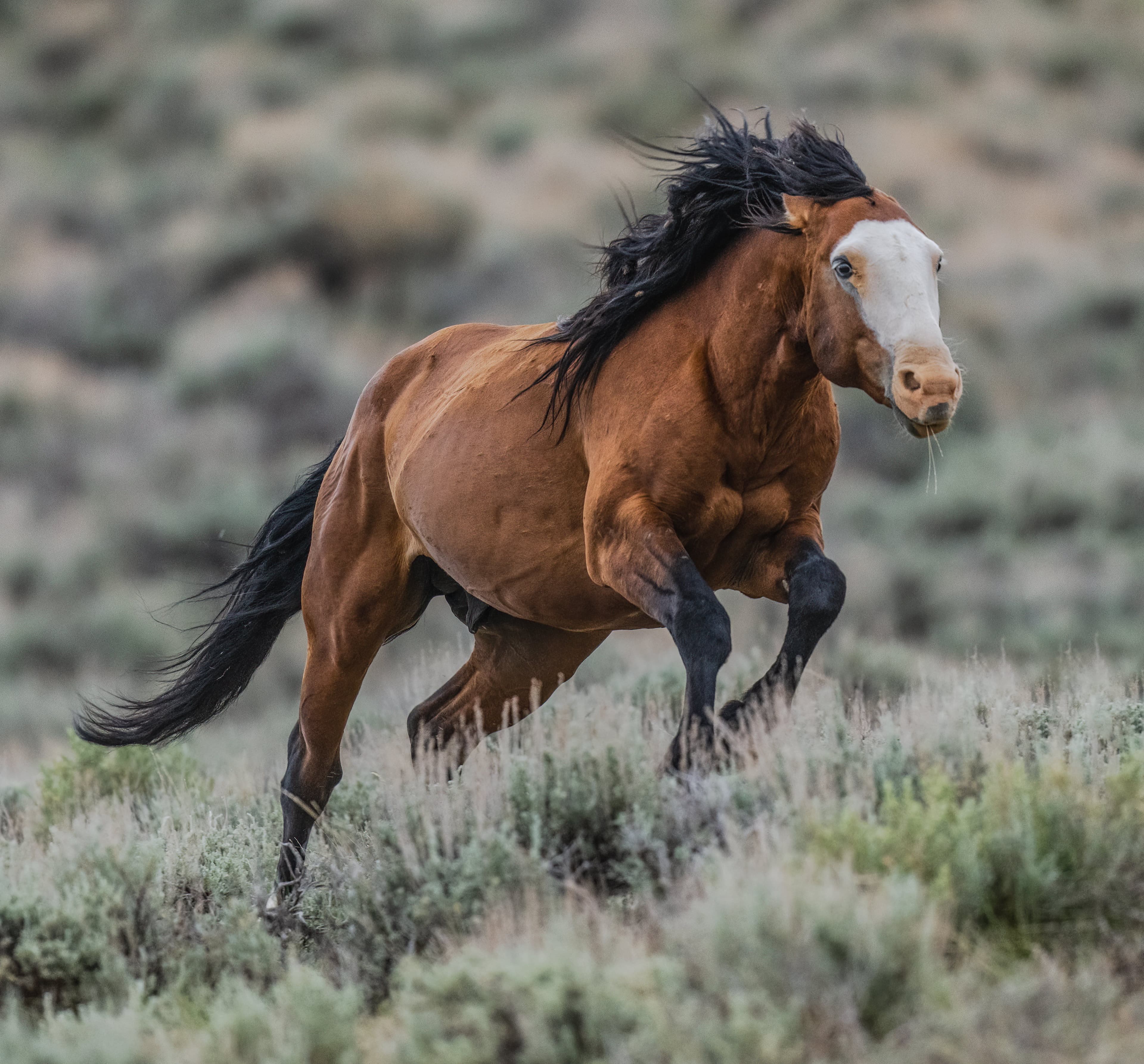
The controversy centers around the 3,000 wild horses living on the Devil’s Garden Wild Horse Territory, a federally-protected habitat on the Modoc National Forest near Alturas, CA. In November, 932 of these horses were removed to accommodate private ranchers grazing approximately 6,000 cattle and sheep on the 300,000-acre territory managed by the U.S. Forest Service (USFS).
TheUSFSannounced plans to sell horses aged 10 years and older, and those not adopted after three adoption events, through a “Sale without Limitations”policy. Thispolicyallows individuals and groups to purchase up to 36 horses at one time for $1 each, risking their entry into the slaughter pipeline.
The University of California, Its Cooperative Extension, and Laura Snell
The University of California’s division of Agriculture and Natural Resources claims its Cooperative Extension offices serve all 58 counties in California. According to its mission statement, since 1914, the University of California Cooperative Extension (UCCE) has been the bridge between local issues and innovative answers through the power of UC research.
However, Laura Snell, the County Director andLivestockand Natural Resources Advisor in Modoc County, has used her position to advocate for the slaughter of Devil’s Garden wild horses. Despite the UCCE's mission to provide unbiased, science-based solutions, Ms. Snell has openly promoted horse slaughter, raising concerns about her activities as a University of California and state of California employee.
Although the Devil’s Garden horses represent the largest and most historic wild horse herd in California, Ms. Snell, along with the Modoc County Farm Bureau and local ranchers, views them as pests competing with private cattle and sheep grazing on public lands.
Questionable Research and Advocacy
In 2015, Ms. Snell initiated a “research project” under the UCCE to examine the impacts of wild horses,livestock, and wildlife on riparian areas. However, her research lacked objectivity from the start. In a 2016 article inGreen Blog, she stated:
Despite her research being incomplete until 2018, Ms. Snell presented preliminary, unpublished results at conferences and shared them with opponents of wild horses, promoting their removal and slaughter.
Dennis Willis, a retired BLM employee, criticized Ms. Snell’s research:
Promotion of Horse Slaughter
Ms. Snell has used her UCCE research to publicly promote wild horse slaughter, as illustrated in a 2017 interview:
Funding and Accountability
The UCCE, along with theUSFSand USDA, funds a website calledDevil’s Garden Horses: Uncovering the story behind the wild horses, which posts blogs about the horses and their management. One blog acknowledges that Devil’s Garden horses could be sold to kill buyers:
It’s irresponsible for the UCCE to support a website that tacitly promotes the slaughter of California’s wild horses, especially in a state that banned the practice two decades ago.
The University of California and Accountability
TheUSFS’s announcement of a “Sale without Limitations”policyresulted in a massive public outcry. In November 2018, California Attorney General Anthony Becerra sent a letter to theUSFS, warning that selling or exporting horses for slaughter is a felony in California. Assemblymember Todd Gloria introduced new legislation to protect California’s wild horses from federal roundup and slaughter.
The question remains whether the University of California has played a role in promoting the slaughter of these federally-protected horses by not restraining an employee who has used her position to advocate for their removal and slaughter. The answer is “Yes.”
As stated in its mission, the UCCE views itself as a “bridge between local issues and innovative answers through the power of UC research.” However, Ms. Snell has not provided that “bridge.” Instead, she has used her subjective study and media outlets to advance her personal vendetta against the Devil’s Garden wild horses.
The University of California should be held accountable for how state resources are used to promote a practice banned by law and opposed by most Californians.
* “horses” refers to all equines, including horses, ponies, donkeys, and mules.
Subscribe to our newsletter: