
June 24, 2014: Tour of Humboldt Herd Area Bait/Trap Removal
Roundups
Read time: Four Minutes
Published: June 26, 2014
Written by:
AWHC Contributor
Update June 30, 2014:The Bureau of Land Management (BLM) announced that the removal of horses would be temporarily suspended, but will continue on July 7th, 2014. The stated reason for the delay is the need to acclimate horses to the trap site. The trap site remains in the same location as it was when we observed the operation on June 24. To date, theBLMhas captured 37 horses, but has been unable to trap more horses, since they are wary of the panels surrounding the water source and have not been willing to enter the trap site. As a result, the contractor andBLMhave suspended operations in hopes that the remaining horses will get used to the trap panels so that they will enter the trap site.
On June 24, 2014, I traveled to Lovelock, NV to tour thebait/water trap and holding sitewhere a wild horse removal had begun and is to continue over the next few weeks. Lisa Ross, Public Affairs Specialist for theBLMCarson City District, and Vic Lozano, the manager for theBLM’s Humboldt River Field Office, met me for the tour. A reporter from theLovelock-Review Mineralso attended the tour.
We first met with the contractor, Dave Cattoor, who immediately expressed concern that the water/bait trapping was not going to work. He stated that if he could use the helicopter to round up these horses, he could get the job done faster. TheBLMstated that no helicopters could be used until July 1, asBLMconsiders March through June to be “peak foaling season.” Helicopter use is prohibited during that time except in the case of emergency.
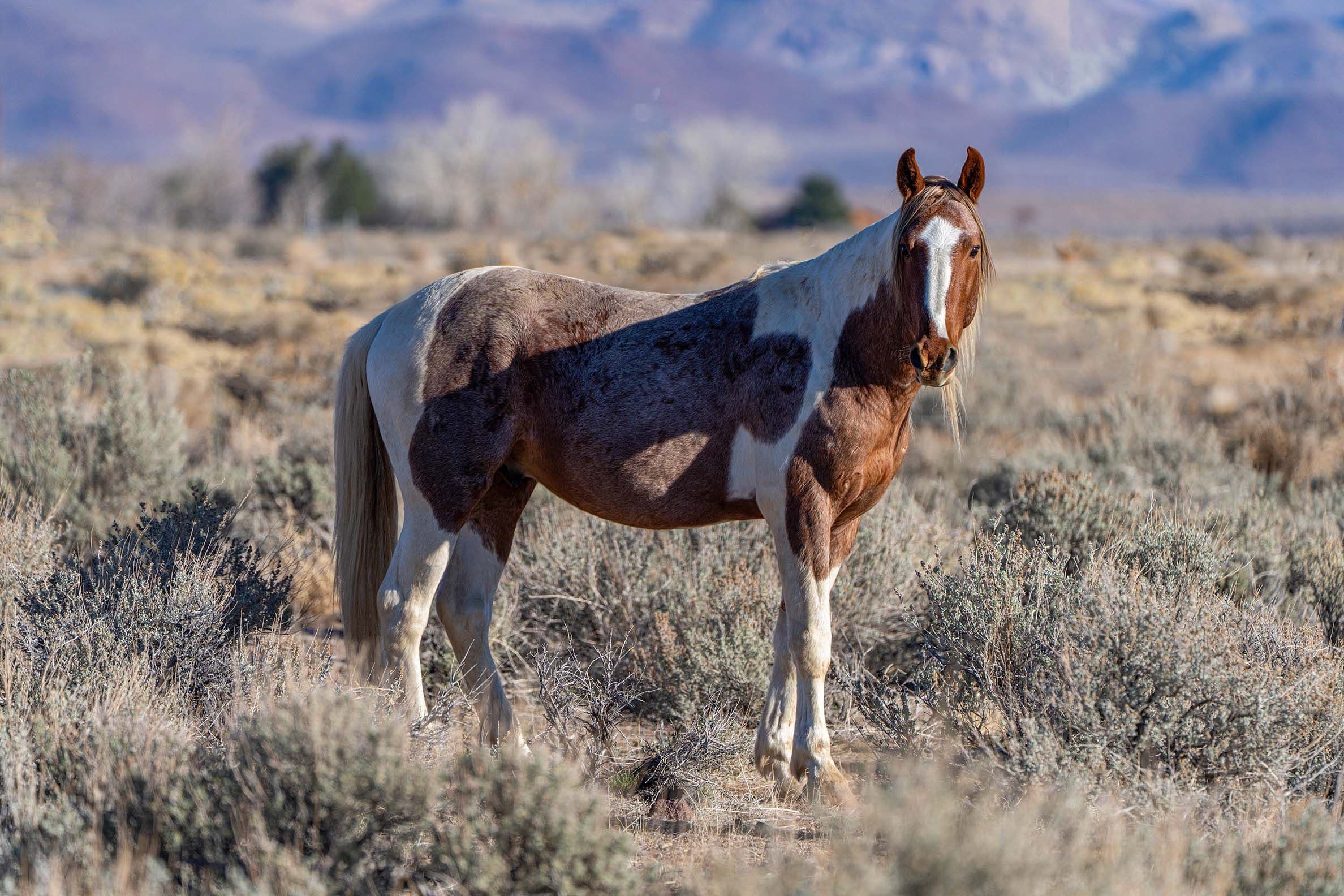
I observed approximately 30 to 40 horses. Most, if not all, appeared to be in good shape. However, it was strange to see the horses concentrated in a small area where forage is exceedingly scarce. It was difficult to imagine that horses stayed in this area long, given the condition of the range. There were very few foals. It was difficult to determine whether the majority of these horses were stallions.
These pictures show one group of horses already at the trap, the trap itself, and the barren condition of the land. Forage and water is available up in the mountains, and it is unclear why horses would be coming down into this area. Although I did not observe any fencing or gates, it is possible that the horses were pushed into this area and gates closed behind. The reporter on the tour said she had previously seen the horses in the area.
TheBLM“zeroed out” the Humboldt Herd Area (HA) for wild horses in the 1980s but they did not catch all the horses at that time. TheBLM’s primary reason for zeroing out horses from this Congressionally designated wild horse habitat is that the land is “checkerboard,” meaning alternating parcels of private and public land. TheBLMsaid that private landowners have complained that wild horses were intermingling with their domestic horses in the area.
After traveling hours to attend thisBLM“tour,” I was greatly disappointed that theBLMonly allowed me and the one other public visitor just 30 minutes to observe the horses. During that short period, we observed horses walking around the trap site but were not given enough time to observe more than a quick snapshot in time. It would be helpful if theBLMset up a blind where observers could hide and be given more time to observe bait/water trapping operations.
To viewBLMdaily updates on the Humboldt wild horse removal please click here.
MEDIA:
BLMtemporarily suspends horse gather
Humboldt Herd Area Bait/Water Trap Wild Horse Gather Concludes
Subscribe to our newsletter: