
Lawsuit Challenges Plan to Eradicate Wyoming's Wild Horses
Press Releases
Read time: Six Minutes
Published: May 10, 2023
Written by:
AWHC Contributor
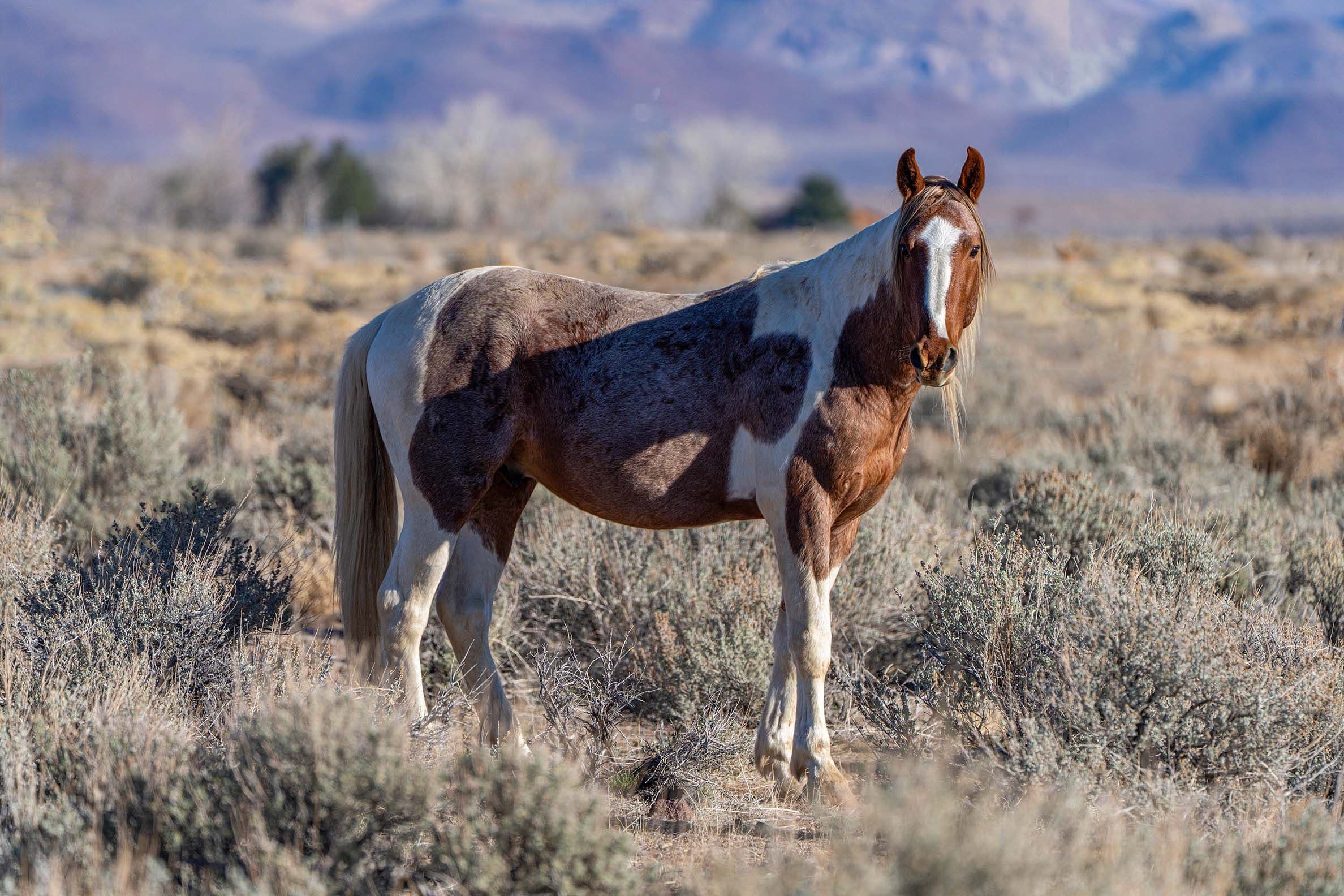
Bureau of Land Management plan amendment “zeroes out” the Salt Wells Creek and Great Divide BasinHerd Management Areasin Wyoming Checkerboard, while slashing the size of protected habitat in Adobe Town
Washington, DC (May 10, 2023)—Today, a coalition of wild horse advocates, environmentalists, and academicsfiled suitin the U.S. District Court for the District of Wyoming against the U.S. Department of the Interior over a federal plan that would result in the largest-ever eradication of federally protected wild horses and elimination of 43% of designated wild horse habitat in the Red Desert area of Wyoming.
The plaintiffs —the American Wild Horse Conservation (formerly American Wild Horse Campaign),Animal Welfare Institute(AWI), Western Watersheds Project, author and Casper College instructor Dr. Chad Hanson, and wildlife photographers Kimerlee Curyl and Carol Walker—allege that a Bureau of Land Management (BLM) plan to decimate some of the state’s most popular and iconic wild horse herds violates federal law.
The lawsuit is the culmination of adecade-long battleto defend the wild horses of the Wyoming Checkerboard against demands by the Rock Springs Grazing Association (RSGA) to remove these animals from more than 2 million acres of land in the southwestern part of the state. RSGA members graze privatelivestockon thepublic landswithin the Checkerboard and view wild horses as competition for cheap forage available through tax-subsidized grazing fees.
“The decision threatens to undermine federal protections for wild horses across the West by setting a dangerous precedent for private landowners to dictate whether federally protected wild horses will be allowed to live in their designated habitats onpublic lands,”said William S. Eubanks II of Eubanks and Associates, which filed the protest on behalf of the groups.Eubanks notes that the plan violates the Wild Free-Roaming Horses and Burros Act, the Administrative Procedure Act, and the National EnvironmentalPolicyAct.
Even before theBLM’s helicopterroundupsof 2020 and 2021, which permanently removed 3,502 wild horses from the Red Desert, the agency determined through its environmental analysis that Red Desert wild horse habitats were already meeting the “thriving natural ecological balance” standard established under the Wild and Free-Roaming Wild Horses and Burros Act.
TheRecord of Decisionpublished yesterday approves a land use plan amendment that would eliminate 2.1 million acres of wild horse habitat in Wyoming and slash by one-third the allowed population of wild horses in the state by:
- Changing the status of the Salt Wells Creek and Great Divide Basin Herd Management Areas (HMA) to Herd Areas with an authorized population of zero wild horses. In places that are popular destinations for wild horse tourism, every single wild horse would be removed.
- Slashing the size of the Adobe Town HMA by approximately half and reducing the wild horse population to well below the 1,338 wild horses that the BLM previously determined to be at a “thriving natural ecological balance” with other uses of the land.
The final amendments would preserve the White Mountain HMA as habitat for wild horses. TheBLMdropped its plan to convert that population to a non-reproducing herd via surgical sterilization after local officials objected, citing negative impacts on this importantecotourismresource in the area.
“Our lawsuit challenges theBLM’s decision to elevate the private interests of the livestock industry over the public interest in protecting wild horses and thepublic landswhere they live,” said Suzanne Roy, executive director for the AWHC. “This is a clear and present danger, not only to wild horses but also to the larger fight to protect our westernpublic landsfrom the destruction caused by extractive industries. It’s a troubling decision by an administration that has claimed conservation ofpublic landsas a priority.”
Conservationists proposed a number of alternatives that would improve ecological conditions, including reducinglivestocknumbers, reintroducing wild bison, and resolving checkerboard public land patterns through land swaps or, if necessary, eminent domain. Checkerboard land ownership patterns, wherepublic landsare interspersed with private parcels like the ones the Rock Springs Grazing Association owns in the Red Desert, have also been causingmajor public access issueselsewhere. The agency failed to give any of these reasonable alternatives the detailed consideration they are due under the law.
"Because of checkerboard land ownership, the Rock Springs Grazing Association has been able to dictate land management and block conservation initiatives in the Red Desert for far too long, to the detriment of wildlife and healthypublic lands," said Erik Molvar, a wildlife biologist and Executive Director of the conservation group Western Watersheds Project. "This wild horse plan amendment is one more example of how thelivestockindustry uses the checkerboard to force its agenda regardingpublic landsand wildlife to maximize their private gain, to the detriment of the public interest. Enough is enough."
“When the Bureau of Land Management conducted the largest roundup in U.S. history in 2021 and 2022, removing over 3,500 horses from the Wyoming Checkerboard region, it was clear the agency was setting the stage to permanently wipe out many of the state's most cherished herds," said Dr. Joanna Grossman, equine program director and senior advisor for theAnimal Welfare Institute. “This extreme plan sets a dangerous precedent for all wild horses across the west who, under the law, are supposed to be protected by our government. Removing wild horses and eliminating millions of acres of their designated habitat simply because they pose an inconvenience to theBLMand private ranchers is an abdication of the federal government's responsibility to humanely manage these herds.”
About American Wild Horse Conservation
TheAmerican Wild Horse Conservation(AWHC) is the nation’s leading wild horse protection organization, with more than 700,000 supporters and followers nationwide. AWHC is dedicated to preserving the American wild horse and burros in viable, free-roaming herds for generations to come, as part of our national heritage. In addition to advocating for the protection and preservation of America’s wild herds, AWHC implements the largest wild horse fertility control program in the world through a partnership with the State of Nevada for wild horses that live in the Virginia Range near Reno.
AboutAnimal Welfare Institute
TheAnimal Welfare Institute(www.awionline.org) is a nonprofit charitable organization founded in 1951 and dedicated to reducing animal suffering caused by people. AWI engages policymakers, scientists, industry, and the public to achieve better treatment of animals everywhere – in the laboratory, on the farm, in commerce, at home, and in the wild. Follow us onFacebook,Twitter, andInstagramfor updates and other important animal protection news.
About Western Watersheds Project
Western Watersheds Project (www.westernwatersheds.org) is a nonprofit conservation group dedicated to protecting and restoring wildlife and watersheds throughout the American West.
Eubanks & Associates, PLLCis a Washington, DC public interest law firm.eubankslegal.com
Subscribe to our newsletter: