Mustang Whisperers: Advocates Preserve Wild Horse Heritage
Wild Horse Management
Read time: Four Minutes
Published: September 3, 2015
Written by:
AWHC Contributor
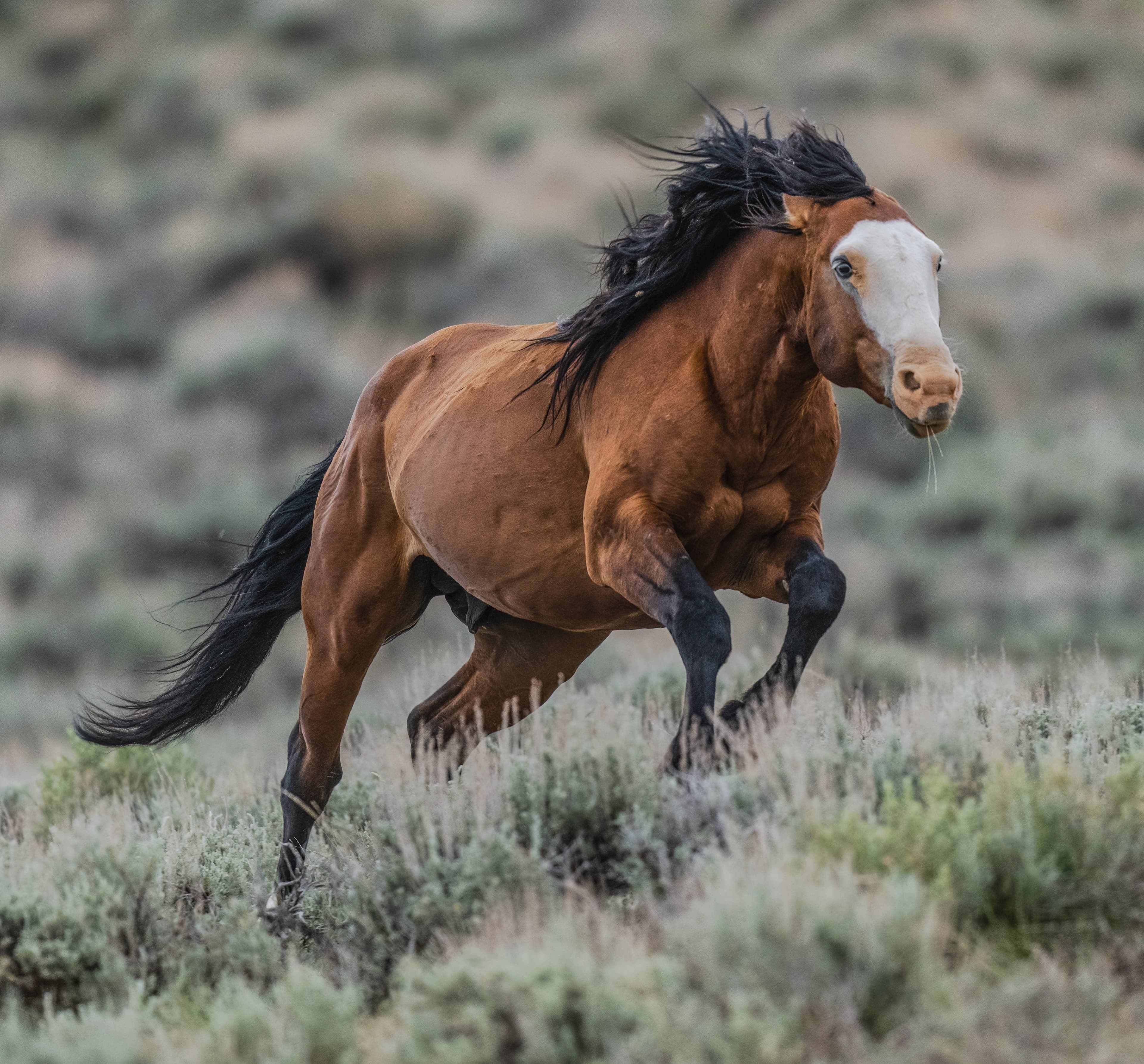
A decade ago, two mustang proponents helped form Friends of A Legacy (FOAL), the localadvocacygroup for the McCullough Peaks wild horses living on 110,000 federal acres. FOAL founders Marshall Dominick and Ada Inbody, both of Cody, will be recognized for their 10 years of service at FOAL’s Mustang Rendezvous on Sept. 12.
Both are proud of FOAL’s collaboration with the Bureau of Land Management, its progress with water projects, which benefit all wildlife, and thefertility controlprogram that promotes a sustainable herd size. Both also have a long history with horses, domestic and wild.
Dominick’s contact withmustangsbegan in 1959, when he and his three brothers received four stallions that were captured in the McCulloughs, before such activity was banned. After themustangswere gelded and trained, “they turned out to be wonderful mountain horses,” he said.
Fast forward to 1998 when Dominick’s wife Bettye presented him with adoption papers for twomustangsrounded up by theBLM. The one he trained now works on the dude string at his family’s 7D Ranch. That foray into horse-adoption became a habit.
The next year, following a McCullough Peaks roundup, they adopted fourmustangs. One became the lead horse for Dominick’s son, an outfitter then, while another, a perpetual bucker, became a “pasture ornament,” he said. The adoptions continued.
“We now are the proud owners of 14mustangs,” Dominick said.
WhenBLMwas planning another roundup in 2005 to reduce the herd that had grown to about 500, the Dominicks determined an organization might help the agency manage the horses. FOAL was born and became an official non-profit in 2006.
Soon after, FOAL purchased property 26 miles east of town, the present site of a trail with informational signs and the planned site of a building where the public can learn aboutmustangs.
Inbody also advocates public education about themustangs, so people are aware they exist and take a sense of ownership. WhileBLMoversees the range where they live and manages them, “I refer to them as our horses,” she added.
Inbody recalled exploring that landscape after her husband died.
Inbody then decided to volunteer withBLMto help the wild horses, and she ended up counting them as well as checking reservoirs. She has also provided data collection for 15 years.
She also reports about horses with problems.
One young one that she encountered, 4 days old, didn’t look as if he’d recover. He’d been abandoned, and Inbody suspected septicemia, a blood infection she’d seen on her family’s Oklahoma farm. “He has to see a vet today or he’ll die,” Inbody recalled thinking.
The colt was saved by a vet and moved to Inbody’s pasture. She named him TsunGaNi, a Cherokee word for most perfect and rode him for 15 years. Now he’s retired, “my pasture ornament,” she said.
From a passive volunteer, Inbody has become actively involved helpingBLMwith its fertility control program. Not only does she deliver the dose with a dart, but she also records all the information about the mares and knows all themustangs’ monikers.
Inbody hopes such collaboration withBLMcontinues in FOAL’s future. She also hopes FOAL will erect an interpretive center “to let people learn about and appreciate wild horses.”
IF YOU GO:
The second annual Mustang Rendezvous, FOAL’s fall fundraiser, will be 5-8 p.m. Saturday, Sept. 12, at the FOAL property 26 miles east of town. The event will feature a buffet by Hawg Heaven, live music by the Willwood Gypsies, games and a silent auction with a variety of items such as art, photographs, posters and books along with a private mustang tour and river floats.
Tickets are $40 adults, $20 children, available at Big Horn Basin chambers of commerce and online at the FOAL website.
Originally Posted By Cody Enterprise
Subscribe to our newsletter: