
NBC News: The True Cost of Wild Horse Roundups - Cruel or Necessary?
Roundups
Read time: 11 Minutes
Published: August 11, 2013
Written by:
AWHC Contributor
The majestic mustangs of the American West, symbols of freedom and strength, face a controversial fate. Wild horseroundups, conducted by the Bureau of Land Management (BLM), have sparked heated debates about their necessity and impact. This article delves into the heart of the issue, exploring the perspectives of both critics and supporters, and examining the future of these iconic animals.
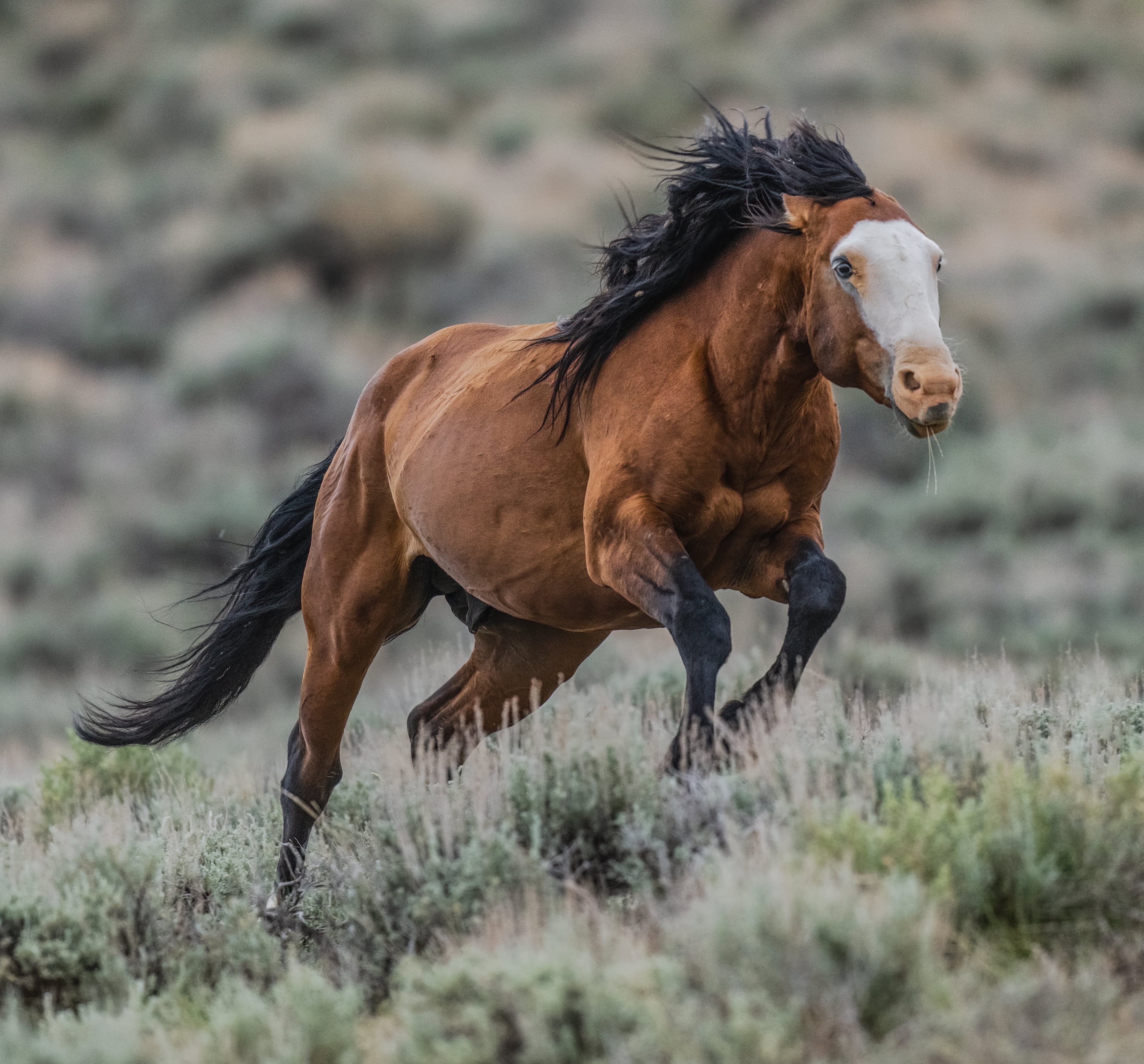
DELTA, Utah -- Themustangsrun with a spirit that makes them legendary here in the West. On a bitter cold morning, they descend from the Swasey mountains of central Utah and gallop for miles across the plains. Stallions and mares, beautiful and strong, guiding their young.
It’s an enthralling scene, but also one that infuriates many Americans. Thundering choppers overhead are driving the wild horses, many that appear terrified, toward a trap. For most, these are their final moments living wild and free.
A steel gate slams behind them. There is panic. Minutes later, families are split up, with males, females and their young eventually sent to separate holding facilities.
“I know how much they love their families and their freedom. And in an instant they lose both,” said Ginger Kathrens, a filmmaker who has documented wild horse herds.
This recent roundup ended a season of wild horse “gathers” in which the government captured and removed thousands ofmustangsfrom nearly 32 million acres of public land in 10 Western states.
Afterward, the Bureau of Land Management reported new numbers likely to shock many Americans unfamiliar with the economics and politics surrounding theroundups: A record number of wild horses – almost 50,000 – are now living in captivity, far more than the 32,000 left on the range.
Both critics and supporters of theroundupsagree on one thing: theBLM’s Wild Horse and Burro Program is “out of control” and heading for crisis. With adoption rates falling, its cost has doubled in a decade to $78 million this year. Even the government acknowledges “the current path is not sustainable for the animals, the environment or the taxpayer.”
“Theroundupsare devastating for the wild horses, being terrorized by helicopters and stampeded for miles,” saidSuzanne Roy, director of the American Wild Horse Conservation (formerly American Wild Horse Preservation), one of several groups fighting the roundup program. “It doesn’t make sense. It doesn’t work. It costs taxpayers money. It costs horses their freedom, sometimes their lives. It’s insanity.”
A Tug-of-War
TheBLM, which is responsible for protecting wild horses under federal law, rejects that charge, insisting theroundupsare “necessary and justified.”
Joan Guilfoyle, head of theWild Horse and Burro Program, says the wild horse population doubles every four years and needs to be thinned to preserve ecological balance on the public land.
“If we stopped gathering animals, the population would continue to grow and grow and grow and the rangelands would continue to be overgrazed,” she said.
TheBLMsays there are currently 7,831 "excess"mustangsand that the "appropriate management level," the number of wild horses which can be supported in official herd areas, should be only 23,622.
Roy and other advocates insist wild horse overpopulation is a “myth propagated by theBLMand thelivestockindustry.”
“The reality is that there are a small number of wild horses out there, fewer than 32,000, and there are millions of cattle and sheep,” she said. “We don’t have an overpopulation of wild horses. We have an overpopulation oflivestockon ourpublic lands.”
Roy’s group recently analyzed how the government allocated forage in 50 herd management areas where there have beenroundupsin the past three years. It found 82.5 percent was allocated tolivestock; 17.5 percent to wild horses.
Bob Edwards, who retired in 2005 after 30 years with theBLMmanaging wild horses and working as a natural resources specialist, agrees that the deck is stacked.
“The wild horses are not getting a fair shake,” he told NBC News, speaking out against theroundupsfor the first time. “I don’t think they have been given their proper place on the landscape in the American West.”
Guilfoyle argues that she must manage the land for “multiple uses,” including grazing for cattle, sheep and wildlife.
And Utah rancher Fred Tolbert, who pays theBLMfor permits to graze his cattle with wild horses, says the horses are overgrazing.
“I’m on the range and I see what the damage is,” said Tolbert, adding that he’d go out of business ifroundupsstopped. “… If my cows don’t calve, I don’t make any money. There’s no feed, they’re not gonna have calves.”
The National Cattlemen’s Beef Association also supports theBLMroundupsand calls for more “aggressive and increased use of long-term fertility control” to stabilize the population.
TheBLMcurrently devotes only 1.5 percent of its wild horse budget to “population suppression,” such as treating female horses with the contraceptivePZP. But the agency saysPZPworks for only about one year after it’s injected and “has not been as effective as we had hoped.” So most of the program’s budget goes to rounding up and permanently housing horses and burros, which are kept in separate facilities.
“It’s my observation that the government continually violates the provision of the act that requires humane handling of these animals,” said Laura Leigh of the advocacy group Wild Horse Education. Leigh has takenBLMto court four times and has won two temporary restraining orders in lawsuits she has filed against theroundups. “I feel that removing wild horses by helicopter stampede is inherently inhumane.”
Leigh says she has spent about 500 days observingroundups, living out of her truck, documenting injuries and even deaths with her cameras.One of Leigh’s videoshas been seen more than 2 million times on YouTube.
Criticism ofroundupsis not limited to wild horses. TheBLMalso annually removes "excess" wild burros from public lands, mainly in Arizona, Nevada and California. In this video, wild burro advocates document "aggressive" roundup practices. As with horse roundups, theBLMdefends the operations as humane and says such incidents are isolated and contrary to guidelines.
“I’ve seen broken legs,” Leigh said, standing outside aBLMholding facility in northern Nevada. “I’ve seen legs ripped up by barbed wire. I’ve seen horses kicked in the head. I’ve seen animals dragged by the neck with a rope. I’ve seen a helicopter hit horses.”
NBC News showed Guilfoyle, theBLMdivision chief, some videos taken by activists, including Leigh. Among other things, the videos showed a stallion trying to escape from a roundup nearly ripping off his leg, horses in a trap pen with gouged and bloody faces andBLM’s contractor wranglers repeatedly applying electric shocks to horses that wouldn’t move into a trailer.
“There are some very heartbreaking pieces in there, absolutely,” Guilfoyle said. But she characterized the injuries as accidents and “isolated incidents.” “They are still wild animals and accidents will happen,” she said.
BLMwild horse specialist Gus Warr questioned the editing of some of the activist videos.
“I would challenge … the stuff you see on YouTube because you’re not seeing the whole picture, that is the worst of the worst,” he said.
Despite such incidents,BLMreports “the mortality rate during wild horse and burro gathers is typically about 1 percent or less.” Among the common causes of deaths listed inBLMmortality reports: broken necks, head trauma and complications from the agency’s gelding of animals.
Critics say that many other wild horses die later of complications from theroundups, but theBLMattributes many of those deaths to pre-existing conditions.
BLM Reviews Roundup
TheBLMconducted its own review of the 2011 Triple B roundup in Nevada, assessing video shot by advocates and its own staff. The review found “aggressive loading procedures and excessive pressure by multiple handlers,” including:
- Helicopters pursuing horses too closely and for too long;
- Excessive and inappropriate use of electric prod, based on animal welfare experts’ review of the videos;
- Kicking, pinning horses in gates and twisting of tails during loading.
The review team generally found operations “were done in accordance with currentBLMpolicy,” but added: “External animal welfare experts, as well asBLMemployees, split on whether or not horses had been treated inhumanely.”
In January 2013, a federal judge issued a temporary restraining order halting another roundup after Leigh produced photos of aBLMhelicopter driving wild horses through a barbed wire fence at theOwyhee Complexroundup one month earlier.
Judge Miranda Du later lifted the order, but barred theBLMfrom using “hot shot/electric prod treatment” on weanlings and “rushed and aggressive loading tactics.” She alsoinstructed the bureau “to conduct the gather in a humane fashion,”not “in a manner where the horses are driven through barbed-wire fences.”
Thirteen days later, theBLMissued an internal memorandum “to ensure that the responsible and humane care treatment of WH&B (wild horses and burros) remains a priority for theBLMand its contractors at all times.” The document lists 24 “expectations” intended to reduce abuses atroundups.
But under the new guidelines: helicopters will still be able to hover over animals “when it is necessary,” electric prods can still be used on animals as a “last resort,” and wild horses will be treated “in a manner that is consistent with domesticlivestockhandling procedures.”
Deniz Bolbol, a spokeswoman for American Wild Horse Conservation (formerly American Wild Horse Preservation), called the memo a “charade” and said it is “the latest attempt by theBLMto weaken humane standards.” She also called the use of domesticlivestocktechniques a “significant step backward,” saying wild horses should be treated like wild animals, notlivestock.
As a result of its aggressive capture program, theBLMis running out of places to putmustangs. Long-term holding pastures in the Midwest are close to capacity. TheBLMadoption program tries to find homes for the younger horses and burros it removes from the wild, but the adoption rate is on the decline -- only 2,598 animals were placed last year.
TheBLM’s contracts for use of privately owned holding facilities for captured horses also have triggered disputes among neighboring property owners, who fear that, among other things, the wild horses could overgraze the land, leaving them to either escape or starve. (A Montana ranch owned by NBCUniversal CEO Stephen Burke is among several parties appealingBLMefforts to locate about 700 wild horses on a nearby ranch.)
The Slaughter ‘Solution’
Federal law actually provides a “solution” -- it allows the sale of wild horses by the government to citizens “without limitation,” including sale for slaughter.
So far theBLMhas taken a public stance against slaughtering the animals, but ranchers like Tolbert support the idea and say it would save taxpayers millions of dollars.
“Let ‘em go to slaughterhouse,” he said. “What value are they now? ... They’re a drain. They’re a negative.”
Guilfoyle said theBLMwould not consider allowing wild horses to be sold for slaughter: “We never have and never will.”
ButBLMrecords show the agency has considered slaughter as a way to solve the problem. In October 2012, the idea was floated again byBLMadvisory board member Jim Stephenson at a meeting in Salt Lake City: “The only real solution to this is to have a slaughter market,” he said.
In March, however,legislationknown as the Safeguard American Food Exports (SAFE) Act was introduced in both the U.S.Senateand House. If approved and signed into law, it would prohibit the knowing sale or transport of all horses (wild or domestic) "for purposes of human consumption."
Edwards, the formerBLMrangeland expert, said he thinks the days are numbered for wild horses in America. “I think what’s going to happen in the long run is that the wild horses will eventually be removed frompublic lands, which I think is a tragedy,” he said.
Filmmaker Ginger Kathrens, who has produced documentaries about wild horses, said, “TheBLMwould like to see wild horses gone, because with no wild horses, end of problem. ... Wild horses will be managed to extinction.”
ButBLMprogram chief Guilfoyle insists that, despite the criticism and controversy, “We will always have wild horses and burros out there. That’s our job. We care about them and we’re going to do our best to have them out there forever.”
Back in Utah, meanwhile, 160mustangschased out of the Swasey mountains by choppers this year will likely spend the rest of their lives in holding pens, eating hay at taxpayer expense, wild -- but not free.
Originally Posted By NBC News
Subscribe to our newsletter: