
Neguse and Colleagues Urge Pelosi to Halt Harmful Wild Horse Roundups
Media Publicity
Read time: Five Minutes
Published: November 30, 2020
Written by:
AWHC Contributor
In a significant move for wild horse conservation, 22 members of Congress, including Representative Joe Neguse, have penned a letter to House leadership advocating for humanefertility controlmethods over harmfulroundups. This initiative aims to protect wild horses in Colorado and across the West.
A Nov. 25letterfrom 22 members ofCongress, including House Representative Joe Neguse, urges House leadership to consider a more “humane and sustainable” practice offertility controlfor wild horses in Colorado and across the West.
Neguse, who represents Vail, EagleVail, and parts of Avon in the U.S.House of Representatives, co-sponsored a bipartisan wild horse protection amendmentin Julywhich directs the federal Bureau of Land Management to use at least $11 million of its annual wild horse program budget onPZPfertility programs for wild horses, a fertility-control vaccine given to female horses on the range through an injection via remote darting.
But the U.S.SenateAppropriations Committee, on Nov. 10, insteadadded more fundingto the Bureau of Land Management’s horse roundup program, which involves the controversial drive-trapping method of chasing wild horses into pens using helicopters. The horses are then separated from their herd-families and held in expensive holding facilities.
According to aSept. 16 reportfrom Bureau of Land Management, 71% of the more than $87 million that had been spent on the Wild Horse and Burro Program in 2020 was used to conductroundupsand place horses in holding facilities, and none of that budget was spent onPZP, Porcine Zona Pellucida.
The letter is addressed to Rep. Nancy Pelosi, speaker of theHouse of Representatives; Rep. Nita Lowey, chairwoman of the Appropriations Committee, and Rep. Betty McCollum, chairwoman of the Interior and Environment Appropriations Subcommittee.
Proposal for Colorado
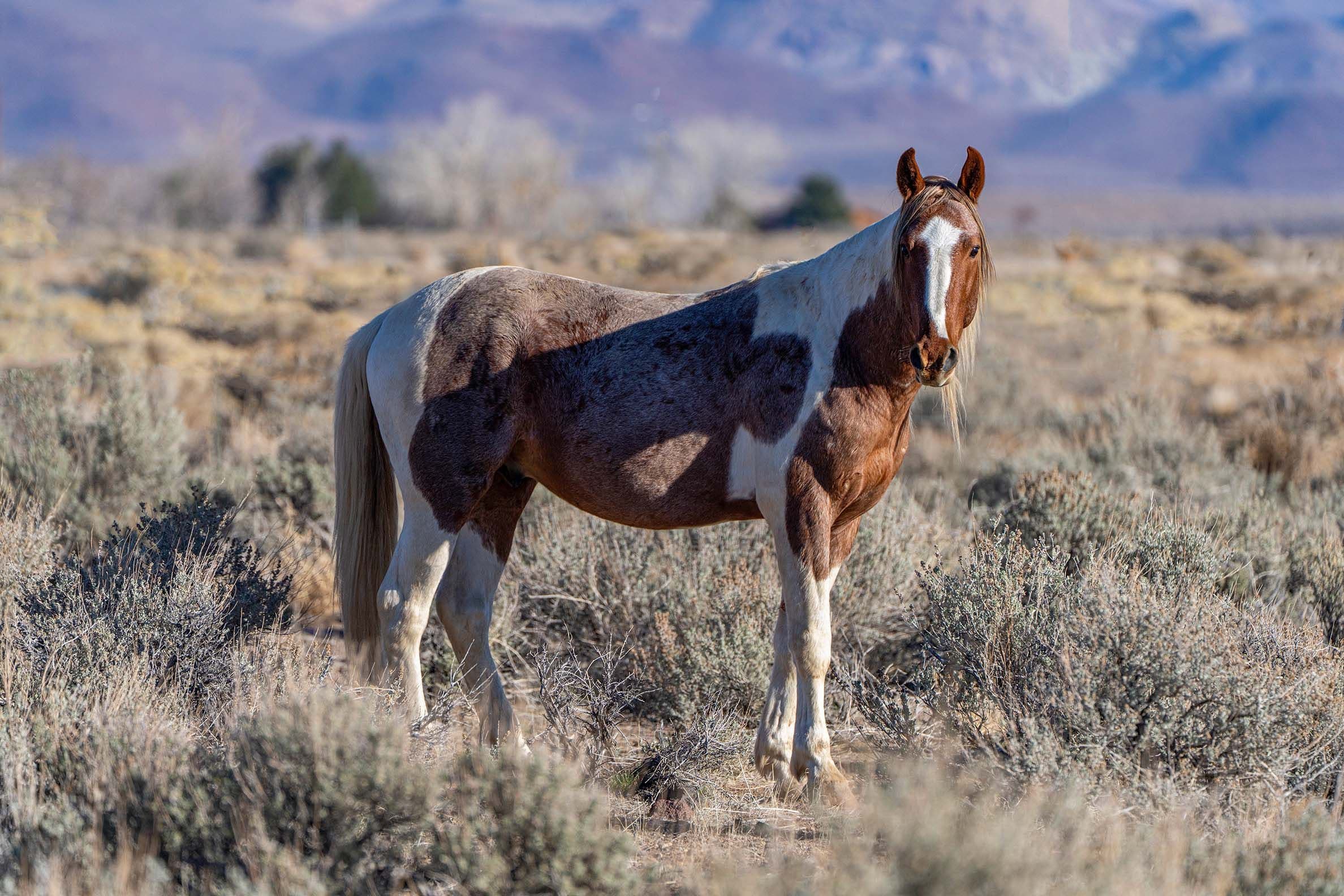
In Colorado, theBureau of Land Management estimatesroughly 2,100 wild horses are roaming onpublic lands.
The bureau says a more appropriate level of horses, based on the available range land, would be closer to 800. Bureau of Land Management range land available to wild horses has shrunk from 723,095 acres in the early 1970s to 365,988 acres now.
TheBLMhas proposedthe use of helicopter, fixed wing aircraft and other motorized vehicles to track, inventory, gather and transport wild horse and burro herds throughout Colorado in 2021, but will first have a public hearing on the matter to receive comments from citizens.
An in-person public hearing was originally scheduled to take place at theBLM’s White River field office on Nov. 19 but has been postponed in order to reduce the risk of the spread of COVID-19.
“The hearing will be rescheduled and may be held virtually at a later date,” said Benjamin Gruber, acting deputy state director of resources.
Gruber says the use of motorized vehicles and aircraft helps theBLMto “efficiently monitor and manage wild horse populations.”
“The more efficiently we can do our job, the more effective we can be at protecting and preserving these iconic animals,” Gruber said.
But wild horse advocates like the Colorado-based Cloud Foundation say the Bureau of Land Management’s use of helicopters to gather and remove wild horses is cruel to the animals, which see high mortality rates during the operations.
“I have viewed horses when they take them off the range, in short-term holding, some of the babies had been running so long and hard, their hoofs had literally disintegrated,” Bolbol said.
Accepting comments until Dec. 23
In theBLM’s 190,000-acre Piceance-East Douglas Herd Management Area (and surrounding lands) in northwestern Colorado, the bureau estimates there are nearly 1,000 more wild horses than the agency has deemed appropriate for the area.
Bolbol told the Vail Daily the Bureau of Land Management’s idea of healthy range lands has been influenced by area ranchers, who don’t want profitable livestock like sheep and cattle to lose range land to wild horses.
The Bureau of Land Management aims to confine wild horses to herd management areas onpublic lands, as opposed to the larger herd areas where horses have been identified.
The Bureau of Land Management has released an environmental assessment on the Piceance-East Douglas Herd Management Area, analyzing potential wild horse removals inside the area that could occur over the next several years, which “may use helicopters and/or bait trapping,” according to theBLM. “Fertility controltreatments would also be introduced to help reduce annual population increases, without which, herd numbers increase by approximately 20% each year in the Piceance-East Douglas Herd Management Area.”
The public can comment on the assessment until Dec. 23 by viewing it athttps://go.usa.gov/x7fcQor submitting written comments to the White River Field Office at 220 East Market St., Meeker, CO, 81641.
Utah roundup underway
On Saturday, theBLMbegan a helicopter roundup operation to gather 500 horses frompublic landsin Utah. The effort is expected to run through Dec. 13 and is taking place on the Confusion Herd Management Area.
The population growth suppression method the Bureau of Land Management intends to use, according to the American Wild Horse Conservation (formerly American Wild Horse Campaign), is known as an ovariectomy procedure and involves “a veterinarian manually reaching into the mare’s abdominal cavity via the vaginal canal, blindly locating the ovaries then using a rod and chain device called an ecrasuer to sever and remove the ovaries.”
The American Wild Horse Conservation (formerly American Wild Horse Campaign) also added that in 2013, the National Academy of Sciences concluded: “The possibility that ovariectomy may be followed by prolonged bleeding or peritoneal infection makes it inadvisable for field application.”
In May, the American Wild Horse Conservation (formerly American Wild Horse Campaign) completed the first year of aPZPfertility controlprogram in Nevada. Deemed “highly successful” by the campaign, an estimated 690 births were prevented at a cost of $182,000.
Originally posted by Vail Daily
Subscribe to our newsletter: