
New Data Reveals Ineffectiveness of Wild Horse Roundups
Press Releases
Read time: Four Minutes
Published: April 13, 2022
Written by:
AWHC Contributor
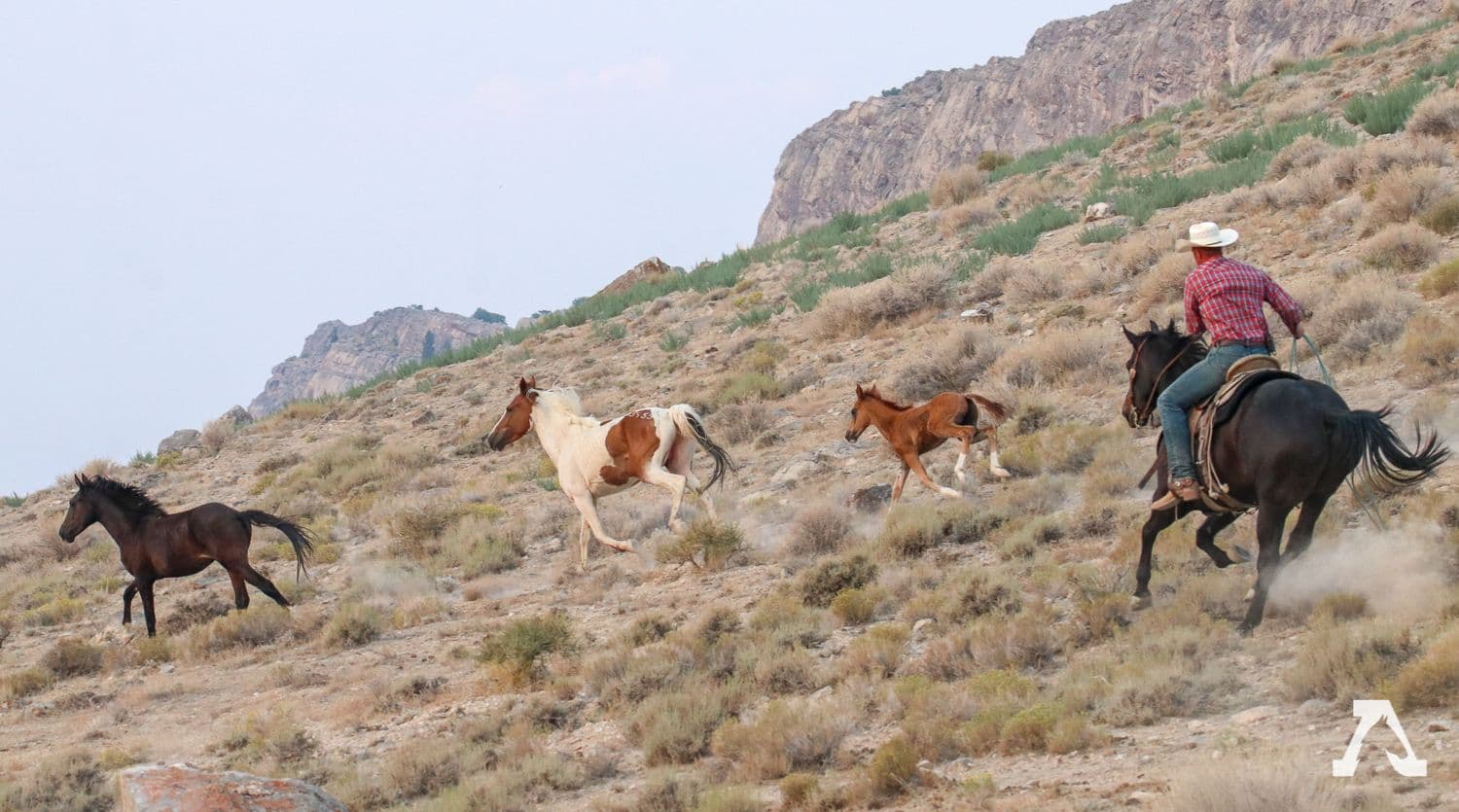
WASHINGTON (April 13, 2022)— The Bureau of Land Management (BLM) has released its 2022 wild horse and burro statistics, revealing a population of 82,384 animals. This marks a decline of less than 4,000 despite the roundup and removal of over 13,000 federally protected animals from the wild last year.
The agency’spress releasehighlights the removal of 50,000 wild horses since 2018. However, its own data shows that there were 82,000 wild horses and burros onpublic landsin 2018, indicating that the population has remained stable despite efforts to drastically reduce numbers. Over the past four years, theBLM's focus on removals has cost taxpayers $369 million and resulted in the highest number of wild horses in off-range holding facilities in history.
TheAmerican Wild Horse Conservation (formerly American Wild Horse Campaign)(AWHC) argues that these numbers demonstrate the federal program's fiscal and animal welfare failures, as it continues to rely on costly, inhumane, and ineffectiveroundupswhile ignoring scientifically recommended birth control as a humane and cost-effective solution.
“The vast majority of Americans want our iconic wild horses and burros protected on our Westernpublic lands,” said Suzanne Roy, executive director for AWHC. “But the federal government continues to pursue the most inhumane, expensive, and least effective method for managing them: capture, removal, and warehousing of these wild free-roaming horses in taxpayer-funded holding facilities.”
AWHC points to a report commissioned by theBLMfrom the National Academy of Sciences (NAS), entitled, “Using Science to Improve the BLM Wild Horse and Burro Program,” which found that roundups and removals cause wild horse populations to grow at higher than normal rates due to a biological phenomenon called compensatory reproduction. The NAS recommended that theBLMpursue fertility control as an alternative to ineffective and costly roundups.
“Theroundupsare like a bandaid on a gunshot wound. They don’t work,” Roy continued. “The agency is on a treadmill that it will never get off without investing infertility controlto address reproduction humanely on the range.”
AWHC also challenges theBLM’s claim that wild horses are overpopulating the West. The animals are present on just11 percent of the landthe agency manages and are outnumbered50-1 by commercial livestock. AWHC noted that theBLM’s desired population limit for wild horses and burros – 17,000-25,000 – is not based on science,according to the NAS. By comparison, 1 million elk live in the ten western states where wild horses and burros are found.
“Westand with the Sierra Cluband numerous other environmental organizations that have challenged this administration for scapegoating wild horses for environmental damage caused by massive commerciallivestockgrazing on ourpublic lands,” Roy concluded.
AWHC is lobbying for dedicated funding for humane fertility control implementation and supportsRepresentative Dina Titus’ (D-Nev) 2022 Wild Horse Protection Actto prohibit the use of helicopters to capture wild horses. AWHC has documented stress, injury, and death associated with helicopterroundupsand is working to conserve wild horses and burros onpublic landswhere they belong.
About the American Wild Horse Conservation
TheAmerican Wild Horse Conservation (formerly American Wild Horse Campaign)(AWHC) is the nation's leading wild horse protection organization, with more than 700,000 supporters and followers nationwide. AWHC is dedicated to preserving the American wild horse and burros in viable, free-roaming herds for generations to come, as part of our national heritage. In addition to advocating for the protection and preservation of America's wild herds, AWHC implements the largest wild horsefertility controlprogram in the world through a partnership with the State of Nevada for wild horses that live in the Virginia Range near Reno.
###
Subscribe to our newsletter: