>
stories
>
on world donkey day awhc advocates for burros & supports congressman don beyers ejiao act 8196
On World Donkey Day, AWHC Advocates for Burros and Supports Congressman Don Beyer’s Ejiao Act
Press Releases
Read time: Three Minutes
Published: May 8, 2024
Written by:
amelia perrin
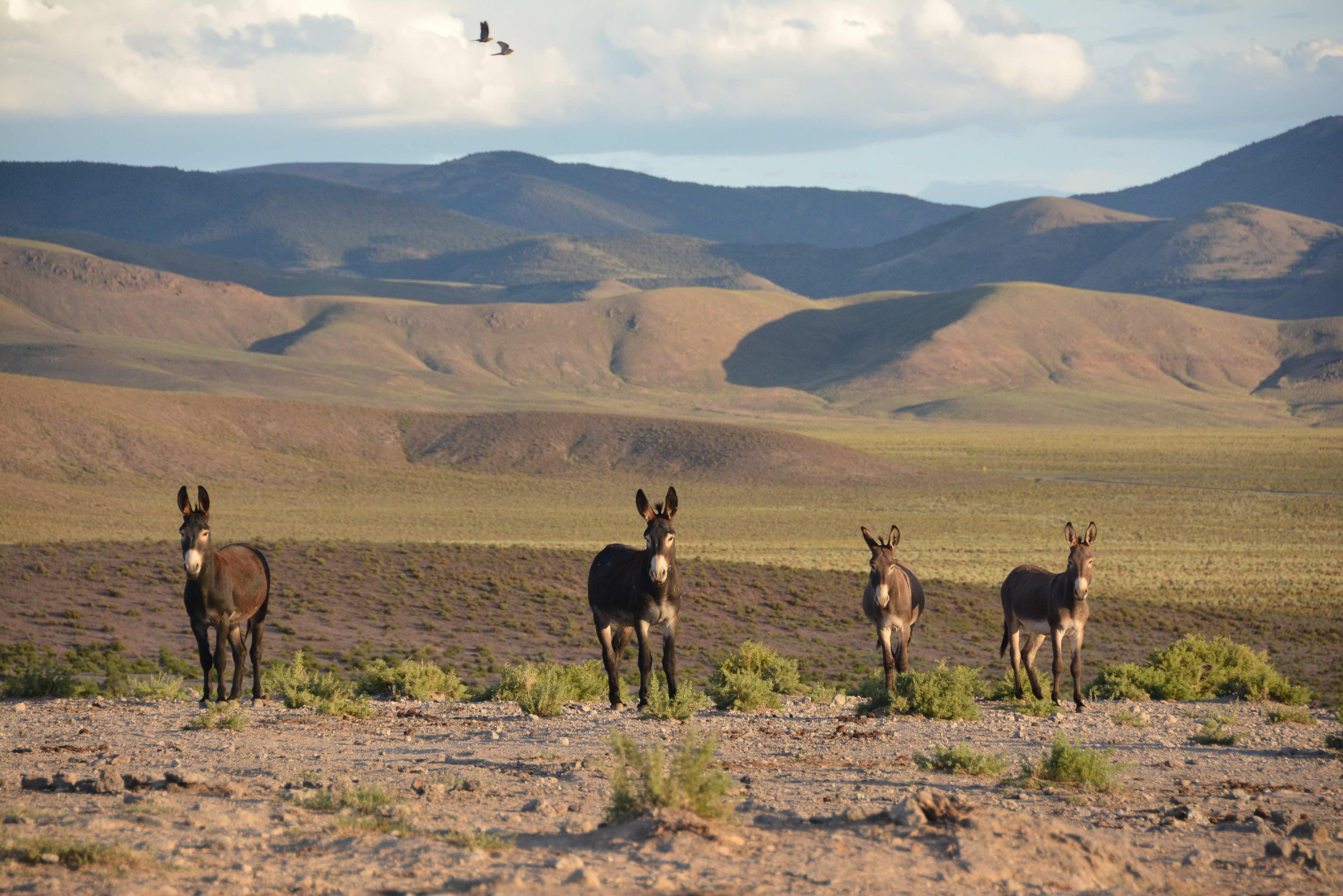
On World Donkey Day, AWHC Calls for Support for Burros and Congressman Don Beyer’s Ejiao Act-H.R. 6021.
Washington, DC (May 8, 2024) – On World Donkey Day, May 8th, the nation’s leading wild horse and burro conservation organization,American Wild Horse Conservation (AWHC)is leading a national Day of Action to support both wild burro and global domestic donkey populations.
This Day of Action comes as the Bureau of Land Management (BLM) plans to round up over 1,600wild burrosfrom their natural habitats this summer. The captured animals will be funneled into an overburdened holding system, where 64,000 wild horses and burros already languish.
Wild donkeys, or burros, are at risk of entering the slaughter pipeline, thanks to theBLM’s Adoption Incentive Program (AIP). The AIP was exposed by theNew York Timesas a pipeline to slaughter for “truckloads” of animals.
Further, donkeys and burros are especially at risk of being slaughtered in foreign slaughter plants for the production of ejiao, gelatin made from boiling donkey skins.
Globally, 4.8 million donkey hides are consumed yearly for the ejiao trade. At this rate, half of the world’s donkeys could be decimated in a few years. Further, the United States is the third largest importer of products made with ejiao, with $12,000,000 in annual imports.
To combat this, Representative Don Beyer (D-VA) has introducedH.R. 6021, which would prohibit the transportation, sale, and purchase of donkeys or donkey hides for the purpose of producing ejiao and prohibit the transportation, sale, and purchase of products containing ejiao, and for other purposes.
“The international trade in ejiao, a gelatin derived from donkey hide, devastates global donkey populations. As the third largest importer of ejiao products, the United States significantly fuels this demand for donkey skins.Congressshould take action to halt all importation of those products into this country,” said Rep. Beyer. “The effects of the ejiao trade reverberate throughout global communities, impacting those who depend on donkeys for their livelihood. It’s time to help shut down this inhumane trade, which leads to substantial harm to humans and animals worldwide.”
“We are witnessing an increase in the number ofwild burrosentering the slaughter pipeline due to the federal government’s extensive roundup and removalpolicyand its incentivized adoption program,” said Suzanne Roy, executive director of American Wild Horse Conservation. “Instead of putting federally protectedwild burrosat risk of entering trades like the ejiao, the federal government must invest in scientifically proven, humane methods of in-the-wild conservation for our beloved burro populations.”
Supporters are encouraged to voice support forwild burroson social media – (#KeepWildBurrosWild and #SaveOurBurros) and sign their names toAWHC’s lettercalling onCongressto support H.R. 6021.
About American Wild Horse Conservation
American Wild Horse Conservation (AWHC) is the nation's leading nonprofit wild horse conservation organization, with more than 700,000 supporters and followers nationwide. AWHC is dedicated to preserving the American wild horse and burros in viable, free-roaming herds for generations to come, as part of our national heritage. In addition to advocating for the protection and preservation of America's wild herds, AWHC implements the largest wild horse fertility control program in the world through a partnership with the State of Nevada for wild horses that live in the Virginia Range near Reno.
###
Subscribe to our newsletter: