
Oregon Wild Horse Roundup Spurs Debate
Roundups
Read time: Five Minutes
Published: November 20, 2015
Written by:
AWHC Contributor
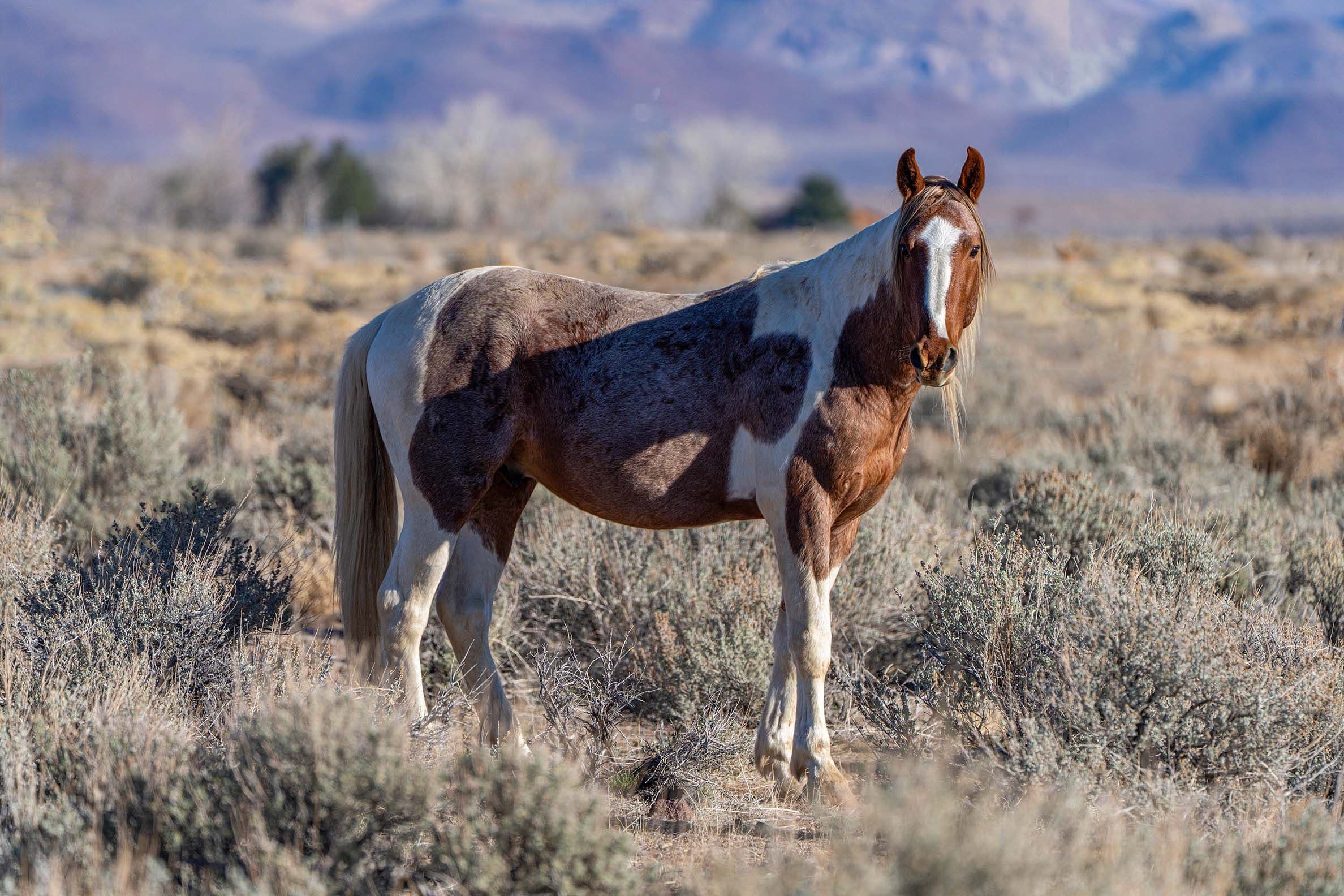
About 1,400 wild horses are currently being gathered via helicopter from Oregon’spublic landsin an area known as Beaty’s Butte on Oregon’s east side. Wild horse advocates are questioning the management of the area and what will ultimately happen to themustangsonce they have been removed from the range.
Historical Significance of Beaty's Butte
The Beaty’s Butte herd is where Oregon’s famous Kigermustangswere first found, and horses with Spanish mustang characteristics are still found there, according to the Bureau of Land Management’s (BLM) information on the herd management area (HMA). It is believed that Spanish-type mustangs such as the Kigers are descended from the horses brought to the Americas by the Conquistadors.
Current Roundup Details
According to Larisa Bogardus with theBLM, 888 horses have been captured as of Nov. 14. The gather contract concludes at the end of November, Bogardus tellsEW, and then next year or the following year “bait trapping” the horses with salt and water will begin. Bogardus says there have been nine horses euthanized for reasons such as blindness, lameness, and clubfoot, with veterinarians from theUSDA’s Animal and Plant Health Inspection Service making the determinations.
TheBLMplans to capture 1,500 horses and ultimately leave around 100 horses on the land, which is located about 65 miles from Lakeview and covers more than 400,000 acres. Darla Clark of Strawberry MountainMustangs, an all-breed horse rescue and rehab center, says she doesn’t think such low numbers constitute a sustainable breeding stock, and there’s no reason for such small numbers on such a large HMA.
Concerns Over Management Practices
Clark says, “TheBLMhas some protocol issues they need to address, and until then there’s no reason for us to be paying for that many horses standing in long-term holding.” She points to a federal investigation in October that revealed theBLMhad not followed the federal wild horse and burro law when it sold around 1,700BLMmustangsto a Colorado rancher who admitted most of them went to slaughter.
TheBLM“also failed to follow its ownpolicyof limiting horse sales and ensuring that the horses sold went to good homes and were not slaughtered,” the report says.
Bogardus says the horses that have been gathered are sent each day to corrals in Hines, near Burns, Oregon, and Palomino Valley, Nevada, where they will be made available for adoption. TheBLM’s news release adds that horses might be sent to a permanent holding facility.
According to theBLM’s statistics, there are currently more than 47,000mustangsin its long-term holding facilities.
Environmental and Ethical Implications
TheBLMcites the recent drought and overgrazing by the horses as among the reasons for the gather, and that the wild horse numbers are above the designated management levels for the area. Bogardus says the horses that have been gathered are in “pretty good shape, not emaciated or starved, but we don’t want them to reach that point either.”
Scott Beckstead, Oregon director for the Humane Society of the United States, says that “HSUS remains committed to the idea wild horses need to be managed on the range, and roundups need to stop.” He says it’s time that theBLM“gets serious” about usingfertility controlon the horses.
Bogardus says 60 stallions and 40 mares will be allowed to remain at Beaty’s Butte. The mares will be periodically gathered and treated with Porcine Zona Pellucida (PZP), a 22-month anti-fertility vaccine.
Allegations and Accusations
Deniz Bolbol of the American Wild Horse Conservation (formerly American Wild Horse Preservation) alleges that by allowing the horse numbers to build up on the range and in holding facilities, theBLMis “intentionally creating a crisis on and off the range and trying to set up the stage to have the horses in holding sent to slaughter.”
According to Bolbol, the roundup is being conducted to make room for cattle grazing, an accusation theBLMhas denied. She observed some of the gather and says the areas she was in did not look overgrazed.
“The very foundation ofpublic landsmanagement is unfair,” Bolbol says, criticizing the low fees private ranchers pay to graze their cattle onpublic lands, including those shared by wild horses.
The AWHC says that the “Beaty’s Butte Grazing Association — including its president — market their beef through a cooperative called Country Natural Beef, which is a major provider of beef to Whole Foods Market,” and alleges that the roundup is in response to pressure from the grazing association. Bolbol says the wild horse group is asking Whole Foods to “adopt a mustang-safepolicy” for its meats.
Whole Foods' Position
Michael Silverman, a spokesman with Whole Foods Market, says, “This is a complex issue, and we believe that the best way to reach a compromise is for the activists, ranchers, and government officials involved on the ground to meet face-to-face to ensure all sides are heard and that all parties can collaborate on a solution.”
Silverman says that Whole Foods also encourages people to express their concerns to theBLM.
Originally Posted By Eugene Weekly
Subscribe to our newsletter: