
PEER Report Reveals Livestock Outnumber Wild Horses and Burros 125:1
Livestock
Read time: Four Minutes
Published: December 16, 2022
Written by:
AWHC Contributor
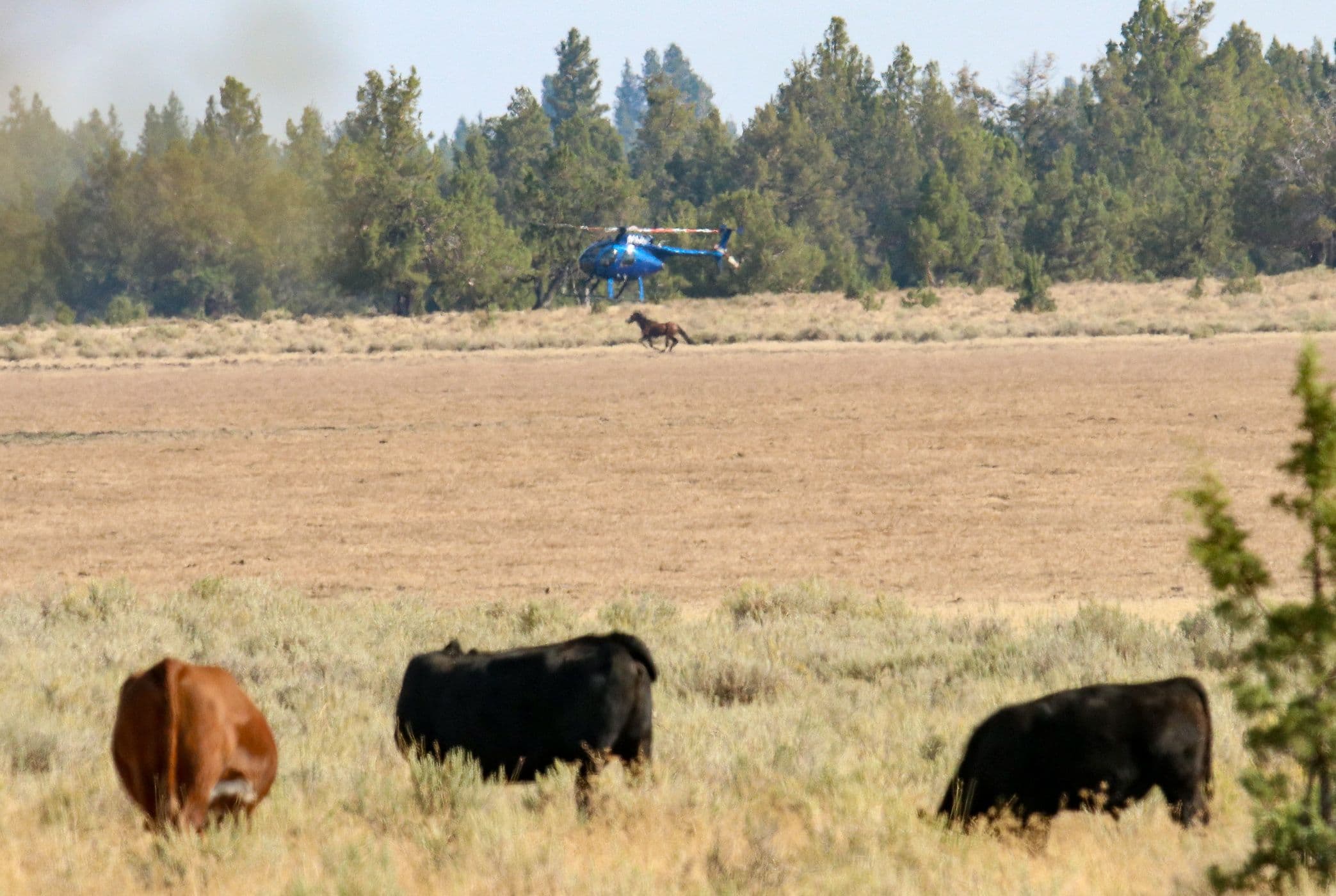
In a revealing report by Public Employees for Environmental Responsibility (PEER), it was found thatlivestockoutnumber wild horses and burros on public lands by more than 125:1. This finding challenges the Bureau of Land Management's (BLM) narrative that wild horses and burros are the primary cause of rangeland degradation. The report highlights significant discrepancies inBLM's land management practices and data transparency.
PEER Data Overview
In March 2022, usingBLM's rangeland assessment data from 1997 to 2019, PEER published aninteractive mapdepicting range conditions on 21,000 grazing allotments covering 155 million acres of public lands in the West. “BLMis required to conduct assessments about every 10 years, but this target has never been met,” said Chandra Rosenthal, Rocky Mountain Office Director for PEER. “Many have never been formally assessed by the agency since the requirement went into effect in 1997.” In fact, PEER’s map shows that 27% of all grazing allotments - over 40 million acres - have never been assessed.
BLM Allotment Data Not Available to the Public
PEER’s map reflects all records received via Freedom of Information Act (FOIA) requests fromBLMas of 2020. Significantly, the agency does not maintain grazing allotment land health standards evaluation records in electronic format or in any centralized location. Nor does the agency track the actual number of acres that fail federal land health standards. Rosenthal told American Wild Horse Conservation (formerly American Wild Horse Campaign) that the process for obtaining these records is time-consuming. “BLMrangeland assessments are on paper and kept in filing cabinets,” she explained. “The [BLM] National Operations Center has to request [from] each field office that they compile their most recent records and submit them to the state office, where they are compiled and sent back to the National Operations Center.” PEER analyzed the data in 2021 and published the map the following year.
BLM Rangeland Management Practices Promote Double Standard
In November 2022, PEER took a deeper dive into the data to get a clearer picture of wild horse and burro impacts on the range. DespiteBLMand ranchers’ claims that wild horses and burros are primarily responsible for range degradation, this is not what the data show. “The key finding is that wild horses are responsible for a failing allotment less than 1% of the time compared tolivestock,” explained Rosenthal. Yet, in most cases, wild horses and burros are the first to be removed from the range ifBLMdetermines the range is degraded.
“The key finding is that wild horses are responsible for a failing allotment less than 1% of the time compared tolivestock,” explained Rosenthal.
This double standard was abundantly clear in Colorado in 2022. TheBLMused drought conditions as a reason why wild horses in the Piceance-East Douglas Herd Management Area would be removed but, reported PEER, the agency neglected to issue an official nationwide or statewide drought call, which requires a reduction oflivestockon the range.
PEER's Recommendations
Rosenthal told American Wild Horse Conservation (formerly American Wild Horse Campaign) that the report raises many questions, including why the agency continues to spend millions of taxpayer dollars on wild horse management and comparatively little on similar management oflivestock. “I'm not saying that wild horses don’t have impacts on the land,” she explained. “But,livestockgrazing really seems to be the area that would make some big changes if [BLM] would make some management decisions.”
PEER’s recommendations include:
- Improve the grazing database and make it accessible
- Complete and update land health standard assessments
- Use the data to make land use decisions
- Prioritize biodiversity, including the greater sage grouse
- Use agency data to evaluate wild horse/burro impacts on the land compared to livestock.
Subscribe to our newsletter: