
>
stories
>
piceance east douglas creek hma north piceance ha & west douglas creek ha wild horse roundup
Piceance-East Douglas Creek HMA, North Piceance HA, and West Douglas Creek HA Wild Horse Roundup Reports
Roundups
Read time: 15 Minutes
Published: August 5, 2026
Written by:
AWHC Contributor
Welcome to our roundup reporting page for the Piceance-East Douglas Creek Herd Management Area and the North Piceance and West Douglas Creek Herd Areas in western Colorado, where you will find eyewitness reports, photographs, and videos as the Bureau of Land Management carries out one of the largest scheduled wild horse removals of the 2026 roundup season.
The BLM has scheduled the combined operation for August 2 through August 31. Across the three areas, its plan calls for gathering approximately 1,025 wild horses and permanently removing 1,011. Only ten horses are scheduled to receive fertility control, and just 14 are expected to be returned to the range. Because West Douglas Creek is classified as a Herd Area and is not managed for a permanent wild horse population, none of the horses captured there are planned for return to the range.
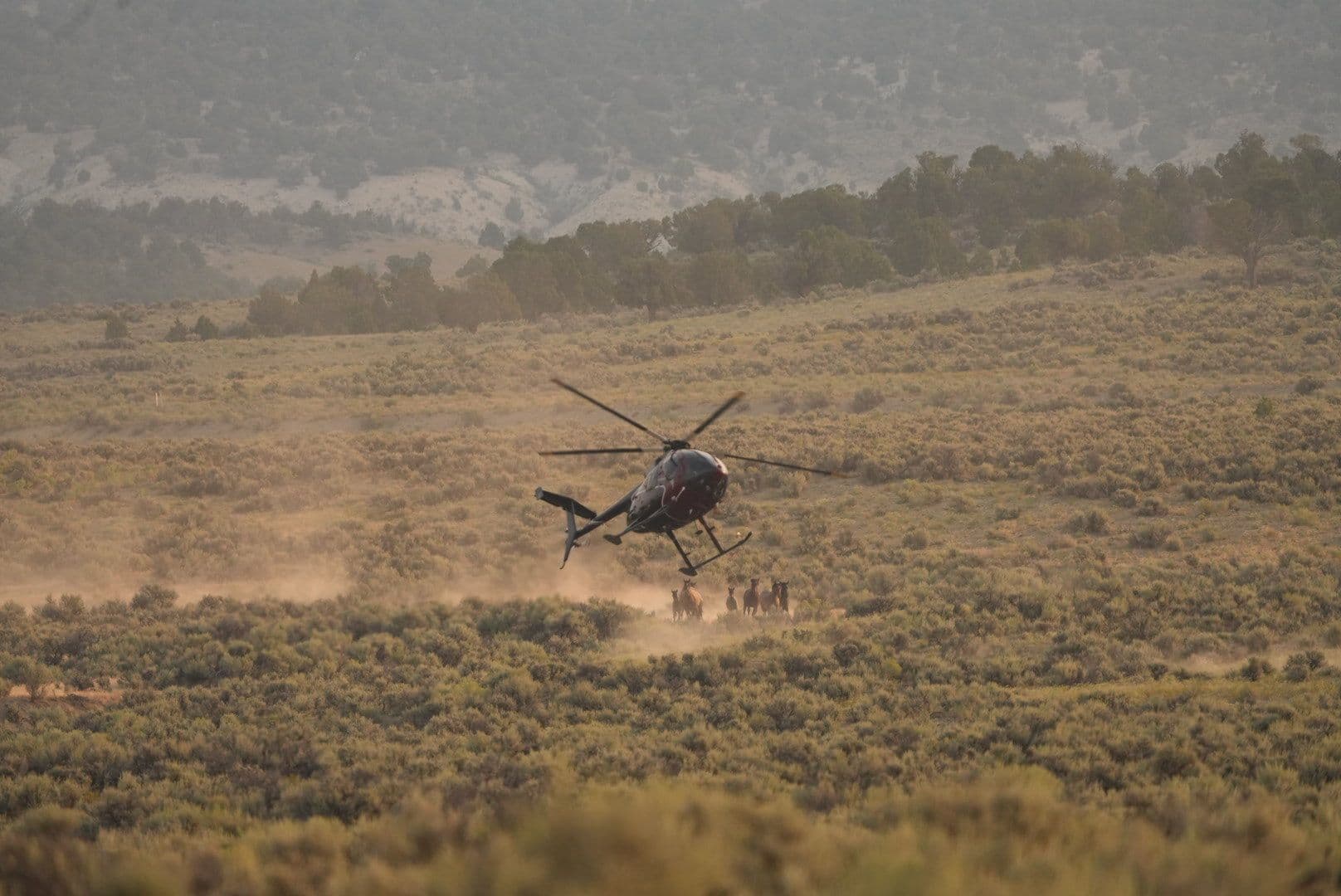
Conducted using helicopters, the roundup will separate family bands and remove more than 1,000 wild horses from the landscape. Most captured horses will be transported into the federal holding system rather than returned to their public-land habitat.
Our field observers will attend the operation whenever access is provided to witness helicopter drives, monitor horse welfare, document conditions, and provide the public with independent reporting.
This page will serve as a living record of the roundup. Throughout the operation, we will publish daily totals, photographs, videos, and observations from the field so the public can follow events as they unfold.
We hope these reports bring greater transparency to the large-scale removal of wild horses across these neighboring public-land areas and strengthen the call for humane, science-based management that prioritizes keeping wild horses free on the range.
The Piceance-East Douglas HMA and West Douglas HA Roundup is complete.
There were 9 deaths.
Final numbers:
As of Sept. 2, 2026
Animals Gathered: 894 wild horses (355 stallions, 368 mares, and 171 foals)
Animals Shipped: 880 (345 stallions, 365 mares, 170 foals)
Animals Released: 0
Deaths: 9
Day 32 - 9/2/26
Animals Shipped: 38 (38 stallions, 0 mares, 0 foals)
Animals Treated with Fertility Control: 0
Animals Released: 0
Day 31 - 9/1/26
Animals Shipped: 50 (0 stallions, 38 mares, 12 foals)
Animals Treated with Fertility Control: 0
Animals Released: 0
Day 30 - 8/31/26
Animals Gathered: 11 (4 stallions, 4 mares, 3 foals)
Animals Shipped: 0
Animals Treated with Fertility Control: 0
Animals Released: 0
Deaths: 1
Adult bay mare died unexpectedly, likely heart disease or failure.
AWHC did not have an observer onsite today.
Day 29 - 8/30/26
Animals Gathered: 21 (7 stallions, 9 mares, 5 foals)
Animals Shipped: 0
Animals Treated with Fertility Control: 0
Animals Released: 0
Deaths: 1
Adult bay mare humanely euthanized due to pre-existing condition - fractured left scapula, unable to maintain or improve.
Observation was not allowed by BLM today.
Day 28 - 8/29/26
Animals Gathered: 3 (1 stallion, 2 mares, 0 foals)
Animals Shipped: 0
Animals Treated with Fertility Control: 0
Animals Released: 0
Deaths: 0
BLM reports operations started around 6:30 a.m. and concluded around 11 a.m. and that weather was windy and rainy.
Day 27 - 8/28/26
Animals Gathered: 0
Animals Shipped: 0
Animals Treated with Fertility Control: 0
Animals Released: 0
Deaths: 0
BLM states operations ran from 6:30am to 12:30pm and reports no horses captured.
AWHC did not have an observer onsite today.
Day 26 - 8/27/26
Animals Gathered: 15 wild horses (9 stallions, 4 mares, and 2 foals)
Animals Shipped: 1 foal
Animals Treated with Fertility Control: 0
Animals Released: 0
Deaths: 0
From 6:00am to 1:00pm, BLM captured just 15 horses.
Another single foal shipped.
AWHC did not have an observer onsite today.
Day 25 - 8/26/26
Animals Gathered: 2 wild horses (1 stallion, 1 mare, and 0 foals)
Animals Shipped: 0
Animals Treated with Fertility Control: 0
Animals Released: 0
Deaths: 0
From 6:30am to 1:00pm, BLM captured just 2 horses.
AWHC did not have an observer onsite today.
Day 24 - 8/25/26
Animals Gathered: 7 wild horses (2 stallions, 4 mares, and 1 foal)
Animals Shipped: 0
Animals Treated with Fertility Control: 0
Animals Released: 0
Deaths: 0
From 6:30am to 1:30pm, the BLM captured just 7 horses.
AWHC did not have an observer on site today.
Day 23 - 8/24/26
Animals Gathered: 16 wild horses (9 stallions, 6 mares, and 1 foal)
Animals Shipped: 34 (34 stallions, 0 mares, 0 foals)
Animals Treated with Fertility Control: 0
Animals Released: 0
Deaths: 1
Adult bay stallion humanely euthanized due to pre-existing condition - acquired physical defect; neck injury that did not heal properly, unable to maintain or improve.
AWHC did not have an observer onsite today.
Day 22 - 8/23/26
Animals Gathered: 11 wild horses (6 stallions, 3 mares, and 2 foals)
Animals Shipped: 45 (0 stallions, 26 mares, 19 foals)
Animals Treated with Fertility Control: 0
Animals Released: 0
Deaths: 1
Acute/unexpected: Colt found deceased at temporary holding.
BLM did not allow observers today.
Day 21 - 8/22/26
Animals Gathered: 22 wild horses (8 stallions, 10 mares, and 4 foals)
Animals Shipped: 1 (1 foal)
Animals Treated with Fertility Control: 0
Animals Released: 0
Deaths: 0
BLM did not allow observers today.
Day 20 - 8/21/26
Animals Gathered: 17 wild horses (6 stallions, 7 mares, and 4 foals)
Animals Shipped: 0
Animals Treated with Fertility Control: 0
Animals Released: 0
Deaths: 0
BLM continues to capture small numbers of horses.
AWHC did not have an observer present today.
Day 19 - 8/20/26
Animals Gathered: 15 wild horses (10 stallions, 4 mares, and 1 foal)
Animals Shipped: 40 wild horses (27 stallions, 13 mares, and 0 foals)
Animals Treated with Fertility Control: 0
Animals Released: 0
Deaths: 0
No observers were allowed by BLM today.
Day 18 - 8/19/26
Animals Gathered: 27 wild horses (8 stallions, 13 mares, and 6 foals)
Animals Shipped: 0
Animals Treated with Fertility Control: 0
Animals Released: 0
Deaths: 0
Observers were at the same trap site again today approximately ¼ mile from the trap.
During the third run, two horses were captured while a third horse escaped to the east. A fourth horse was seen evading as well.
There were four runs for 27 horses today.
Day 17 - 8/18/26
Animals Gathered: 25 wild horses (8 stallions, 12 mares, and 5 foals)
Animals Shipped: 45 horses (0 stallions, 26 mares, and 19 foals)
Animals Treated with Fertility Control: 0
Animals Released: 0
Deaths: CATEGORY NOT REPORTED BY BLM so we assume zero deaths.
Observers were placed at the same observation site as yesterday.
The pilot brought 3 horses in during the first run, but there was a three hour gap until the next run came in with 9 horses and a tiny foal, all looking tired. The time gap seems to indicate they were brought quite a distance.
Almost two hours later the third run came in with 8 horses, slow and tired.
A fourth run completed the day.
Day 16 - 8/17/26
Animals Gathered: 22 wild horses (6 stallions, 11 mares, and 5 foals)
Animals Shipped: 40 horses (27 stallions, 13 mares, and 0 foals)
Animals Treated with Fertility Control: 0
Animals Released: 0
Deaths: CATEGORY NOT REPORTED BY BLM
Observers could not see the trap or the wings at all.
During the first run, one horse broke away and was not pursued and a group of six horses evaded the helicopter.
Two and a half hours later, 6 horses were brought in, visibly tired with a foal falling behind.
A third run brought in 6 more horses.
Temperature reading at the observation site vehicle was 101 degrees. BLM reported 92.4 degrees.
Day 15 - 8/16/26
Animals Gathered: 43 wild horses (18 stallions, 18 mares, and 7 foals)
Animals Shipped: 0
Animals Treated with Fertility Control: 0
Animals Released: 0
Deaths: 0
No observers were allowed by BLM today.
Day 14 - 8/15/26
Animals Gathered: 23 wild horses (14 stallions, 5 mares, and 4 foals)
Animals Shipped: 47 (0 stallions, 25 mares, 22 foals)
Animals Treated with Fertility Control: 0
Animals Released: 0
Deaths: 1
Yearling cremello colt humanely euthanized due to pre-existing condition - eye abnormality/blindness.
No observers were allowed by BLM today.
Day 13 - 8/14/26
Animals Gathered: 15 wild horses (9 stallions, 4 mares, and 2 foals)
Animals Shipped: 39 (25 stallions, 14 mares, 0 foals)
Animals Treated with Fertility Control: 0
Animals Released: 0
Deaths: 0
No observers were allowed by BLM today.
Day 12 - 8/13/26
Animals Gathered: 15 wild horses (9 stallions, 4 mares, and 2 foals)
Animals Shipped: 39 (25 stallions, 14 mares, 0 foals)
Animals Treated with Fertility Control: 0
Animals Released: 0
Deaths: 0
No observers were allowed by BLM today.
Day 11 - 8/12/26
Animals Gathered: 51 wild horses (18 stallions, 22 mares, and 11 foals)
Animals Shipped: 39 (39 stallions, 0 mares, 0 foals)
Animals Treated with Fertility Control: 0
Animals Released: 0
Deaths: 1
Adult bay stallion humanely euthanized due to pre-existing condition - physical deformity, unable to maintain or improve.
There were seven runs today.
Body scores were reported by BLM to be 3-4, but our observer was seeing scores looking to be closer to a 5. Observers are unsure who is scoring the conditions.
Two horses were roped during the last run.
Day 10 - 8/11/26
Animals Gathered: 36 wild horses (15 stallions, 13 mares, and 8 foals)
Animals Shipped: 45 (0 stallions, 29 mares, 16 foals)
Animals Treated with Fertility Control: 0
Animals Released: 0
Deaths: 0
The observation site was quite close at about 400 yards. They were then told they needed to be moved. Observers protested and pointed out they were next to the highway, where vehicles were being driven, so their vehicles were no different and it was a public state highway outside their jurisdiction. BLM acknowledged that unless the highway was closed, they did not have jurisdiction, and they were allowed to stay.
The second run was a group of 5 that had split off earlier, and the still evaded capture. The jute wings were extended.
During the third run a horse avoided the trap or fell behind. Four wranglers went out but came back without the horse. It is unknown if it was an adult or foal.
During the fourth run, two of four horses being brought in broke off.
Operations ended at about 11:45am.
Day 9 - 8/10/26
Animals Gathered: 38 wild horses (15 stallions, 16 mares, and 7 foals)
Animals Shipped: 42 (26 stallions, 16 mares, 0 foals)
Animals Treated with Fertility Control: 0
Animals Released: 0
Deaths: 0
Observers were placed quite close to the trap approximately ¼ mile away. There was no dust abatement during the first run but some dust abatement was done between following runs.
After the second run, they pursued 3 horses for a while, but eventually abandoned the effort.
There were five runs total, bringing in a total of 38 horses.
Day 8 - 8/9/26 - No observers allowed by BLM due to “staffing shortage”, and no transparency to ongoing operations.
Animals Gathered: 67 wild horses (30 stallions, 28 mares, and 9 foals)
Animals Shipped: 41 (0 stallions, 24 mares, 17 foals)
Animals Treated with Fertility Control: 0
Animals Released: 0
Deaths: 2
-Adult bay stallion humanely euthanized due to pre-existing condition - physical deformity, unable to maintain or improve.
-Adult bay stallion humanely euthanized due to pre-existing condition - physical deformity, unable to maintain or improve.
Day 7 - 8/8/26 - No observers allowed by BLM due to “staffing shortage”, and no transparency to ongoing operations.
Animals Gathered: 35 wild horses (16 stallions, 12 mares, and 7 foals)
Animals Shipped: 37 (26 stallions, 11 mares, 0 foals)
Animals Treated with Fertility Control: 0
Animals Released: 0
Deaths: 0
Day 6 - 8/7/26 - No observers allowed by BLM due to “staffing shortage”, and no transparency to ongoing operations.
Animals Gathered: 48 wild horses (16 stallions, 21 mares, and 11 foals)
Animals Shipped: 87 (26 stallions, 39 mares, 22 foals)
Animals Treated with Fertility Control: 0
Animals Released: 0
Deaths: 0
Day 5 - 8/6/26 - No observers allowed by BLM due to “staffing shortage”, and no transparency to ongoing operations.
Animals Gathered: 41 wild horses (15 stallions, 19 mares, and 7 foals)
Animals Shipped: 1 (0 stallions, 0 mares, 1 foal)
Animals Treated with Fertility Control: 0
Animals Released: 0
Deaths: 1
*Adult gray mare with acute fatal injury during trailer transport.
Day 4 - 8/5/26
Animals Gathered: 41 wild horses (21 stallions, 10 mares, and 10 foals)
Animals Shipped: 40 (26 stallions, 14 mares, 0 foals)
Animals Treated with Fertility Control: 0
Animals Released: 0
Deaths: 0
Observers were placed about three-quarters of a mile from the trap. They could not see the trap itself. There was not dust abatement done.
The first run brought in 7 horses. Minutes later 3 horses with the same coat color were seen running in the direction of observation from the direction of the trap. One had a clear limp/injury. It is unknown if these are the same horses from the run and they escaped or not.
Just after 9:00am, three observers arrived and walked in front of the observers’ cameras, some actively recording. They were not introduced but later observers were told they were the BLM State Director, the State veterinarian, and someone from the County.
A white horse ran back and under the helicopter and away during the 2nd run. The helicopter pursued for about 30 minutes and 3 horseback riders went out.
The third run resulted in a roped foal and a white horse chased on horseback.
During the fourth run a foal was separated and adults ran out of the trap. The helicopter regrouped them and brought them in.
Another white horse was chased, but evaded the trap and ran to the trees. Shortly after, a lone gray horse was chased close to the trap then just let go.
Fifteen minutes later 3 horses, including a foal, were chased but changed direction and evaded the trap. The helicopter did not pursue.
Over the course of the dayl, horses were pushed too fast, foals fell behind, horses were run but then not pushed into the trap.
The observer’s onsite air temperature sensor was reading 105 degrees by end of operations. BLM stated the temperature was 89 degrees.
Day 3 - 8/4/26
Animals Gathered: 52 wild horses (23 stallions, 22 mares, and 7 foals)
Animals Shipped: 86 (26 stallions, 40 mares, 20 foals)
Animals Treated with Fertility Control: 0
Animals Released: 0
Deaths: 0
BLM confirmed that one mare jumped the trap panels yesterday and escaped.
There were seven runs bringing in smaller groups of horses today.
Observers are still denied access to temporary holding due to the owner of private land owner claiming liability issues, however a local wild horse org was given access. They made suggestions on what horses to release but those suggestions were not implemented.
Temperatures peaked alarmingly high as read by our observers at 105 in the sun on a new thermometer with high accuracy reviews. This would be in direct violation of CAWP standards. Observers notified BLM staff that temps were reading that high. They stated that BLM was monitoring temperature readings but from a nearby weather station rather than at the trap site itself, which is where temps are typically recorded. BLM reports operations were stopped at 94.2 degrees.
Day 2 - 8/3/26
Animals Gathered: 84 wild horses (23 stallions, 40 mares, and 21 foals)
Animals Shipped: 80 (25 stallions, 37 mares, 18 foals)
Animals Treated with Fertility Control: 0
Animals Released: 0
Deaths: 0
The day started out less dusty as they had put water down, however as the day went on the dust increased and got bad again. It was also very smoky from wildfires in the state, raising questions about the safety and health of the horses running and breathing hard in the smoke.
After 7 runs, operations ended at 11:48am and by BLM’s reporting, the temperature was 95.2 degrees, adding extreme heat to the smoky and dusty conditions. Foals were noted to have fallen behind during runs, and were continued to be pushed into the trap.
Advocate observers were again denied viewing of short term holding, while it was stated that journalists/media might be allowed. That decision was questioned and observers were told they would receive a text letting them know if they might be allowed. After waiting more than an hour in the heat, only the journalist who had been there received a text.
Day 1 - 8/2/26
Animals Gathered: 96 wild horses (35 stallions, 43 mares, and 18 foals)
Animals Shipped:
Animals Released:
Deaths:
-Sudden / Acute:
-Pre-existing / Chronic:
The wings of the trap were visible from the observation site, though a mile away. There were 6 runs which brought in an estimated 100+ horses (pending BLM number confirmation.) Visibility was very poor when running horses in with the helicopter from very dusty conditions. The day ended when temperatures reached 93 degrees.
During observation, dozens of cattle passed through the observation area.
Observers were not allowed to visit the temporary holding, as it was placed on private instead of public land, and they were told the owner doesn’t want the public on the property. This seems easily avoidable by simply placing temporary holding on public land.
This roundup is following a similar situation at the Callaghan HMA, with “scheduled” observation days. During the other days, the roundup will continue with no public viewing and no transparency. The reason stated is a shortage of personnel.
Related Tags:
Subscribe to our newsletter: