
Protected Wild Horses Dying for Ranchers’ Profit
Wild Horse Management
Read time: Four Minutes
Published: April 22, 2015
Written by:
AWHC Contributor
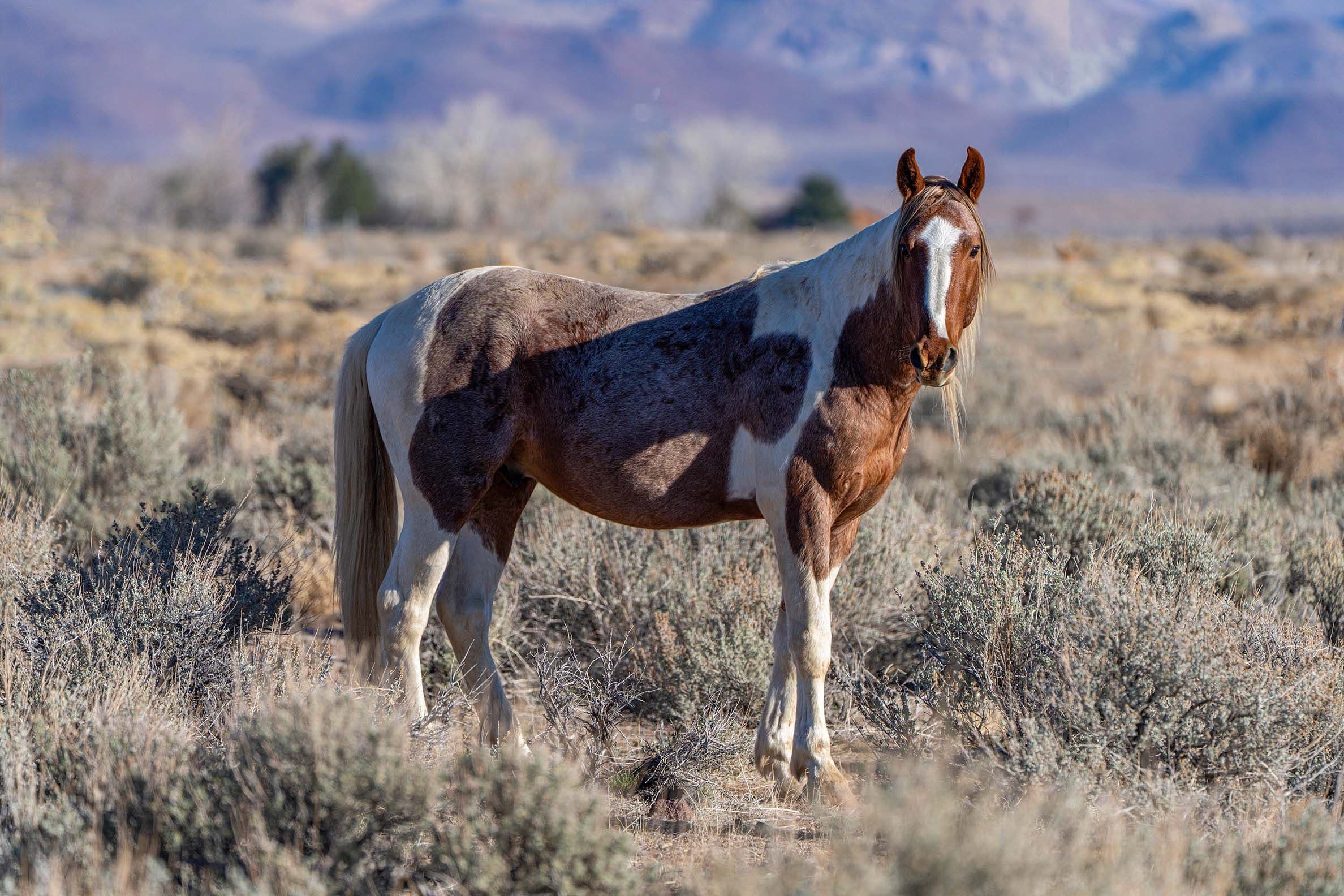
Wild horses, long an inspiring symbol of the American West, are under attack and about to be dragged away by a group of ranchers in Utah. Earlier this month, U.S. District Court Judge Dee Benson ruled that a case brought by the ranchers seeking to eliminate around 1,350 protected wildmustangs, which they claim have become a nuisance, can go forward.
They allege that the Bureau of Land Management, who is responsible for the land and native horse herds in question, hasn’t properly kept the population under control. The ranchers claim that this overpopulation has led to reduced grazing for theirlivestockin the area around Cedar City, which is located in the southern part of the state and is home to a large portion of the state’s wild horse herds. The catch, however, is that the land they’re describing as being overrun isn’t exactly their own property—it’s public land, which they lease at a taxpayer subsidized discount of 1/12ththe market rate to graze their privatelivestockon.
Should the suit prevail, the animals will face an uncertain future.
“They round them up with helicopters,” Roy explains. “They drive them into traps. They separate them from their families. You know, wild horses are very social animals, they live in social bands mostly consisting of a stallion, his mares, and their offspring. They throw them into holding pens, where they’re either put up for adoption if they’re under age ten or, if they’re over age ten, they can beput up for auctionfor as little as $25 apiece.”
According to Roy, horses that aren’t sold or adopted wind up in “warehouse pastures,” living out the rest of their days on the taxpayer’s dime as opposed to roaming free—and free from cost—on their native land. She estimates there are currently more wild horses in warehouse pastures than there are roaming free in the U.S.
And, Roy notes, conditions can be less than ideal while the noble creatures await their fate.
“TheBLMwill say, ‘Oh, we only have a 1 percent death rate from the round up.’ But then they never tell you what happens in the pens in the days and the months after they’re rounded up, and a lot of them die from traumatic injuries,” she says.
The Wild Free Roaming Horse and Burro ActpassedbyCongressin 1971 declares “wild free-roaming horses and burros shall be protected from capture, branding, harassment, or death.” Wild horses are typically docile animals that pose no threat to humans unless aggressively approached.
Sadly, according to documents obtained by the American Wild Horse Conservation (formerly American Wild Horse Campaign) under the Freedom of Information Act, a round-up of wild stallions in Wyoming similar to the one the Utah ranchers seek has thus far led to the death in captivity of some 75 animals, from reasons including “neck, brain, spinal, leg, pelvis sudden injury” (22 deaths) and a variety of other causes, including at least one case of “trauma to penis.”
Roy says that almost 80 percent of the forage goes tolivestock.
The irony of the ranchers looking to push the protected horses from their own, federally protected habitat for personal benefit hasn’t been lost, with arecord-setting35,000 Americans filing public comments on the case in favor of the horses. And, while the case will be moving forward, Roy is optimistic.
“In Nevada, a similar suit was filed and we intervened in that case, and the judge granted our motion to dismiss,” she says. “So we don’t think the ranchers in Utah are on strong legal ground.”
The Bureau of Land Management had not returned multiple requests for comment as of this writing.
Originally Posted By The Daily Beast
Subscribe to our newsletter: