
Q&A on the Dangerous Plan for Wild Horses & Burros
Press Releases
Read time: 12 Minutes
Published: September 29, 2019
Written by:
AWHC Contributor
(September 30, 2019)
Q: What happened last week in the Senate?
A:The Senate Appropriations Committee approved $35 million in additional funding to theBLMWild Horse and Burro Program for a mass mustang roundup and warehousing plan promoted by thelivestockindustry, along with the HSUS, ASPCA, and Return to Freedom.
On September 26, 2019, the Senate Appropriations Committee passed the Interior, Environment and Related Agencies Fiscal Year 2020 Appropriationsbill. The bill includes a $53 million increase to the Bureau of Land Management’s (BLM’s) overall budget. Inreport languageaccompanying the bill, the Senate directs that $35 million of that increase be directed to the agency’s wild horse and burro program. The nearly 40% increase to theBLM’s Wild Horse and Burro Program is directed toward accelerated roundups accompanied by “population growth suppression” on wild horses that remain on the range.
The funding increase was requested and intensively lobbied by the Humane Society of the U.S. (HSUS), the ASPCA, and Return to Freedom, as part of their compromise with thelivestockindustry on wild horse management issues. That compromise is outlined in a plan dubbed the“Path Forward For Management for BLM’s Wild Horses and Burros,”which is also endorsed by the National Cattlemen’s Beef Association, the American Farm Bureau Federation, and other commerciallivestockinterests that seek to maximizesubsidizedcattle and sheep grazing on public lands.
TheSenate’s $35 million increase is a significant increase over the $6 million appropriated in the House version of the bill, whichpassed the full House in June.
Q: What’s Next?
A:There’s a long process ahead before this becomes law - if it ever does.
The next step for theSenateInterior Appropriations bill is a vote on the floor of the fullSenate. Following that, the bill would go to a conference committee, where designated members of both the House and theSenateiron out differences between the two bills and negotiate the contents of the final spending bill. This process may never happen, however, sinceCongressmay choose to fund the government in FY20 by passing a Continuing Resolution (CR) instead of a spending bill. A CR would extend FY 2019 spending levels and restrictions into the new fiscal year, which begins October 1, 2019.
Even if the bill becomes law, theBLMwill have many hurdles to cross before implementing acceleratedroundupsand inhumane management tools like surgical sterilization.
Q: What is the “Path Forward”?
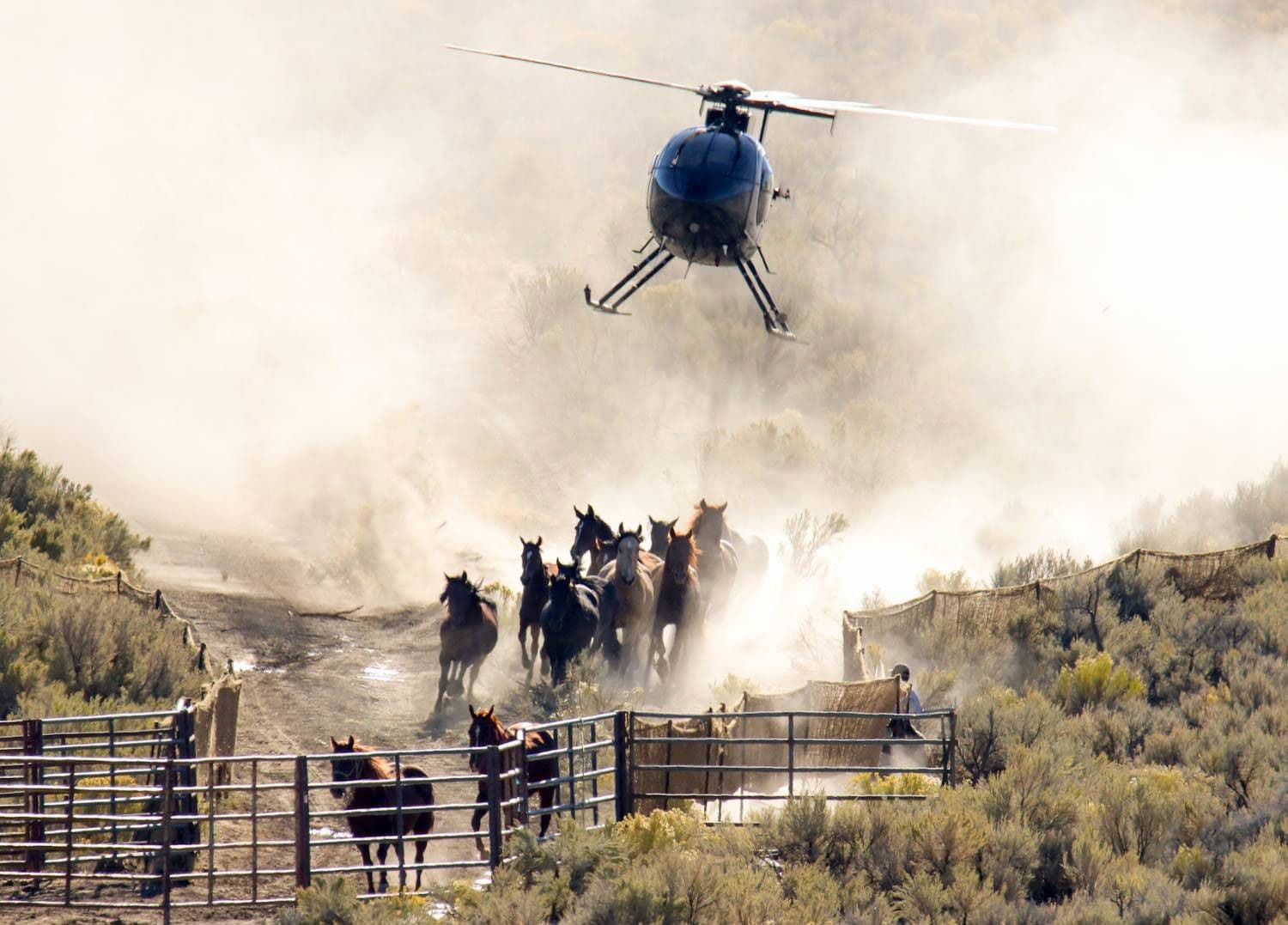
A:It’s a so-called compromise that would reduce wild horse and burro populations by 70% over the next ten years through large-scaleroundups.
The “Path Forward” plan is an inside-the-beltway deal cut by the Humane Society of the United States, the ASPCA, Return to Freedom, the American Mustang Foundation—a new organization formed by lobbyists with connections to Western politicians—andlivestockindustry lobbying groups for the management of wild horses and burros onBLMland.
The plan was developed without input from boots-on-the-ground individuals and groups actively engaged in managing wild horses on the range and isopposed by the majority of organizationsworking to protect wild horses and burros in the West.
Q: What’s in the Plan?
A:The plan has these components.
- Roundup and removal of 15,000-20,000 horses and burros per year for three years, and 5,000-10,000 horses and burros per year for the remaining 7 years of the 10-year plan. In total, as many as 130,000 wild horses and burros—more than even exist today on the range—would be removed frompublic landsover the next decade.
- “Population Growth Suppression” methods on horses who remain wild, with no restrictions on the type of methods that can be used. While HSUS/ASPCA/RTF say that the plan does not allow for surgical sterilization methods such as theovariectomy via colpotomyprocedure on wild mares that theBLMis planning, other signatories to the plan say overtly that additional funds will be used to sterilize wild horses on the range.
- Nearly tripling the number of wild horses and burros in holding pens and pastures with only a one-year ban on slaughter and no guarantee of funding for their lifelong care.
- Reductions of wild populations to less than 27,000, or the number that existed in 1971 whenCongressprotected them because they were “fast disappearing.”
- Sex ratio skewing to create populations with 7 stallions to every 3 mares—an unheard-of manipulation of a wildlife population that will destroy their social structure and create havoc and aggression on the range.
Q: What’s Wrong with the Plan?
A:The plan accepts thelivestockindustry’s premise that wild horse populations are wildly overpopulating the range. It omits any consideration of the vastly larger numbers oflivestockin mustang habitat and onpublic landsin general.
The plan lacks any consideration of the following key facts:
- Wild horses and burros are dwarfed in number and habitat area by commerciallivestock, which have a massively larger impact on grazing land in the West.
- Forage allocations for commerciallivestockvs. protected wild horses and burros within designated habitat is grossly inequitable. Currently, wild horses occupy just 17% ofBLMland grazed by livestock, but 80% of the available forage in designated wild horse habitat is allocated to commercial livestock.
- Assertions of “overpopulation” are based entirely on theBLM’s unscientific AMLs (population limits), which the National Academy of Sciences has called “not transparent to stakeholders, supported by scientific information, or amenable to adaptation with new information and environmental and social change.”
- Reduction of wild horse populations to the AML of less than 27,000 will create subpopulations so small that they will be unsustainable due to lack of genetic viability.
- Holisticsolutionslike higher AMLs, habitat adjustments and improvements, grazing buyouts, protection of predators, in addition to population growth suppression methods, which are essential parts of any solution to the wild horse issue.
Q: The HSUS, ASPCA and RTF say it’s a non-lethal plan. Is that true?
A:No. The long-term risk of slaughter is actually increased by this plan.
The new plan makes wild horse slaughter more likely as thousands more wild horses will be added to holding facilities.
The bill language provides only a one-year prohibition on slaughter. However, as the plan is implemented and holding pens and pastures swell with tens of thousands more horses and burros, increased pressure will be placed on an already stressed system of warehousing horses and burros without any consideration of the future.Congresswill tire of paying a bill for the care, as the price tag grows toward $1 billion over the 10 years of the plan.
Even ifCongressdoes not legalize slaughter outright, the sheer number of horses and burros in holding will undoubtedly lead the agency to take steps to reduce numbers through policies that make it easier to move horses out of holding. Expect further relaxing of sales and adoption policies and pursuit of an internationalpolicythat would allow for the shipments of horses and burros out of the country to destinations where their welfare will be impossible to ensure. These measures will make it easier for wild horses and burros to slip through the cracks into the slaughter pipeline, and for situations like the agency’s 2012 illegal sale of over 1,700 wild horses to a known kill buyer to recur.
Q: They also say that it’s a fertility control plan. Is that true?
A:Quite the opposite.Fertility controlis not required as part of the plan.
While those groups clearly hope thatBLMwill utilize humane fertility control, there is nothing to guarantee that outcome. In fact, theBLMstill maintains thatPZPfertility control—the best and most humane method available—is useful in only limited situations and the agency continues to press for “spaying” mares (via a dangerous surgery to remove their ovaries).
From the language being promoted:
The language does not require the use ofPZP. The vague nature of the plan leaves the door open for the agency to pursue other methods. Keep in mind that words like humane are not defined and therefore the agency is able to determine whether an option is humane and proven based on its own criteria.
Q: Why would those groups support the plan?
A:Different endorsers of the plan have different motivations.
For thelivestockindustry, the plan maximizes profits as the large numbers of horses removed from the range are replaced by cattle and sheep. TheAmerican Mustang Foundationstands to make millions through holding contracts for the warehousing of up to 50,000 wild horses.
For the HSUS/ASPCA and RTF, the situation is more complex. At a basic level, striking this “compromise” has allowed these groups to curry favor with House andSenateappropriators by giving them a “plan” to “solve” a contentious issue and appease the powerfullivestocklobby while appearing to help wild horses. The ASPCA and HSUS are not wild horse protection organizations and they lobby for a range of issues that affect both domestic and wild animals. It’s not beyond the realm of possibility that these groups “horse traded” our wild horses for appropriators’ support for other animal issues they work on.
The groups say that they have developed models for managing wild horses withPZPfertility control that show mustang populations can only be managed at very low numbers. However, these models have never been published or peer-reviewed, or even released publicly. And as stated above, other solutions have been left off the table by these groups for whom appeasement of thelivestockindustry seems to be a top priority.
Q: What are our next steps?
A:Now that the lines have been drawn, we willjoin with like-minded organizationsin continuing to fight to keep America’s wild horses and burros wild and free on ourpublic lands.
Here’s how we’ll do it:
1. Fight them in Court
We’ll continue to carefully review every environmental assessment that theBLMissues related to wild horse and burro management to make sure that protections are included in accordance with the Wild Horse Act, and that the agency does their due diligence under the National Environmental Policy Act for each action. When the agency falls short, we will be there to challenge them. Our legal team has already established important legal precedent establishing that theBLMis not required to conduct roundups when populations exceed the AML, and that the agency has discretion to manage herds in a variety of ways that do not involve removal. AWHC and our coalition partners The Cloud Foundation and the Animal Welfare Institute havetwice gone to courtto stop theBLMfrom proceeding with its plan to “spay” mares with a cruel and risky surgical method. If the plan is funded, we’ll need to beef up our litigation program to meet the new challenges ahead.
2. Fight them in Congress
In the coming weeks, we’ll be working with open-minded legislators to expose the flaws in the “Path Forward” plan. We’ll also be letting Congress know where Americans stand on the protection of wild horses and burros on ourpublic lands. And, we’ll be working in Nevada in a stakeholder process led by Sen. Masto to develop a plan to manage wild horses in that state where over half of America’s remaining mustangs live. Working with our local coalition partners, our voice will be essential in this process. Our strong advocacy for the preservation of wild horses and burros on ourpublic landsprovides a critical counterbalance to the HSUS/ASPCA/RTF ten-year agenda of massroundupsand radical population reductions.
3. Fight in the field to show that humane management works.
We’ll continue to implement and expandPZPprograms to show thathumane management, including population reduction when necessary, is possible.
- In the Virginia Range in Nevada, our program is showing thatPZP fertility controlcan be used to manage large wild horse populations in large habitat areas. (The Virginia Range horse population is estimated at 3,000 on 300,000 acres of land in the greater Reno Area.) In just 5.5 months, our team of 14 volunteer darters delivered morefertility controltreatments to wild mares than the entireBLM, with its $80 million a year budget, did in all of 2018.(903 for our volunteers vs. 702 for the BLM.)
- In Utah, we’re helping theBLMUtah Salt Lake field office and the Wild Horses of American Foundation expand aPZPprogram for the cherished wild horses of the Onaqui Mountains. We’re sending indarting supportand helping a comprehensive database of every horse on the range to assist in the program.
- We’re actively seeking partnerships with willingBLMfield offices to assist in the implementation of successfulPZPprograms for habitat areas in their jurisdiction.
4. Hold the HSUS/ASPCA and Return to Freedom Accountable
These groups have made promises to the horses, outside of the text of their plan. They promise that wild horses will not be slaughtered and that ovariectomies will not be used, even as their fellow signatories to the plan say they will. They assure the public that theBLMwill usePZPfertility control instead of more draconian “population growth suppression” even as theBLMcontinues to maintain that PZP is useful only in limited situations (oftentimes agency officials say that it simply doesn’t work). We will closely monitor what happens, and hold these groups accountable if the funding they lobbied for is used solely for roundups and/or on inhumane "population growth suppression" methods.
More info on the plan:
New Details Emerge on Plan for Wild Horses
Subscribe to our newsletter: