
Ranchers Demand Public Lands for Livestock, Target Wild Horses and Taxpayers
Wild Horse Management
Read time: Nine Minutes
Published: June 13, 2014
Written by:
AWHC Contributor
For months, ranchers in Utah’s Iron and Beaver counties have been pressuring the Bureau of Land Management (BLM) to remove 697 out of 777 wild horses from public rangeland called the Bible Springs Complex.
What prompted them was aBLMrequest seeking voluntary reductions inlivestockon public land suffering damage during the long drought. Faced with the loss of cheap forage for their cattle and sheep, the ranchers found a way to deflect the blame and economic burden.
Wild horses make an easy target; but that’s only as long as theBLM's and the ranchers’ case for removal goes unexamined. The news media so far has done little probing into the issue—not in Utah, nor elsewhere ranchers lobby to get rid of wild horses.
Instead, the ranchers andBLMsimply assert that the mustangs—and not privately ownedlivestock—are “overpopulating” and “overgrazing.” This claim is made without any scientific proof. Overgrazing as compared to what, exactly? Cattle and sheep? Neither theBLMnor the ranchers will provide data.
What is known is that the ranchers have nearly two million acres of grazing allotments in Iron and Beaver counties thatoverlap eight herd management areas (HMAs)where wild horses are protected. The four HMAs making up the Bible Springs Complex are just a fraction of the more than half-million acres where the wild horses (and privatelivestock) graze together under “multiple use” land policies. Another nearly million and a half acres ofpublic landsprovide further forage exclusively for cattle and sheep.
The ranchers have grazing privileges there (but no property rights) for which they pay the Federal Government a nominal fee of $1.35 for one cow and her calf or five sheep to graze for a month’s time — that is, unless they refuse to pay, as Cliven Bundy did (and as some ranchers are apparently now threatening to do in other parts of Utah).
The $1.35 fee compares to upwards of $16.00 per month—on average—to graze on private land.
The ranchers complain that the wild horses are not being “managed” on the HMAs, and inBLMparlance, that generally means chased by helicopters into pens (theBLMcalls these taxpayer-fundedroundups“gathers”), separated by age and gender, and, for the majority of wild horses, shipped off to private long-term holding facilities paid for by taxpayers where they will never run free (or be seen by the public) again.
Thecostsare substantial. Round-ups last year cost theBLM$1,149 per horse, or $4.8 million; long-term holding for 48,194 wild horses permanently removed frompublic landscosts taxpayers $1.35 per horse per day for the rest of their lives (which can span 30 years or more) or $46.2 million last year. The program, which cost $76.1 million, is pretty much considered to be financially unsustainable by everyone, from theBLMand the ranchers to the public and members of Congress.
The federal grazing program is unsustainable, too, but ranchers aren’t complaining. According to the Government Accountability Office (GAO), managing privatelivestockgrazing on federal land costs at least $144 million annually, but brings in only $21 million in grazing fees—for a net loss of at least $123 million per year.
Add in other direct and indirect costs not included in the GAO report and the cost of federalpublic landsgrazing on onlyBLMand Forest Service lands may total as much as $500 million to $1 billion annually.
This isaccording to Wild Earth Guardians, a group that lays the extensive damage caused by overgrazing onpublic landsat the ranching industry’s door. On this, they are not alone.
But never mind all that. In Iron and Beaver counties, 697 wild horses in the Bible Springs Complex (or 90% of the herd) face removal, if ranchers prevail. And they’ve got supporters, notably the Iron County Commission, which sent astern letteron March 30 toBLMDirector Neil Kornze.
Signed by Iron County Sheriff Mark Gower and Commissioner David Miller, the letter invoked, not the part of the Wild Free Roaming Horses and Burros Act (WFRHBA) of 1971 stating that the wild horses shall be protected from “capture, branding, harassment or death,” but another section ordering the immediate removal of animals in excess of appropriate management levels.
According to theBLM, appropriate management levels (AMLs) are the “optimal number of horses (or burros) that result in a thriving natural ecological balance on thepublic lands.” It then goes on to say that the optimum number of horses is somewhere below the number that would cause damage.
That backpedaling goes a long way toward explaining the excessively low AMLs theBLMsets for 179 different HMAs in ten western states.
Consider the Bible Springs Complex. TheBLMhas stated that 80-170 horses is AML. The ranchers have fixated on the lower number, and have threatened to start removing horses if theBLMdoes not step up and get the job done.
UtahBLMDirector Juan Palma has stated that theBLMcan only afford to do an emergency round-up of 200 horses now. He says theBLMwill round up more horses to achieve AML, but over a 10-year period. The ranchers called that offer a “joke” and threatened to slaughter horses if they’re not removed by July 1.
This is where wild horse “gathers” start looking very much like the proverbial “bridge to nowhere”—spending money simply to placate political constituents—and not a plan to foster a “thriving, natural ecological balance on thepublic lands.”
Says Dr. Allen Rutberg, the Director of the Center for Animals and PublicPolicyat Tufts University’s Cumming School of Veterinary Medicine, “Cutting the number of wild horses by 697 to 80 reduces what is now an important, vital part of the range ecosystem to a token, relic herd. And it, of course, increases by another factor of 10 the extent to whichlivestockalready outnumber wild horses on the range.”
Ah yes, thelivestockpopulation. TheBLMand the ranchers don’t throw those numbers around; they do their best to keep them under wraps—and for good reason.
Iron County Commissioner David Miller, in fact, deflected inquiries about the number of cattle and sheep onpublic landsin his area not once, but twice in an interview. “I’m not a rancher,” he said. “I have not closely followed the cattle.” He did repeat that wild horses were “overpopulating and overgrazing” the HMAs, however.
The UtahBLM—from its Public Affairs Specialist to its Chief of External Affairs—has also not responded to multiple requests forlivestocktotals and other information.
Without that, the ranchers’ andBLM’s entire justification for removals is hard to disprove; but that’s where theBLM’s ownRangeland Administration System(RAS) is useful.
The RAS allows every permit holder, grazing allotment, length of rotation and corresponding inventory of cattle and sheep to be reviewed and tabulated.
Here’s what 12 months of data reveals: 27,367 cattle and sheep grazing during March, 2014, when the Iron County Commission first sent its letter to Neil Kornze demanding theBLM“follow the law” and round up those pesky, destructive “overpopulating” horses. That’s 13.2 times more cattle and sheep than the 2,075 wild horses estimated by theBLMin all eight HMAs, including the Bible Springs Complex. And this doesn’t figure in all the calves under a year old.
The previous month, in February, there were 31,311 cattle and sheep grazing, compared to the same 2,075 horses—a ratio of 15.1 privately ownedlivestockto every mustang protected under the WFRHBA.
Even so, over the last 12 months, an average of 21,940 privately owned cattle and sheep outnumbered wild horses on federal rangeland in the two Utah counties by a factor of 10.6 to 1. These are wild horses that have a protected right to be there.
If theBLMremoves 200 horses in July, as Juan Palma has offered to do, there would be an average of 11.7 times as many cattle and sheep as wild horses.
Now look at the Bible Springs Complex, where an average of 2,917 head oflivestockoutnumbers the estimated 777 wild horses by 3.8 to 1. Round up 200 of those horses (or 26% of the herd) and the ratio rises to 5.0 to 1. Remove 697 horses (or 90% of the herd) to reach AML, as the ranchers are pushing for, and that ratio soars to 36.5 to 1.
How much overgrazing damage do ranchers think they’re going to undo by increasing the ratio oflivestockto wild horses on federal land beyond the present levels? And what about the drought-damagedpublic landsin Iron and Beaver counties that have onlylivestockgrazing on them? There are no horses to blame for overgrazing those allotments; only the ranchers themselves.
This brings us back to the mess that cattle and sheep overgrazing have made out ofpublic lands.
The federal grazing program is a bomb that continues ticking as the ranchers’ way of life slips from them; they’re hell bent on taking wolves, wild horses, and taxpayers with them for the ride—all to produce two percent of the nation’s beef supply.Two percent.
Still, Iron County Commissioner David Miller insists midway through our interview that “If the wild horses aren’t managed properly, they will destroy themselves.”
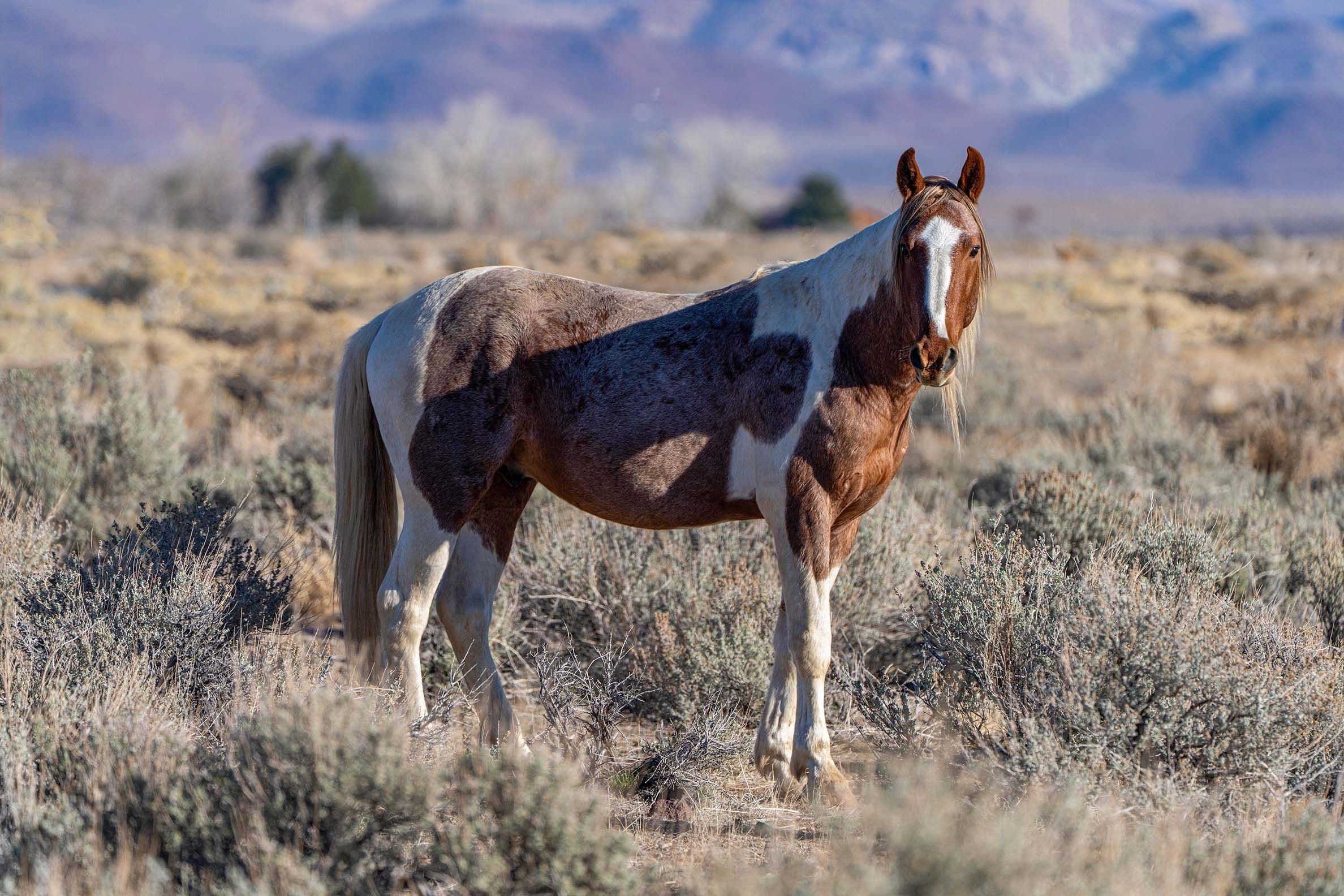
But that’s not true. The horses out on the range may be outnumbered by cattle and sheep by 10.6:1, but they aren’t starving; photographs taken recently show them to be in good shape, despite the drought. Seems like they’ve been achieving their own thriving natural balance, no thanks to theBLM’s “management” practices.
Now if only theBLMwould admit what their own data proves and do the right thing: trim thelivestock, and stop sticking it to public lands, taxpayers and wild horses. “We the People” have had enough.
Originally Posted By Alter Net
Subscribe to our newsletter: