
Roundup Report: The Wild Horses of the Wyoming Checkerboard
Roundups
Read time: 23 Minutes
Published: January 7, 2022
Written by:
AWHC Contributor
Roundup Report: The Wild Horses of the Wyoming Checkerboard
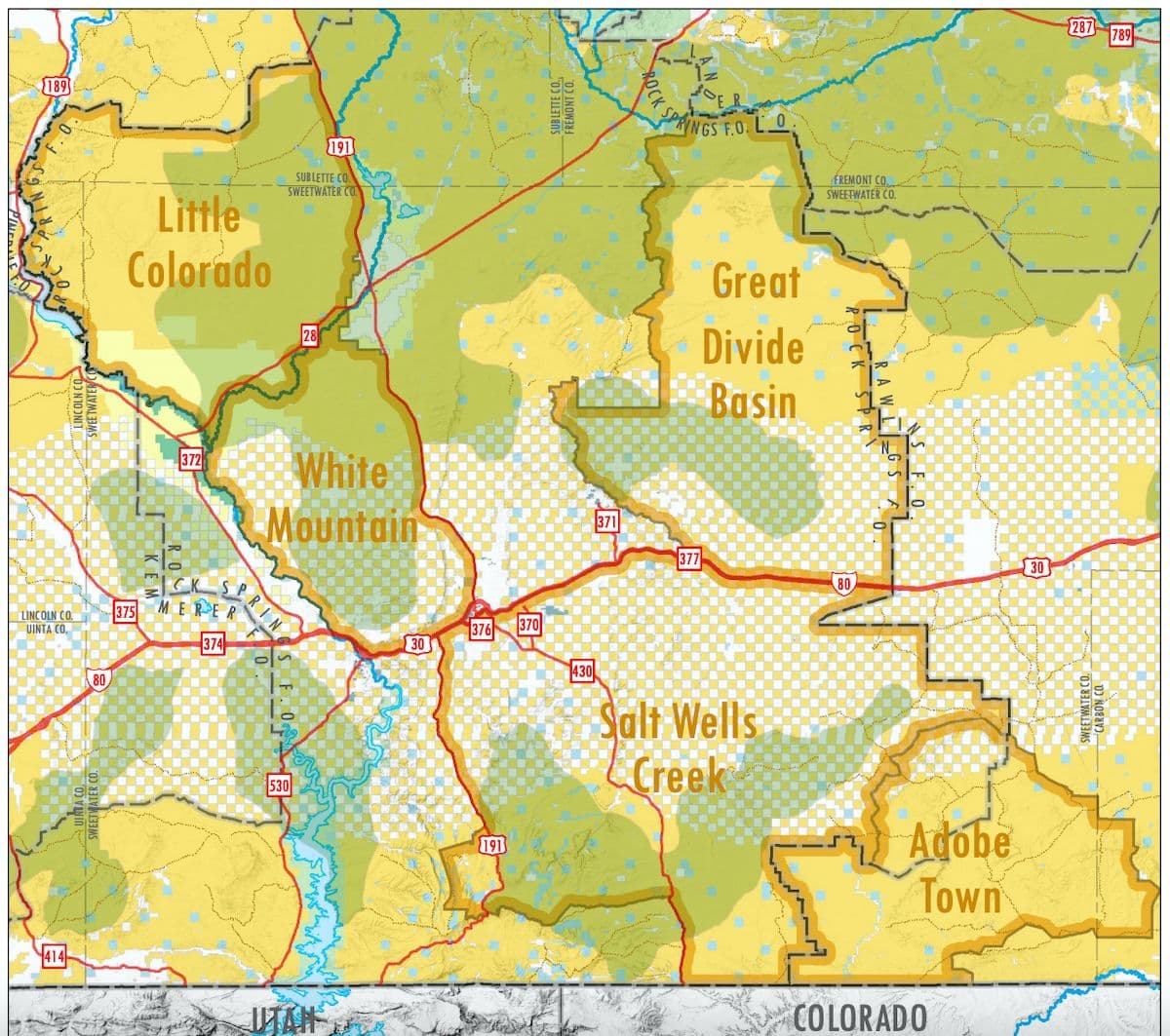
The Checkerboard region in Wyoming includes five separateHerd Management Areas(HMAs): Adobe Town, Salt Wells Creek, Great Divide Basin, White Mountain, and Little Colorado, spanning 3.4
million acres. TheBLM’s unscientifically low Appropriate Management Level (AML) for the HMAs – the number of
horses the agency claims the range can sustainably support in conjunction with other animals and resource uses –
is just 1,550–2,165 horses. This population limit was established based on the allocation of 91% of available
forage in these areas to cattle and sheep, privately owned by the Rock Springs Grazing Association.
TheBLM’s plan for the horses would reduce their numbers to the low AML of 1,550, at a density of 1 horse per 2,217
acres. TheBLM’s plan would permanently remove 3,555 wild horses—or nearly 50 percent of the state’s total wild
horse population—making this the largest wild horse roundup and removal operation in the Program’s history.
It is time for theBLMto manage wild horse habitat for the wild horses.
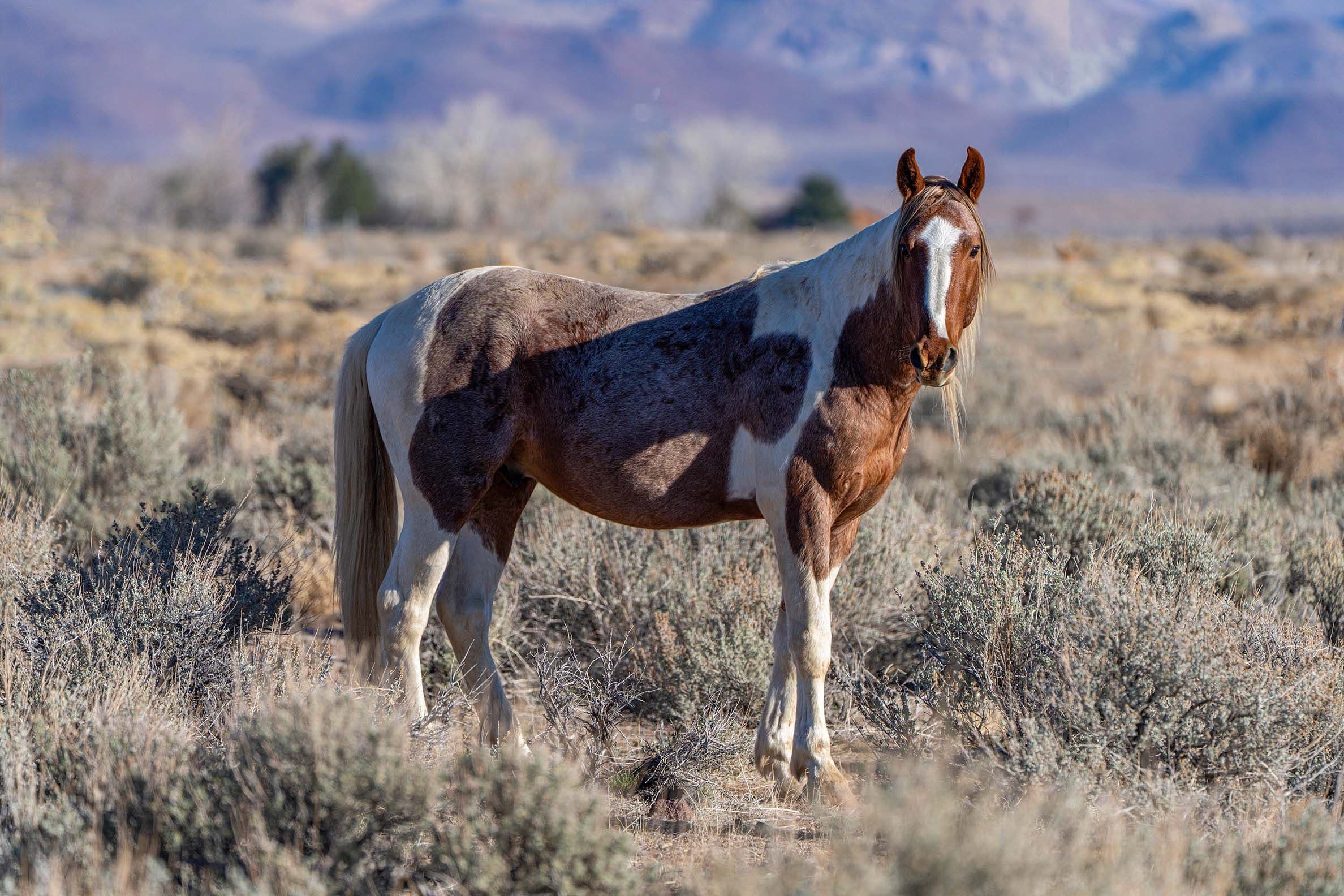
Photo by Kimerlee Curyl
Between three contracts (here,here, andhere), this roundup
will cost taxpayers at least $1.23 million to round up roughly 4,300 beloved horses from the Checkerboard. Of that,
only approximately 800 are planned for return to the HMAs, so the removal will also incur a lifetime cost of
approximately $175 million to house the remaining 3,555 horses for the remainder of their lives in government
holding corrals. The contractors for this roundup are CattoorLivestockRoundup Inc. and Shayne Sampson.
On top of that, taxpayers foot the bill for federally subsidizedlivestockgrazing onpublic landsas well. The
federal grazing fee remains at its historic low of$1.35 per animal per
month. That’s a steep discount, thanks to the taxpayer subsidies that prop up this federal entitlement
program. (Estimates indicate that the overall cost to taxpayers for the federal grazing program could beas
much as $500 million annually.)
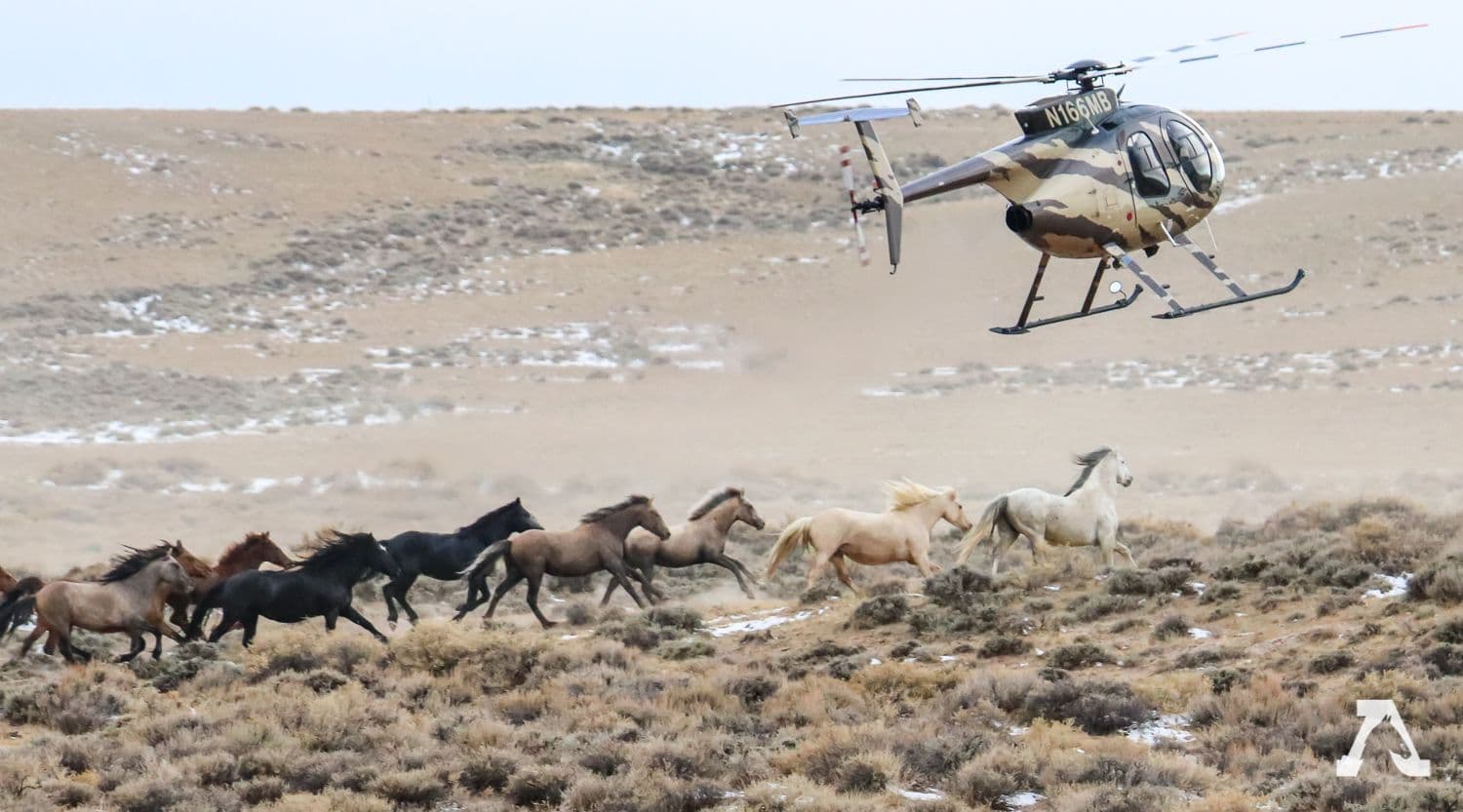
Helicopters are scheduled to fly starting on October 7, 2021. We will update this report as the operation progresses.
ROUNDUP REPORT
January 17, 2022: 117 wild horses were rounded up today.
On the final day of the Checkerboard roundup, we arrived at the observation point at 8:15 am and were at the same
trap site as yesterday.
The helicopter could be seen shortly after at 8:30 am coming from the south with a group of around 15 horses, with an
additional group of 15 horses coming from the west.
At 8:40, the first group of around 15 was in the trap, and the second group followed shortly after at 9:00 with a
lone horse that was left behind and couldn't keep up.
The horse, known as "Jonah" to those who follow the White Mountain horses, was eventually driven toward the trap and
cantered in at 9:03 am despite his large knees. I was later told he would be euthanized due to his knees.
Twenty minutes later, at 9:23, another group of 35-40 came from over a large ridge to the south of the trap.
They were trapped at 9:52, and then the helicopter left and wasn't seen again until almost 2 hours later at 11:43
with a large group of over 60. This group could be observed coming toward the trap at a trot, likely from having
been driven from such a long distance. They were trapped at 12:09, marking the conclusion of the roundup.
I made it to temporary holding around 4:30. I was told there were no deaths or injuries, though some horses would be
euthanized the following day (1/18), including the horse 'Jonah' with the large knee and the mare with the unknown
condition that did not improve and was brought in yesterday.
Sixty-three stallions are supposed to be released on 1/18, with an additional 3 due to having over-caught 120 horses
from the 117 needed to finish out the roundup.
Mares treated withPZPare likely to be released on the following Friday or Saturday (1/21-1/22), with an
undetermined release date for the mares treated with IUDs.
January 16, 2022: 134 horses were captured. There were no deaths.
The following report is from photographerSomer McCain, who is
onsite as a representative for AWHC.
Today we arrived at the observation point at 8:10 am. The site was approximately half a mile away from the trap and
across a highway. The trap itself was behind a ridge with limited visibility, but the entirety of the jute funnel
could be seen from observation.
The runs:
- At 9:17, the helicopter could first be seen west-southwest at a distance, moving multiple groups east toward the
trap. The helicopter made its way south of the trap before combining groups and moving a large group of around
30 into the trap at 9:40. Some horses can be observed to be sweaty in photos. - After the helicopter went south of the trap, it appeared again at 9:59 and ultimately brought in 40-50 horses at
10:07. The helicopter grounded after this until it left again at 11:18 and headed west. - The helicopter finally returned to view at 12:33 and around 25-30 were finally driven into the trap at 12:59.
Shortly after the horses were in the trap, two wranglers were sent out to retrieve a mare that was left behind
and not able to keep up. She was roped and brought into the trap at 1:07. At holding, I was told there was
something off with the mare, but the vet couldn't determine what exactly was wrong with her at that time. - At 2:08, the helicopter could then be seen again and brought in around 30-40 horses at 2:19.
- After, the helicopter went off near the trap behind a ridge and flew low as though they were looking for
something or checking an area but ultimately landed 10 minutes after driving horses into the trap.
After the helicopter landed for the day, we headed to temporary holding, which was north of the trap in Farson, WY.
On the way, a single bay horse could be seen from the highway looking toward it as though he had seen the recently
caught trailered horses that had just traveled north. This horse was found not far north of the trap and may have
been separated from his herd during the roundup.
Once at holding around 5 pm, we were told 134 horses had been caught with no deaths and only the roped mare with a
currently unknown condition. All pens were relatively calm.
The roundup is expected to conclude on 1/17, with a small chance it may last an additional day with a new trap site.
All stallions will be released the following day after the conclusion of the roundup.
January 15, 2022: 95 wild horses were rounded up and removed. There were 4 deaths; however, theBLMonly
listed out the reasoning for 3 of the horses which they euthanized for having clubbed feet (a
non-life-threatening condition).
January 14, 2022: 132 wild horses were captured today and there were no deaths reported.
January 13, 2022: 24 wild horses were captured and there were 5 deaths; however, theBLMonly gave reasoning
for 3 of the horses which they euthanized for having clubbed feet (a non-life-threatening condition).
January 12, 2022: 62 wild horses were captured and there were 3 deaths:TheBLMeuthanized 2 horses
with broken legs and 1 horse in "poor condition."
January 11, 2022: 48 wild horses were captured and there was 1 death:BLMeuthanized a mare with
"bad knees."
January 10, 2022: 40 wild horses were captured and there were 4 deaths:A 14-year-old mare was
euthanized byBLMfor being blind, an 8-year-old stallion was euthanized byBLMdue to a "pre-existing" broken leg,
and a 3-year-old stallion and 3-year-old mare were euthanized byBLMfor having clubbed feet, a non-life-threatening
condition.
January 9, 2022: 50 (20 Mares, 17 Stallions, 13 Foals) were rounded up and removed.
AWHC did not have an observer onsite today.
January 8, 2022: 107 horses -- 50 mares, 37 stallions, 20 foals -- were captured.
The following report is by Lynn Hanson ofWild
Horses Wild Places, who is on the ground for AWHC.
AWHC's field representative was one of two members of the public onsite and was placed approximately 1 mile from the
trap site, which was hidden because it was located in a gully.
We met theBLMat 7:00 am at a truck stop in Farson, WY. We arrived at the observation site at 7:50 am. The
temperature stayed at approximately 16° all day. The first run was at 10:30 with the last run at 2:30, bringing in
groups of 10-20 at a time. Sorrel and bay seem to be the colors out here, although I did see a pinto or two.
January 7, 2022: 112 horses —49 mares, 39 stallions, 27 foals were captured and no deaths were reported
today.
The following report is by Lynn Hanson ofWild
Horses Wild Places, who is on the ground for AWHC.
AWHC's field representative was the only member of the public onsite and was placed approximately 1 mile from the
trap site, which was hidden because it was located in a gully.
It was 13° after bringing in the first big group of horses at 10:30 am. The helicopter flew northwest. He was gone
until 12:45 p.m. At this time, the helicopter zoomed back to the trap location to refuel, then sped out again. Ten
minutes later, he was pushing two small groups of horses towards the trap location. At first, I saw a single horse
walking exhaustedly, rapid breaths of steam puffing out of his nostrils. He was too tired to even trot. Then another
horse caught up with him, and they just kept walking.
A band of horses behind them was also walking, and for a minute, they all stopped in the road to bunch together and
rest while the helicopter continued to circle and hover. They stammered a bit and began trotting behind the first
two. Because the helicopter was gone for so long, he must have been pushing these horses for many miles. By the time
they got close to the trap, they were clearly exhausted. I could not see if they were sweaty.
When the tired group of horses was brought to the trap, two wranglers appeared on horseback with lassos. Because all
the trap activity was hidden from our view, I heard fromBLMlater that day that one of the colts from this group
decided he didn’t want to enter the trap wings, so he promptly climbed a small hill. After the colt's family had
entered the trap, that’s when the wranglers brought him in.
At temporary holding, viewing the horses is nearly impossible except for ears and hooves. It’s completely taped in
tan canvas. I was allowed to take pictures through small openings in the canvas. Fresh water and hay were available.
Horses were not agitated. A vet was on site.
We went to the Rock Springs Holding Corrals to see the 39 mares who had been captured on Day 1, January 6. They were
all huddled close together, confused, scared, and a few times turned to look at me with desperation in their eyes;
almost pleading, it seemed. They are absolutely stunning mares, many sorrels with white blazes and long flaxen
manes.
January 6, 2022: 119 wild horses captured, 4 dead:One horse died after suffering a broken back, and
theBLMeuthanized 3 more: a horse with a clubbed foot (non-lethal condition), a horse with a broken leg, and a
horse with a sway back (non-lethal condition).
The following report is by Lynn Hanson ofWild
Horses Wild Places, who is on the ground for AWHC.
AWHC's field representative was one of three members of the public onsite. We were placed approximately 1 mile away
from the trap site, which was hidden down in a gully. Only a few feet of the wings of the jute chute were visible
from the observation point.
The whole day lasted maybe 3 hours. The helicopter brought in 3-4 big groups each time.
At temporary holding, we received a tour by aBLMrepresentative. He explained that the mares in one of the pens will
be returned back to the range via an IUD implant. The stallions to be returned were in a pen by themselves. We were
pleased to see no high-strung behavior and no injuries or problems observed.
January 4, 2022
The following report is by Lynn Hanson ofWild
Horses Wild Places, who is on the ground for AWHC.
At 10:30 AM today, I finally received an email fromBLMon resuming operations in the White Mountain and Little
Colorado HMAs in the next few days. So I paid a visit to the Rock Springs Holding Facility where most of the mares
who were captured from the Great Divide Basin, Salt Wells Creek, and Adobe Town HMAs wander aimlessly or stand
around, the light in their eyes fading with their heads hanging low. The foal pen is small, packed with young ones
who have a lot of energy and need to run. I watched one dynamic colt race around, darting back and forth, back and
forth. Now that’s a stallion in the making. If only he was still wild and free. They all deserve to be.
December 3, 2021: 144 wild horses were captured today and no deaths were reported.
The following report is from photographerSomer McCain, who is
onsite as a representative for AWHC.
Today we arrived at temporary holding at 8:15 to wait while the new trap was set. We were placed approximately .7
miles southeast of the trap. We had a mostly obstructed view and little could be seen. As we waited, a lone stallion
could be seen on the other side of the fence from temporary holding, staring at the remaining horses from
yesterday’s operation. Minutes after we left temporary holding and arrived at our observation site at 9:00, the new
trap offered limited visibility aside from horses occasionally coming up on a ridge near it and when making their
way into the trap.
By 9:18, a large group of around 25 was trapped, and the helicopter was gone again, only to return at 10:00 with a
large group of approximately 25 that was trapped at 10:10. After that, the helicopter landed to refuel, and horses
were trailered out to make room for more.
The helicopter was up again by 11:50 and was driving multiple large groups toward the trap by 12:55. As horses were
coming toward the trap, groups scattered, with some going on a ridge above the trap, and an older black foal got
separated from its group and began to run along the jute funnel. The foal eventually took off with a group and
headed south away from the trap. A couple of horses could be seen running north of the trap that were on the
opposite side of the fence.
Within the next hour, 3 separate large groups were driven into the trap, and the helicopter headed back to temporary
holding to call it a day at 1:40.
By 4:35, I made it to temporary holding where I was told a total of 144 horses were captured, including one branded
domestic horse. There were 2 horses with pre-existing injuries that included a young swaybacked mare and a stallion
with an enlarged knee. They were not euthanized and are supposed to be shipped out with others.
December 2, 2021: 69 wild horses were captured and there were no deaths reported.
The following report is from photographerSomer
McCain, who is onsite as a representative for AWHC.
AWHC’s field rep was the only member of the public onsite today to document the removal of the Adobe Town wild
horses.
We arrived at the observation site at 7:45, which was the same location as 11/30 and 12/1.
At 8:43, the helicopter could be heard coming from the north, pushing 3 large separate groups of horses with a group
of pronghorns in between. Five minutes later, a large combined group broke off and headed west from the trap.
At 8:58, a group of 5 made it into the trap. The remaining large group was resisting the pressures of the helicopter
and scattered. At 9:08, around 25 were ultimately driven into the trap.
The helicopter landed at 9:10, then took flight again 10 minutes later and took off going east of the trap. The
helicopter didn't make an appearance again until 11:20 when it could be heard, and then at 11:33 when it could be
seen far south of the trap. At 11:50, multiple groups of horses could be seen, with a smaller group of 6 breaking
off and heading north toward the observation site and a group of around 10 that were driven into the trap.
The helicopter then went north to turn the smaller group of 6 back toward the trap, and they made it into the trap at
11:58. The helicopter landed at 12:00 and was back up 10 minutes after heading west.
At 1:56, the helicopter was visible east of the trap driving a large group over a ridge. After making it near the
funnel, the horses broke off into one group that headed west and the other going north. The northern group was
circled back around, and approximately 15 were driven into the trap, creating large dust clouds.
When driving the remaining 5 horses back at 2:20, a grey mare and foal broke off while the other 3 made it into the
trap. The mare and foal were both highly resistant to the helicopter trying to move them back toward the trap and
were eventually separated, with someone roping the foal at 2:28 and the mare brought in alone at 2:30. After an
additional wrangler was sent out to assist with the foal, they made it back to the trap at 2:40, and we were done
for the day.
At temporary holding, there were no visible injuries and we were told there were none. There were 2 rangers and Kevin
Lloyd with us.
The horses were calm and had plenty of room today. I noticed the pen that was crowded yesterday (the proposed release
pen) was empty, and they said they had moved them to Rock Springs so they'd have more room to move around. I did go
to Rock Springs and verified they were there.
October 21, 2021: 68 captured today, no injuries or deaths.
The following report is from photographerCarol Walker, who is
onsite as a representative for AWHC.
As usual, I could not see the trap or the run into the trap - my view was completely blocked by a ridge. I could hear
the foals whinnying. I could see horses being chased by the helicopter in front of me or horses running if they
escaped, but that was it. I was told that the new criterion is if the horses running into the trap could possibly
see us, that is not okay. After the run of bad publicity surrounding recent Cattoorroundupsin Nevada and Colorado,
it appears that the Cattoors are intent on shielding their activities from the public, and the WYBLMis just going
along with it. Observers at other roundups with other contractors are being given good views of the trap and
approach to it. TheBLMis preventing meaningful observation.
I was the only member of the public to observe today. My view and the trap were on the other side of the ridge.
The runs:
- Two groups of horses moving near the road on my way in - they were among the first groups into the bowl. But
they evaded capture for a little while, then ultimately went in - two grays, one a stallion and the rest
sorrels. Then a dun foal about 2 months old was spotted, and the helicopter went over and set down, waiting for
wranglers to ride out to get him. The wrangler rode quietly over to intercept him - the foal looked and then
took off. The wrangler went around him and drove him toward the trap. Hopefully, by now, the foal has found his
mom. - Three more groups were driven into the trap. Then we saw the helicopter moving very slowly behind the ridge. It
took quite a while to work down to where we could see the horses he was behind. A dappled gray stallion, a
palomino mare, and a 6-month-old cremello foal. At first, I thought they just were not afraid of the helicopter,
but then I became increasingly concerned for the mare. She moved very slowly. The foal did not want to leave her
behind, although his step was lively. The stallion was out front, ready to lead the way. They made painfully
slow progress toward the trap, the helicopter hanging back, not pushing hard.
After the slow group went in, three bachelor stallions came running in, a bay, a sorrel bay, and a black stallion
veered off.
There was a big family that was driven toward the trap, and a blaze-faced foal stopped and was left behind. Then the
family was driven into the trap. One of the helicopters went and found the blaze-faced foal. He was slowly moving
him toward the trap, and a wrangler rode out and finally ended up roping and bringing the foal in.
The helicopter brought in a gorgeous buckskin stallion and a black wild horse. The black horse looked tired but ran
in.
Then one helicopter started chasing a gorgeous black mare, her buckskin foal, a chocolate two-year-old, and a bay
stallion. They scattered before going behind the ridge, and the stallion ran off. The three were driven into the
trap, and the stallion turned and ran by me.
Then a group of 4 with a sorrel mare and foal and a black mare and stallion were driven into the trap.
After the helicopters were done for the day, the mares and foals were loaded up and shipped to Rock Springs. I saw
the little dun foal that had to be roped, and he had not found his mom - he was all alone, looking bewildered as the
mares churned around him.
The beautiful buckskin who lost his family and freedom today.
The bay stallion fighting for his freedom.
The wranglers moving cattle out of the trap site.
October 14, 2021: Operations were resumed today and 26 wild horses were captured.
October 13, 2021: No operation was conducted today. The horses experienced a small reprieve.
October 12, 2021: No operation was conducted today. The horses experienced a small reprieve.
October 11, 2021: Today theBLMcaptured 76 horses (45 mares, 21 foals, 10 stallions).
To date, 44 horses (74 mares, 37 foals, 33 stallions) have lost their freedom in the largest wild horse roundup inBLMhistory.
111 horses (71 mares, 20 foals, 20 stallions) have been shipped to the Rock Springs or Wheatland Wild Horse Corrals.
Photo by Lynn Hanson
There is currently a winter storm warning in Rock Springs and in Bitter Creek, WY, the actual location of the
observation/trap site in the Great Divide Basin. Wind at 50+ mph and snow all day, accumulation 1-3 inches.
October 10, 2021: Today AWHC had two observers on-site, Scott Wilson of Wilson Axpe
Photographer and Lynn Hanson of Wild Horses Wild Places. We were located about 1.5 miles from the trap site. TheBLMclaims the private landowners refused viewing access and the public parcel closer to the trap site was
"inaccessible."
Two runs were completed before the operations were paused because of wind. In the first run, a bay
escaped just before the jute but stayed hanging around outside of the pen, looking at his herd mates. On the second
run, the lead stallion turned his band around no less than 4 times inside the jute in repeated attempts to escape
the final run before they were eventually driven into the trap.
Operations ended up being suspended because of the wind.
October 9, 2021: The helicopters did not fly today due to high winds. Zero wild horses were
captured.
October 8, 2021: 34 wild horses were captured and there were no injuries or deaths
reported.
AWHC's representative Lynn Hanson was the only observer on-site today on the second day of the
enormous Checkerboard wild horse roundup. The operation took place in the same areas as the day before, located in
theGreat Divide Basin HMA. It was a long day which resulted in 34 wild horses losing their freedom. Unfortunately,
the band of horses we called "Defiant 5" were captured today.
October 7, 2021: 9 wild horses were captured and there were no injuries or deaths reported.
Today was the first day of the largest wild horse roundup in Program history. Our field
representative, Lynn Hanson ofWild Horses Wild
Places, was one of eight observers on site. The weather was a mixture of clouds, rain, and fog. At the
location, the observation point was almost a mile away, as usual, with the trap site completely obscured by a ridge.
The length of jute fencing to the trap was short, so what our field representative did see as far as any horses
running to the trap was brief.
A post shared by American Wild Horse Campaign (@freewildhorses)
The runs:
- A small family of 3 was run in by the Judas horse (a trained domestic horse that leads themustangsinto the trap), but as you will see in the short video, they split away from the Judas horse and
climbed a hill. - The helicopter went back out to find them and unfortunately did succeed at bringing them
in. - Another impressive band of five ... who our field representative called theDefiant
5, were chased up and down rocky hills and terrain for about an hour. The helicopters made numerous
attempts to drive them in, but every time they got near the trap site, the horses brilliantly split up and
ran in different directions. This happened over and over. - Finally, the contractor gave up and they called it a day.
Our field representative went to see the gorgeous black stallion with the extremely long mane and
his family, along with the family of three at the temporary holding pens, which were set up right off Interstate 80.
From our representative:
All I kept thinking was not more than an hour ago these horses were enjoying their
lives in the most beautiful landscape you have ever seen. And just like that, their lives changed
drastically. This beautiful family got split up from one another, separated in small iron pens, crying out
to each other amidst the roaring engine noise of the freeway.
Subscribe to our newsletter: