
>
stories
>
utah wild horses injured in aerial roundup four euthanized due to pre existing injuries 6611
Utah Wild Horses Injured in Aerial Roundup; Four Euthanized Due to Pre-existing Injuries
Roundups
Read time: Three Minutes
Published: August 10, 2018
Written by:
AWHC Contributor
In a controversial aerial roundup in Utah's West Desert, wild horses were driven into barbed wire fences, resulting in the euthanization of four horses with pre-existing injuries. This incident has sparked outrage amongadvocacygroups, who are calling for more humane treatment of these animals.
August 9, 2018
A federal wild horse roundup in Utah’s West Desert is drawing fire after four injured horses were put down and photos surfaced showing helicopter wranglers swooping down as some of the galloping animals ran into barbed wire fences.
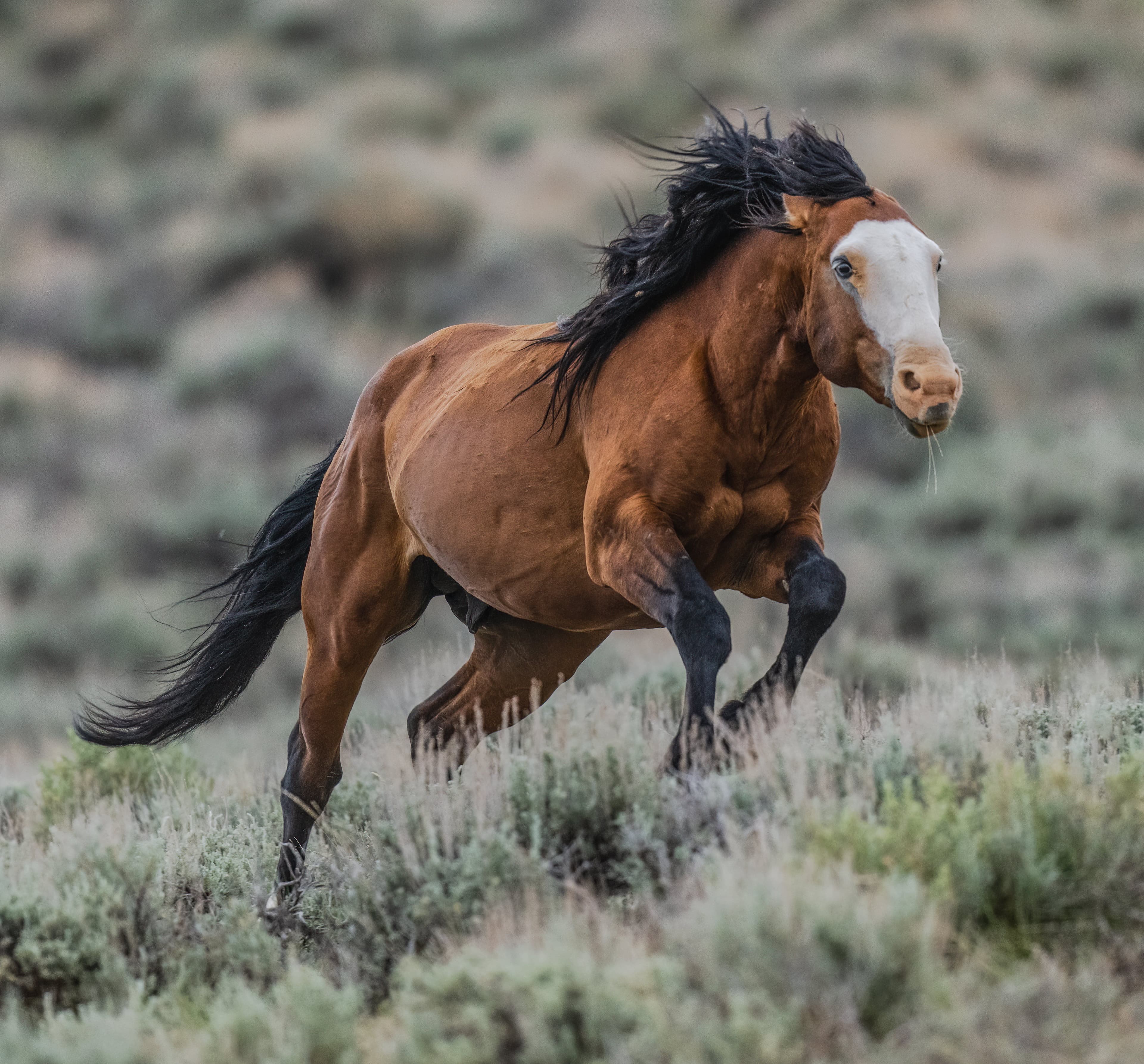
Photos shot Monday by an observer affiliated with theAmerican Wild Horse Conservation (formerly American Wild Horse Campaign)depict one horse tumbling hard, hooves in the air, after striking a fence as a chopper hazed a band toward a trap, according to the photographer, Steve Paige.
She cited her group’s concerns in a letter sent Tuesday to theBLM’s Utah director, Ed Roberson. The complaint targets the practices ofBLMcontractor SampsonLivestock, based in the Millard County town of Meadow, and demands the agency’s horse gathers comply with the agency’sComprehensive Animal Welfare Policy.
TheBLMacknowledged that horses hit the fence while a helicopter pursued them.
The four euthanized horses were suffering from pre-existing injuries, according to Finch.
Thismonth’s Utah roundupis the latest in a series theBLMis staging around the West to remove horses that officials say exceed the capacity of the lands they occupy. It targeted five adjacent horse management areas in Beaver and Iron counties west of Milford, collectively known as the Bible Spring Complex and Sulphur, whose horses numbered 1,400.
The gather concluded Wednesday after the removal of 250 horses, 50 over the number theBLMhad originally targeted for removal.
These horses were sent to theBLM’s corral in Delta, where officials plan to adopt out as many as possible, although it is likely most will join the thousands of others held in on-range pastures for life. In contrast with past Utahroundups, no horses are expected to be returned to the range.
There is universal agreement that the never-ending cycle of horse removals is not sustainable because they do nothing to keep the population growth in check and add to the inventory of horses already being warehoused for life at a cost of more than $50 million a year.
U.S. Rep. Chris Stewart, a Republican whose district covers much of the state’s wild-horse territory, is advocating more frequentroundupsand surgical sterilization of mares that would be returned to the range.
Stewart repeatedly has noted that the West’s wild horses and burros far exceed the 27,000 theBLMhas established as the “appropriate management level." He says many horses are starving on the range, their numbers depleted by drought and overgrazing.
After a town hall-style meeting last week in Salt Lake City, Stewart touted his proposed reforms, saying a broad “consensus” supported them.
But many horseadvocacygroups deeply oppose sterilization. They argue that ovary removal puts mares at risk of infection because there would be no post-surgical care on the range and permanent sterilization disrupts horse bands’ social order.
Mostadvocacygroups prefer increased use of the noninvasive contraceptive called PZP, but Interior Secretary Ryan Zinke hasdismissed its efficacy, which is temporary lasting only a year or two, and the practicality of inoculating thousands of mares over the course of their lives.
Originally posted by The Salt Lake Tribune
Subscribe to our newsletter: