
Why Are Nevada's Wild Horses Being Rounded Up?
Roundups
Read time: Five Minutes
Published: February 8, 2017
Written by:
AWHC Contributor
January 30, 2017
Read our reports from the range.
While the hugeBLMSulphur roundup in Utah is ongoing, the agency will launch another assault on wild horses beginning today in the Reveille Herd Management Area (HMA) in Nevada.
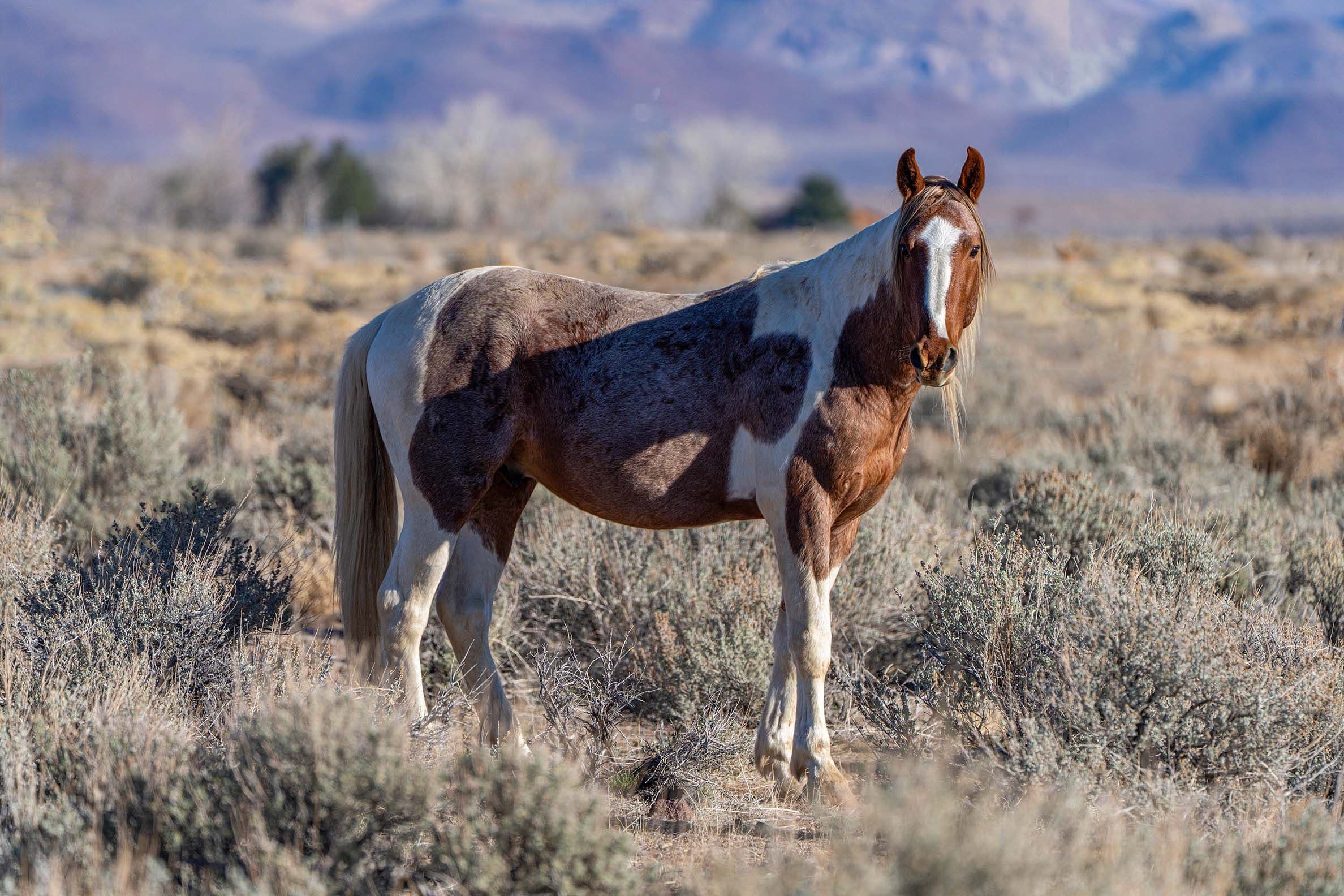
The Reveille HMA is a 105,000-acre (170 square mile)public landsarea about three hours north of Las Vegas. It is home to a wild horse herd whose bloodlines include Oriental, Arabian, Spanish Colonial, light racing, and riding breeds.
TheBLMallows just 138 wild horses to roam in this 170 square milepublic landsarea, and currently estimates that 173 wild horses live there.
Beginning today, theBLMintends to use helicopters to round up 140-160 wild horses and permanently remove 80 of them from their homes on the range. This would reduce the population of the HMA to just 90 horses, well below the established “low” AML number.
Why is theBLMconducting a roundup that will cost American taxpayers hundreds of thousands of dollars when the wild horse population in this HMA is estimated to be just 35 horses over the allowable AML “high” number?
The answer will not surprise those who have followed this issue closely. However, it may be shocking to most people to discover that this roundup is occurring for the benefit of just one ranching family.
The Reveille HMA overlaps the huge, 650,000+-acre Reveillelivestockgrazing allotment, which is controlled by one permittee - the Fallini family. The Fallinis only own 2,000 acres of private land, but their access to 650,000 acres of public land makes their operation valuable. The Fallinis run about 2,000 head of cattle on thepublic landsin the Reveille Allotment each year.
Apparently, the Fallinis don’t want to share the public range with federally protected wild horses. They seem to believe that thepublic landsbelong to them and view wild horses as interlopers stealing public resources they are entitled to use for their personal gain.
In 1995, the court rejected the Fallini’s claim that they owned the water on thepublic landsand therefore did not have to share it with wild horses.
But eight years earlier, the federal government entered into a Stipulated Settlement agreement with the Fallinis that stated if the wild horse population exceeds 165 horses within the Reveille allotment, theBLMis required to remove “excess” horses within 120 days. This agreement, entered into voluntarily by theBLM, is now being misleadingly referred to by theBLMas a court order.
In a 2010 article, Family patriarch Joe Fallini pined for the days of the mustangers, when ranchers could round up wild horses and sell them for slaughter whenever they thought there were too many on the range. Those days are over, but now Joe Fallini has something even better. The government is removing the wild horses for him, and the taxpayers are paying for it.
In 2010, theBLMremoved 222 wild horses from the Reveille HMA. In 2014, 120 more were removed. It’s safe to say theseroundupshave already cost taxpayers millions, and now more tax dollars will be spent to remove wild horses from the Reveille HMA in 2017.
Humane and Cost-Effective Management Solutions
It doesn’t have to be this way. Here’s how a humane and cost-effective management program for the Reveille HMA could work:
- Compromise:The permittee receives taxpayer benefits and access to hundreds of thousands of acres of public lands. The public wants wild horses protected. A compromise would allow a genetically sustainable wild horse population in the Reveille HMA by increasing the population limit to a more sustainable number (say 200-250).
- Public/Private Partnership:Once a sustainable level is achieved, the wild horse population can be humanely managed on-the-range with birth control. This will save taxpayers millions of dollars currently spent on perpetual roundups, removal, and stockpiling of captured horses in holding pens.
- Be Part of the Solution:Instead of continuing to clash, the permittee, wild horse advocates, and the government can work together to implement humane fertility control. Ranch employees can be paid to help administer birth control (by darting or bait trapping). Wild horse advocacy groups can support this work financially and/or with volunteers.
- Compensation:If ranchers must reduce grazing to accommodate a slightly larger wild horse herd, then they can be compensated with public or private dollars until the wild horse population is stabilized.
How Does This Happen?
Both sides must:
- Acknowledge the legitimate interests of the other party.
- Recognize that wild horses have a place in American history and belong on the American range.
- Admit that what’s happening now is not working … and never has.
- Work together to come up with a mutually agreeable solution. The National Academy of Sciences has already laid out the roadmap for change.
Can it happen?
It has to, or we are in for 46 more years of conflict and America’s wild horses and burros might not have that much time left.
Subscribe to our newsletter: