
Wild Horse Advocates and Conservationists Challenge BLM Roundup in Nevada
Litigation
Read time: Five Minutes
Published: June 27, 2018
Written by:
AWHC Contributor
Washington, D.C. (June 27, 2018) –The American Wild Horse Conservation (formerly American Wild Horse Campaign), The Cloud Foundation, and Western Watersheds Project have filed a lawsuit in the U.S. District Court for the District of Columbia against the Bureau of Land Management (BLM). The lawsuit challenges theBLM's decision to roundup and permanently remove all wild horses from the Caliente Herd Area (HA) Complex without considering reductions to domesticlivestockin the same area. The wild horse and environmental conservation advocates are represented by the public interest environmental law firm Meyer Glitzenstein & Eubanks LLP.
While implementing a 2008 decision to eradicate wild horses from over 700,000 acres of the Complex in southeastern Nevada, theBLMwill continue to authorize large-scale, taxpayer-subsidizedlivestockgrazing on these public lands.
“We are directly challenging theBLM’s decision to eradicate all federally-protected wild horses from thepublic landswithin the Caliente Complex while continuing to authorize thousands of privately-owned cattle to graze the same area,” said attorney Bill Eubanks. “TheBLM’s decisions to ‘zero out’ this Congressionally-designated wild horse habitat clearly violates the agency’s obligations to protect wild horses under federal law. Therefore, we are asking the court to vacate these illegal decisions in order to protect the wild horses of the Caliente Complex.”
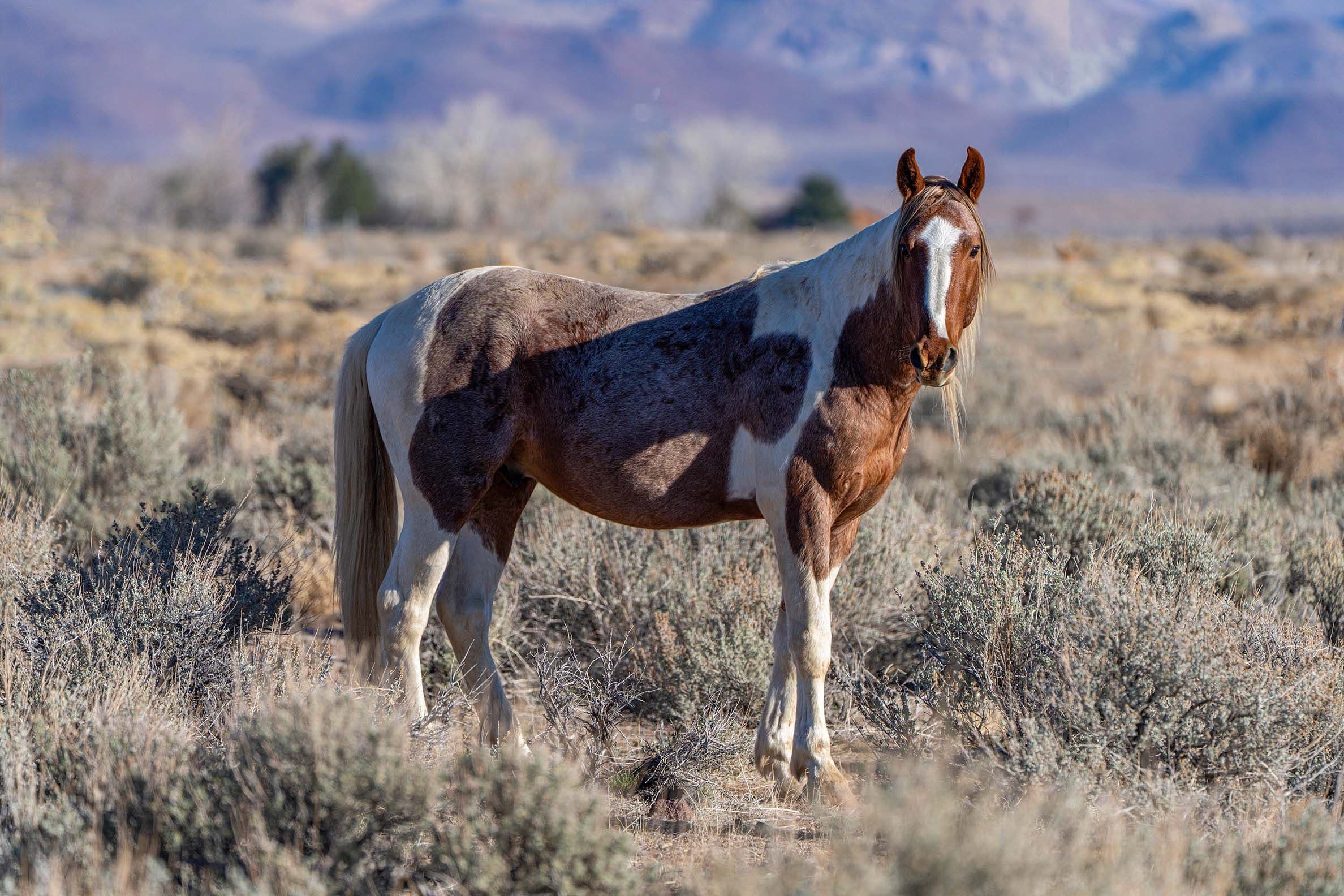
TheBLMauthorizes more than 4,500 cows and sheep to graze in the Complex as a whole and is proposing to roundup via traumatic helicopter stampede the 1,744 wild horses that the Complex currently supports.
“Over the last four decades,BLMhas taken away nearly 40 percent of the habitat designated by Congress for wild horse use. We are taking a stand today to stop the agency from eliminating wild horses and turning our public lands over to use by privatelivestock, who graze thanks to our tax subsidies,” said Suzanne Roy, Executive Director of American Wild Horse Conservation (formerly American Wild Horse Campaign). “It's time for theBLMto stop prioritizing ranching special interests and start honoring the wishes of Americans to ensure that our iconic mustangs are protected and humanely managed on our public lands.”
“The Cloud Foundation is proud to stand alongside these organizations in challenging theBLM’s unconscionable decision to remove these wild horses from their home and their families in order to make more room forlivestockto graze,” said Ginger Kathrens, Executive Director of The Cloud Foundation. “Time and again we see wild horses, a federally protected species, scapegoated for rangeland damage while thousands of cattle wreak havoc on our public lands.”
“We have a real and widespread problem with overgrazing on westernpublic lands, and in almost every case the cause is domesticlivestock, not wild horses, or mule deer, or elk,” said Erik Molvar, a wildlife biologist and Executive Director with Western Watersheds Project. “Over the past several administrations, the Bureau of Land Management has systematically and unfairly blamed land health problems on wild horses so they can distract the public from the real culprit, which is thelivestockindustry.”
The Caliente HA Complex is roughly 911,892 acres in southeastern Nevada. The fate of the horses within the Complex is influenced by the 2008 Ely District Range Management Plan (Ely RMP). The Ely RMP finalized theBLM’s decision to permanently remove all wild horses from sixteen longstanding Herd Management Areas (HMAs), including eight of the nine HMAs in the Caliente Complex—meaning thatBLMset the Appropriate Management Levels (AMLs) for these areas to zero. At the same time, the agency refused to even consider any reductions to domesticlivestockgrazing on these same public lands. In the 2018 Final Environmental Assessment (EA) for the Caliente Complex, theBLMchose to implement the decision made in the Ely RMP.
However, under federal law, wild horse populations must be managed to maintain “a thriving natural ecological balance.” Therefore, this lawsuit primarily charges theBLMwith violating the Wild Horse Act (WHA) and the Administrative Procedure Act (APA) by failing to protect wild horses and eliminating one of the chief uses of thesepublic lands. TheBLMhas also violated the National Environmental Policy Act (NEPA) by failing to give full consideration to the alternatives to, and the impacts of, this proposed action. This failure means that the public was deprived of an opportunity to meaningfully assess and respond to the rationale underlying theBLM’s decision.
TheBLMmust consider reasonable alternatives short of the elimination of wild horses in these sixteen longstanding wild horse management areas. One of the major contentions of this lawsuit is demanding that theBLManalyze and consider a reduction inlivestockgrazing in order to satisfy its mandate under the WHA to protect wild horses. Thelivestockindustry does a tremendous amount of damage to land health because there are no legal requirements for theBLMto manage domestic livestock grazing on public lands in a similar manner to how wild horses are managed.
TheAmerican Wild Horse Conservationis a national wild horseadvocacyorganization whose grassroots mission is endorsed by a coalition of more than 60 horseadvocacy, public interest, and conservation organizations. AWHC is dedicated to preserving the American wild horse in viable, free-roaming herds for generations to come, as part of our national heritage.
Western Watersheds Projectis a nonprofit conservation group dedicated to protecting and restoring watersheds and wildlife across the Intermountain West.
The Cloud Foundationis a non-profit organization dedicated to the preservation and protection of wild horses and burros on our Westernpublic landswith a focus on protecting Cloud’s herd in the Pryor Mountains of Montana. Cloud is the subject of Foundation founder Ginger Kathrens’ groundbreaking PBS/Nature documentaries.
Meyer Glitzenstein & Eubanksis a public interest environmental law firm with offices in Washington, DC and Ft. Collins, Colorado.
Subscribe to our newsletter: