
Wild Horse Advocates Criticize BLM's Sterilization Plan
Wild Horse Management
Read time: Three Minutes
Published: October 23, 2015
Written by:
AWHC Contributor
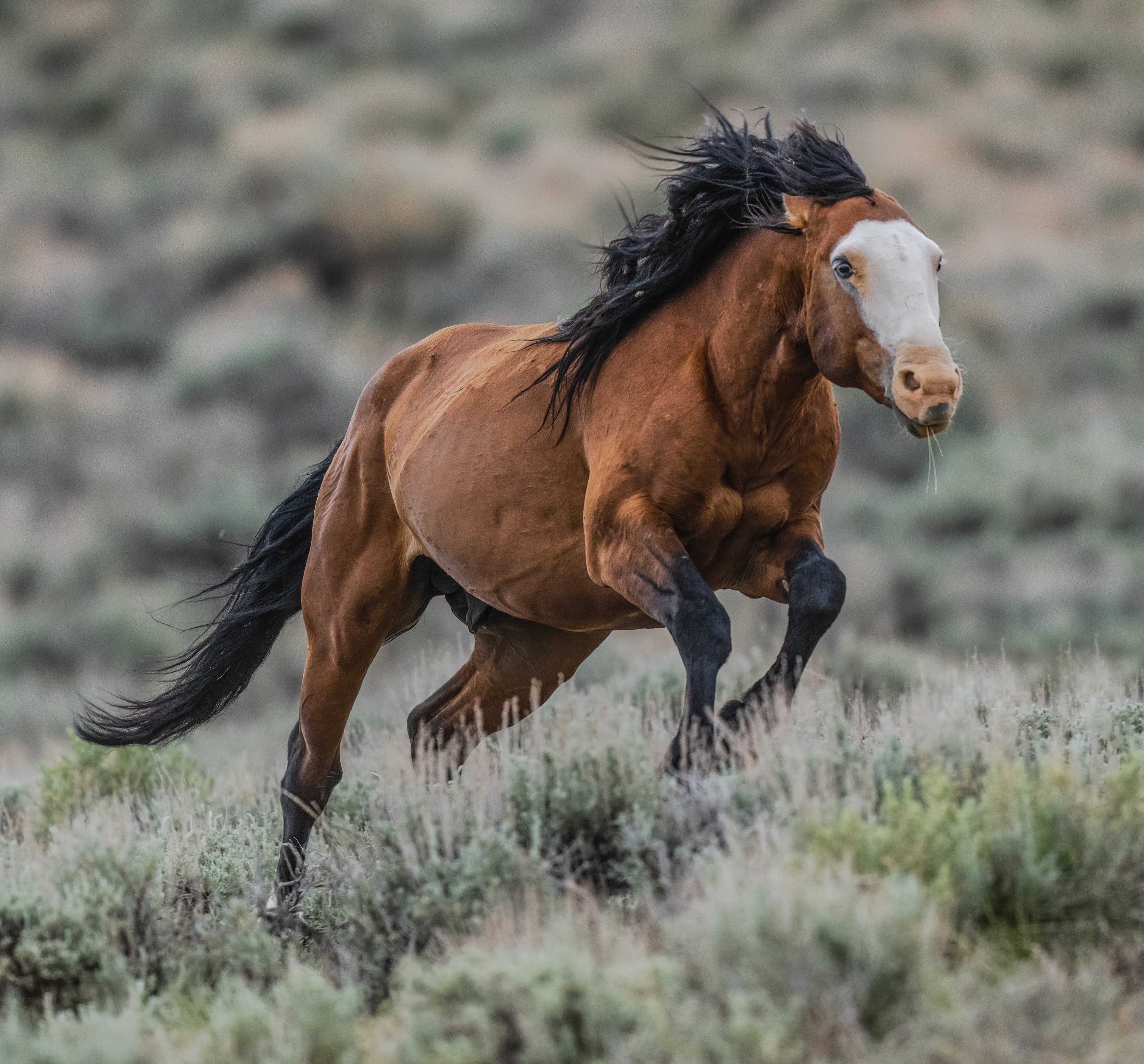
Officials with a group that advocates for wild horses on Bureau of Land Management ranges across the West criticized a plan by the agency to permanently sterilize a horse herd, claiming it is a path to herd extinction.
The executive director of The Cloud Foundation contended theBLMalready is failing in its mission to protect wild herds because of its “inhumane” helicopterroundups, massive removals, and warehousing of America’s wild horses and burros. Now agency officials announced their intention to sterilize the Saylor Creek wild horse herd in Idaho. TheBLM’s Jarbridge Resource Management Plan would “treat all wild horses surgically or chemically to eliminate reproduction capability,” according to Ginger Kathrens, executive director of TCF.
In mid-September, agency representatives said as part of its Range Management Plan, a 150-square mile area in southwestern Idaho will become a sanctuary of sorts for several hundred non-reproducing wild horses that have not been adopted.
The Saylor Creek Herd will be sterilized either chemically or physically, keeping the population between 50 to 200 horses, according to the plan manager. The process likely is years away as details are worked out, officials said.
The herd will be replenished with wild horses rounded up from Idaho and other states when resources are insufficient to support them. The agency estimates that more than 47,000 wild horses and burros are confined in designated corrals and pastures.
Several wild herds roam areas of Lincoln County. The state Department of Transportation installed signs warning drivers of their presence along the highway leading into the village. A local group advocates for their protection, which is managed by the New Mexico Livestock Board. Interest runs high locally about the fate of theBLMwild herds. One resident recently participated in the Extreme Mustang Makeover competition, which aims to train the wild horses in 100 days and to find them adoptive homes.
TCF, partnered with the American Wild Horse Conservation (formerly American Wild Horse Preservation), argues that the plan violates both the National Environmental Protection Act and the WFRHBA, because it fails to analyze an alternative that restores access to the Snake River as a water source for wild horses; because it fails to adequately analyze the impacts of managing a non-reproducing herd in the Saylor Creek Herd Management Area; because it does not analyze the impacts to: the “wild” and “free roaming” nature of wild horses and other behavioral dynamics, the physical health of mares, genetic diversity and rangeland health; and because it proposed to manage a non-reproducing herd at Saylor Creek.
Many experts conclude there are safer, reversible ways to control wild horse populationsin the wild, including the prestigious National Academies of Sciences in its 2013 Report to theBLMon the management of the Wild Horse and Burro Program, TCF officials pointed out.
In 1971, 339 herds were identified for protection after the passage of the WFRHB Act. Only 179 herds remain. The vast majority of the remaining herds are managed at non-viable levels of under 150-200 adult animals, according to TCF. Eighty-three percent of forage in the 179 wild horse and burro herd areas is allocated to privately-ownedlivestockthat cost taxpayers more than $120 million a year for administration of a flawed and range damaging program, TCF officials contend.
Originally Posted By Ruidoso News
Subscribe to our newsletter: