
Wild Horse Ecosanctuary: A New Haven for Free-Roaming Horses
Wild Horse Management
Read time: Four Minutes
Published: March 30, 2013
Written by:
AWHC Contributor
Every year, the Bureau of Land Management removes thousands of horses from public land in Wyoming. They ship most of the horses to long-term holding facilities in the Midwest. But that’s expensive, and they’re running out of space. So now theBLMhas partnered with ranchers to create a so-called horse “ecosanctuary” right here in the Cowboy State. It’s the first of its kind in the nation. Wyoming Public Radio’s Willow Belden reports.
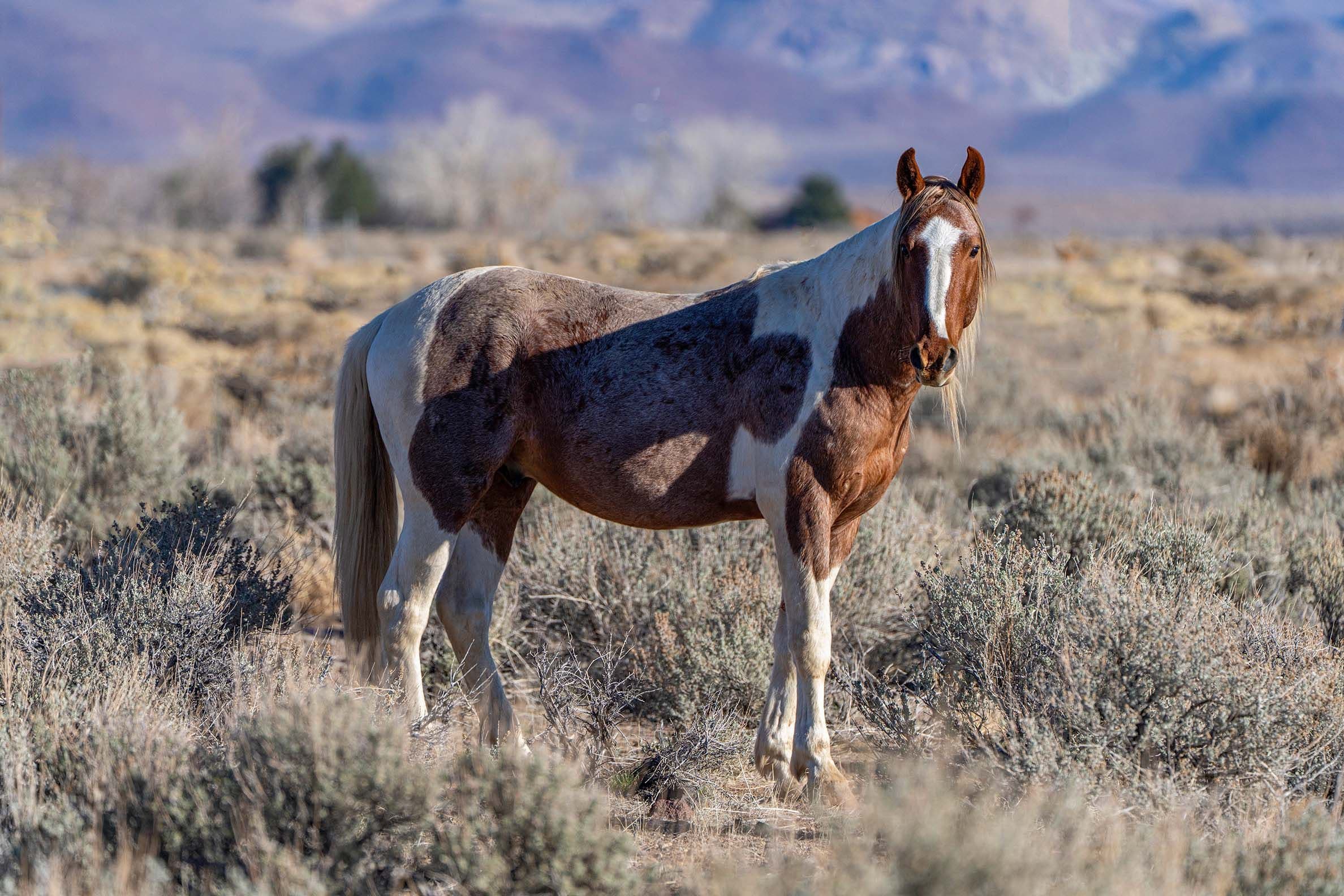
The ecosanctuary is located on a private ranch in southeast Wyoming. Open fields give way to wooded hills. A branch of the Little Laramie River trickles through, flanked by bushy foliage. And everywhere you look, there are horses, grazing calmly. Black horses, and gray ones, chestnuts, and paints.
Rich and Jana Wilson run the ranch. As they drive me around, the horses lift their heads curiously. When we stop, several come over and sniff our hands through the open truck windows. Jana Wilson says they’re prettier than she expected wild horses to be.
Rich Wilson says the 228 horses here are all geldings, and were all removed frompublic landswithin Wyoming. TheBLMroutinely removes horses to keep herd sizes manageable. They try to find homes for them, but it doesn’t always work.
The Wilsons won’t train or domesticate the horses; they’re supposed to stay as wild as possible. But they couldn’t help naming a few, even though one of their contacts at theBLMsaid not to get too attached – after all, they’re wild animals.
The Wilsons say turning their ranch into an ecosanctuary isn’t actually that big a change. Traditionally, other ranchers have paid to grazecattleon the Wilsons’ ranch. Now, theBLMis paying to grazehorsesthere.
And in fact, grazing horses is financially less risky than grazing cows, because theBLMhas promised to keep boarding the animals for life. That means the Wilsons won’t need to negotiate new contracts each year. Plus, they’re planning to start offering tours of the ecosanctuary this spring, and they’re hoping that will bring in some extra money.
Diane Shober with the Wyoming Office of Tourism says it’s a good plan.
Shober says having additional attractions like the horse sanctuary in southeast Wyoming could prompt visitors to stay longer, on their way to the national parks, which in turn could boost the tourism economy.
TheBLMsays the ecosanctuary will be good for other reasons too, most notably, because they need more space to keep horses. The agency’s June Wendlandt says theBLMremoves thousands of horses from the range each year, but at most a few hundred get adopted. As a result, 49,000 horses are currently in long-term holding facilities.
To be clear, the new ecosanctuary can only accommodate a few hundred horses, so it won’t solve the overcrowding problem. But Wendlandt says it’s a start – and it’ll be good for theBLM’s bottom line. The agency pays the Wilsons the same amount they’d pay to keep the horses in long-term holding facilities in the Midwest. But the agency will get some of the money that comes in from tourists who visit the ecosanctuary. And they don’t have to pay to transport the horses to the Midwest.
Not everyone is thrilled with the ecosanctuary model, though.
That’sSuzanne Roy, with the American Wild Horse Conservation (formerly American Wild Horse Preservation).
She says instead of removing so many horses, theBLMshould administer birth control to more mares and leave them on the range. It would take years for theBLMto reach its population objectives just through birth control, though. So in the meantime, the agency is hoping to open several more ecosanctuaries across the west. For Wyoming Public Radio, I’m Willow Belden.
Originally Posted By Wyoming Public Radio.Click Here For Full Audio
Subscribe to our newsletter: