
Wild Horse Slaughter in the West Sparks Debate Over BLM Policy
Read time: 12 Minutes
Published: December 19, 2012
Written by:
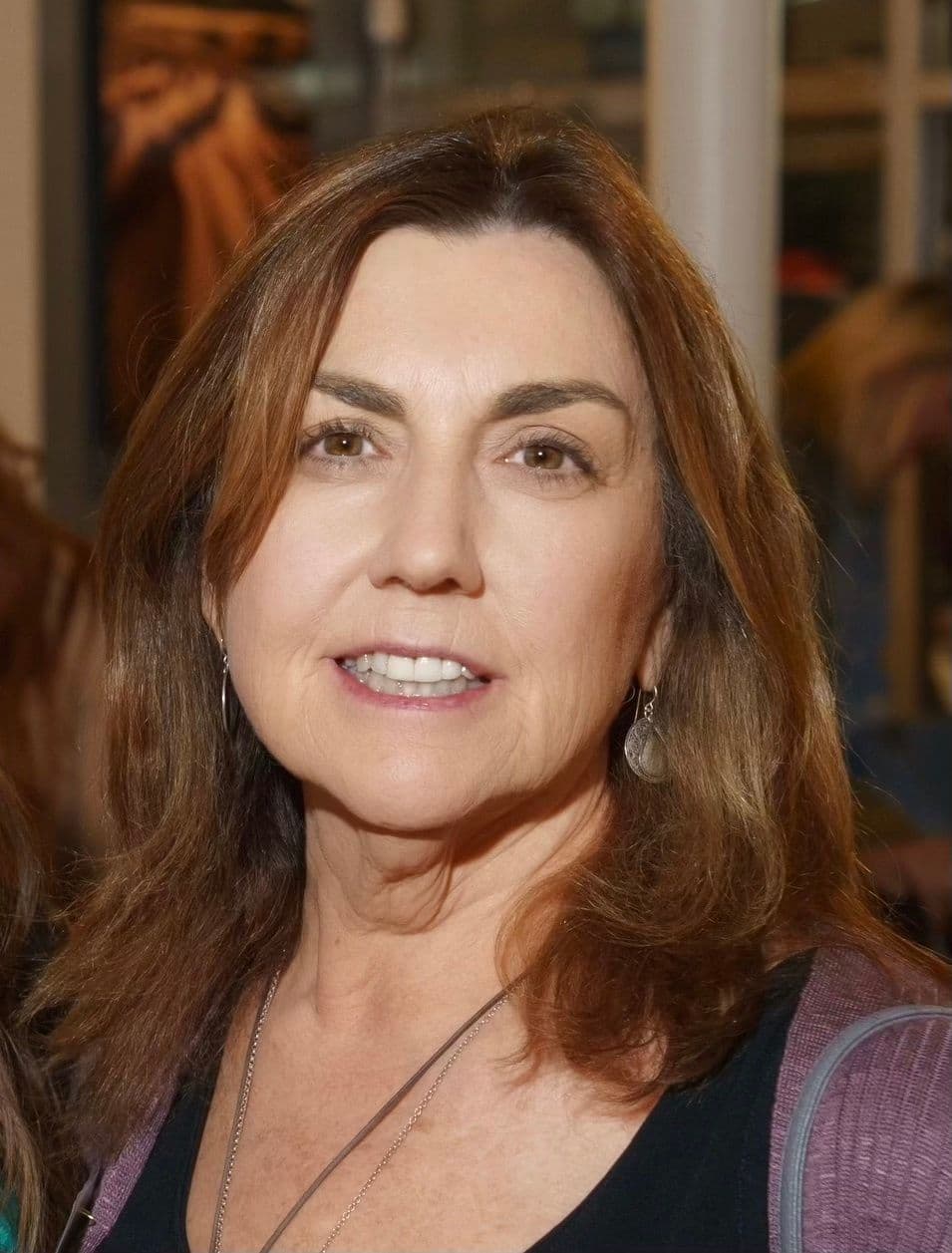
Suzanne Roy
On a sunny spring day, T.J. Holmes creeps up a dusty arroyo in southwestern Colorado. The 41-year-old former journalist carries a big gun over one shoulder. The chalky hills of Disappointment Valley look as if they deserve their name. This sagebrush desert is too dry for farming and not much better for ranching. But it's full of wild horses. Fifty of them now graze these 21,932 acres ofBLMland, the Spring Creek BasinWild Horse ManagementArea.
Holmes peeks over the rim and spots a gray mare grazing in the open scrub. She quietly unslings the gun and checks the chamber. Then, she edges up into the sage, drops to one knee, levels her scope and fires.
"I have never missed," she says wryly, blowing on the barrel. "They call me Annie Oakley." The mare, meanwhile, canters away, unharmed. "At first, I was against population control," Holmes says. "But it is better for the land, better for the horses. I realized it is the only way."
Instead of bullets, the gun shoots darts that will keep the mare infertile for 12 months. Holmes' goal is to keep the population in balance with the limited grass of Disappointment Valley.
"There is something captivating about these horses," she says. "They don't need us. They don't want us. They are just wild." Her eyes moisten. "There is something about it that is just really valuable."
She didn't always think so. In 2002, when she first visited, she expected to see "pig-eyed, hammer-headed inbreds." Instead, she says, "The horses were stunning." Holmes came back again and again, to the point where she calls herself the "horse paparazzi."
With her dart gun, Holmes hopes to turn her obsession into a solution to one of the West's most expensive and vexing natural resource problems: controlling wild horse numbers. The animals exist in a sort of legal and cultural gray area, caught between different mandates for their management. To many people, they represent the fierce independence that once defined the frontier and is increasingly scarce today — a quality that earned them federal protection.
But they are also technically feral — non-native transplants, like wild hogs or knapweed. That means that the government is charged with keeping their numbers in check, so that they don't graze arid valleys down to dirt, out-competinglivestockand native species.
An estimated 37,000 wild horses now roam parts of 10 Western states — 10,000 more than the government says the land can support. With their natural predators mostly gone, they consistently outstrip population goals designed to protect the range. Because slaughter and hunting are not viable management options, the Bureau of Land Management, which oversees most of the lands where wild horses and burros roam, regularly removes thousands through helicopterroundups. Those that aren't adopted enter the so-called "holding system" — a network of government feedlots and private pastures where they remain until theBLMfinds a better solution.
Today, moremustangslive in government captivity than in the wild. Since 2000, this policy has more than tripled the annual wild horse and burro program's cost to $76 million, a whopping 7 percent of theBLM's budget and three times what the agency spends on the 211 endangered native species that inhabit the land it manages.
And now theBLMis running out of space for the horses. In a normal year, it rounds up 9,000. This fall, it has room for only 3,500 more, and its attempts to find more pasture have yet to yield bids. "We're in a bind," saysBLMspokesman Tom Gorey. "We cannot gather more than we can care for."
No one is happy with the status quo. Ranchers, hunters and some environmentalists are frustrated becauseroundupsaren't controlling numbers. Wild horse advocates, meanwhile, feel that the federal law protecting the animals isn't adequately enforced. Lawsuits have flown from both sides.
Facing this intractable mess, a growing number of dart-gun armed insurgents like Holmes are attempting an end run around the conflict's entrenched sides. These horse lovers are pushing alternatives like fertility drugs as a way to end the need for bothroundupsand the holding system by reining in the population at the source. The idea is slowly gaining traction with theBLM— raising hopes that more reasonable solutions may be possible. Proponents and the agency acknowledge that effective management using drugs is still far in the future. Still, even small gains matter, Holmes says as she gets back in her dusty Jeep Cherokee to go look for the rest of the herd: "You have to start somewhere."
Wild Horses in the West
Modernmustangsare descended from Eurasian domestic stock first brought to New Mexico by the Spanish in the early 1500s. As settlers poured into the West, wild horses and burros were increasingly hunted down. States and grazing associations offered bounties because horses competed with cattle and sheep. TheBLM's predecessor, the U.S. Grazing Service, coordinated efforts to destroy herds, shooting horses or driving them off cliffs. In the 20th century, most of the remaining mustangs went to slaughterhouses to feed. By 1970, only an estimated 17,000 were left.
The next year, Congress unanimously passed the Wild Free-Roaming Horses and Burros Act. The law banned hunting and privateroundupsof wild horses and burros and tasked theBLMwith their protection and management.
By 1976, the number of wild horses had nearly doubled. That year,Congresspassed the Federal Land Policy and Management Act, which gave theBLMa new mandate to manage multiple uses on public land to maintain a "thriving natural ecological balance," putting horses on level with other considerations.
Then Congress passed the Public Rangelands Improvement Act, which ordered theBLMto set a target horse population using scientific methods and to periodically remove excess animals.BLMstudies concluded that the West could sustain 27,000 horses and burros, and in 1978, the agency began contracting helicopters for regularroundups.
Theroundupshave kept populations somewhat stable but provoked increasing anger from horse-advocacy groups. Activists accuse theBLMof everything from shortsighted brutality to conspiring with cattle ranchers to carry out "a wild horse holocaust."
Roundupsare not the advocates' only issue. The 1971 law says wild horses should be protected and managed as the primary use on the 47 million acres ofBLMland where they roamed when the act was passed. But because of the agency's multiple-use mandate and conflicts with private property, cattle grazing and energy development, a third of those acres have been "zeroed out," pushing the horses into a smaller and smaller area, concentrating their impacts on the land, and justifying more roundups.
Ranchers say if they put more cattle on the land than their permits allow, they face stiff penalties and risk damaging their ranches' long-term viability. But if theBLMhas more horses on the land than its own targets allow, there is no penalty, no guarantee of roundup. Ranchers regard this as hypocritical at best. At worst, they say, it spells economic disaster.
That's why they've taken an increasingly hard line on wild horses. The National Cattlemen's Beef Association calls for horse populations to immediately be brought down to federal targets, and the excess sold to private bidders, many of whom would likely sell them for slaughter. It also wants to sell off the thousands of horses in storage, with the proceeds going to fund theBLMwild horse program.
"We used to have wild horses that didn't cost nobody nothing. I have probably spent a million on lawyers over the years just to get the damnBLMto follow their own rules," says Joe Fallini, 70, a third-generation rancher in Nye County, Nev. "These days I don't want to do anything with the horses. I am so damn bitter."
No Room to Hold Them
Just outside Cañon City, dozens of large pens stretch for half a mile along the Arkansas River's banks. The air churns with the dust of more than 2,000 captive wild horses milling around listlessly.
The corral is one of about a dozen short-term holding facilities where horses land afterroundups. They stay until they are sorted and vaccinated. Then, most are trucked to contract ranches in Kansas and Oklahoma for long-term holding. TheBLMstarted storing horses in 1988, as a temporary measure. By 2002, though, there were over 12,000 horses in both short- and long-term holding. Today, there are 47,000.
These are the horses that nobody wants. When the agency rounds them up, it tries to find them homes. Anyone with the right facilities can get one for $125. Horses older than 10 cost just $10. But even at those prices, it's a struggle. In the 1980s and 1990s, adoptions kept pace with removals until a number of scandals revealed that many of the horses were quickly sent to slaughter. TheBLMput rules in place to stop the practice, but the restrictions drastically cut adoptions. Rising hay prices and the recession pushed numbers even lower. Now only one in three horses finds a home. The rest go into holding-system limbo.
A ProPublica investigation in October found that Tom Davis, a San Luis Valleylivestockhauler, bought more than 1,700 wild horses and burros since 2009 and is suspected of selling them for slaughter. Last week, Interior Secretary Ken Salazar said he will tighten regulations of the federal government's wild horse program, severely restricting the number of horses people can buy and making it easier for the government to prosecute buyers who sellmustangsto slaughter.
The holding-system program, which now consumes roughly half of the wild horse program's budget, may face tough choices if federal budget balancers target it as part of the automatic 2013 budget cuts known as the "fiscal cliff." "Every year, more money, more horses," says aBLMcorral manager who did not want his name used for fear of retaliation. "Something has got to give. The pot is about to boil over."
There is, perhaps, one way to turn down the heat: injecting the mares with a drug called Porcine Zona Pellucida, orPZP, which blocks sperm from attaching to eggs for about a year. The drug is simple to apply with a dart and easily reversible, so managers can change course if there's an epidemic or a big winter die-off. It's also cost-effective, about $25 per dose.
ButBLMspokesman Tom Gorey says that althoughPZPshows promise in small studies, it's hard to apply to huge herds in wide-open spaces. "We want to pursue thePZPavenue as far as it can go. The challenge is that our horses roam over essentially 30 million acres. This is not Assateague Island."
There are very few places theBLMcan get close enough to use a dart gun, he says, so the agency rounds up horses by helicopter, then injects mares by hand. ForPZPto work, the agency then has to recapture each mare every year to treat them. "That is just not a functional solution."
Researchers are working on a form ofPZPthat could last four or five years, Gorey says, but results so far have been mixed. And because wild horses are above the target populations set by theBLMin most of the West, Gorey adds, in many cases the agency can't treat and release them without risking lawsuits or damage to the land. It must remove horses until it reaches its target.
Jay Kirkpatrick, the reproductive biologist in Montana who developedPZPin the late 1980s, realized that theBLMwas not equipped to handle the job of injecting the mares. He needed people who were able to recognize individual mares in a vast landscape and get within 50 meters to dart them. Only one group fit this description: Wild horse lovers.
All across the West, people like T.J. Holmes have fallen under the spell of these animals. They visit specific horse herds, photograph and blog about their favorites. They ride with them and camp with them. Afterroundups, they often adopt them.
In 2001, Kirkpatrick began inviting such enthusiasts to his lab for a three-dayPZPtraining. One of his first graduates was a retired Colorado schoolteacher, Marty Felix. After she learned how to mix the drug and shoot a dart gun in 2002, she convinced her localBLMoffice to let her dart the 150 wild horses of the Little Book Cliffs herd near Grand Junction. Within a few years, PZP cut the herd's offspring by nearly half, she says.
News of her success inspired other groups in Wyoming, Montana, New Mexico and Colorado. More people trained with Kirkpatrick and cajoled their localBLMoffices into trying PZP. Looking for a better solution thanroundups, Holmes trained with Kirkpatrick in 2010.
These volunteers now account for about 16 percent ofPZPapplications. Yet even with their help, theBLMhas sometimes failed to meet its goals. In 2012, for example, it aimed to inject 2,000 mares, but treated only about 1,015.
T.J. Holmes says she understands that the idea of controlling wild horses with birth control darts makes many people uncomfortable.
"It would be nice if we could just let wild horses run wild, but the truth is these horses have a finite piece of land. They have finite resources. They don't really run free anymore, and we need to take care of them."
Originally Posted By The Denver Post
This is excerpted from a story that originally appeared in the Nov. 12 issue of High Country News (hcn.org).
Related Tags:
Subscribe to our newsletter: