
Wild Horses and Public Land: A Delicate Balance
Wild Horse Management
Read time: Five Minutes
Published: April 8, 2019
Written by:
AWHC Contributor
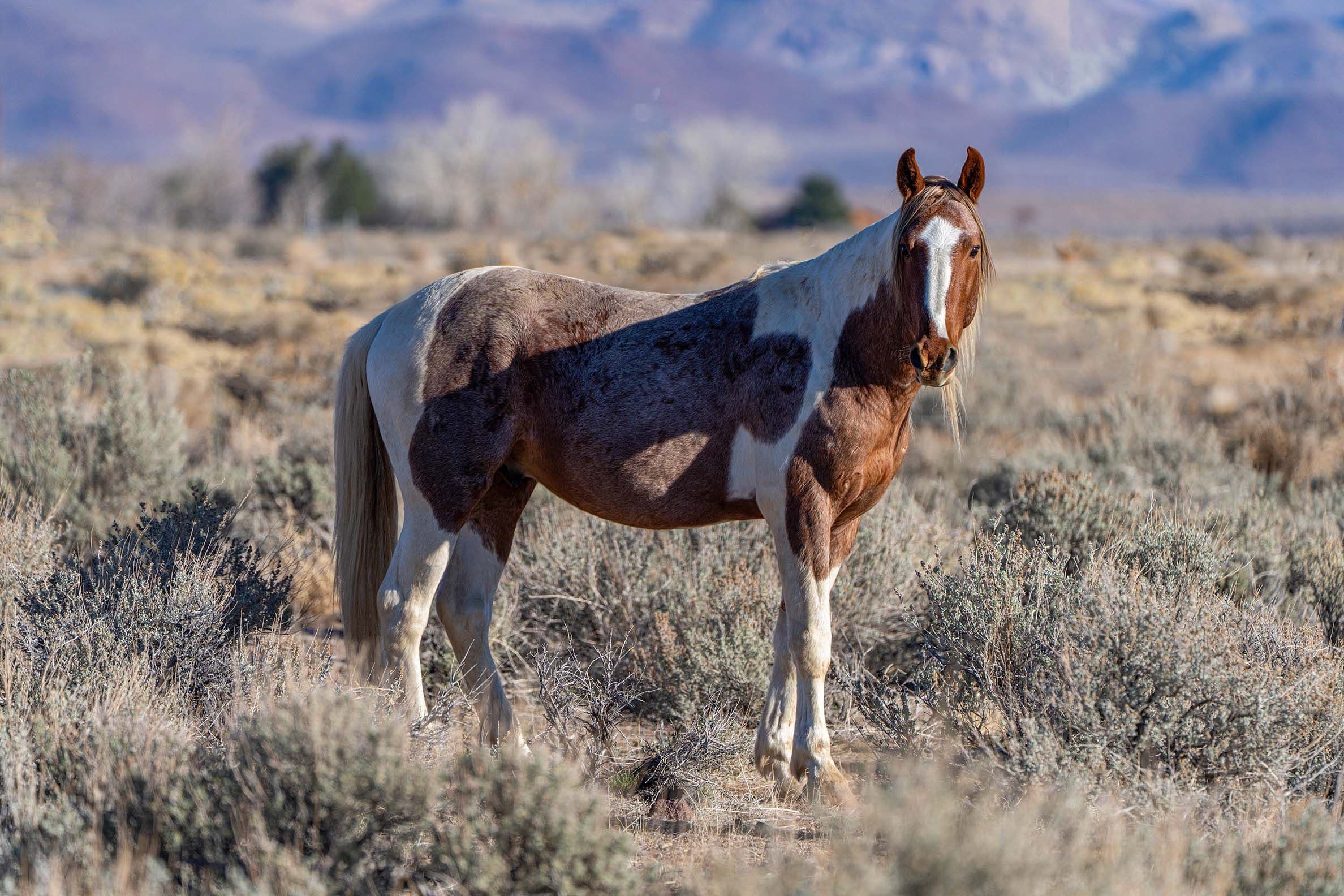
Wild horses and burros, iconic symbols of the American frontier, have become a priority for lawmakers and federal agencies. They face the challenge of balancing the health ofpublic landswith the herds of wild animals that populate Western states.
The federal government spends more than $81 million each year to manage an estimated 81,950 horses and burros under the watch of theBureau of Land Management. More than 40,000 of these animals roam Nevada, where the government controls 85 percent of the landscapes of desert, sagebrush, and pine forests.
Strategies to manage the wild herds and curb the growing population have created a fissure between lawmakers and the Trump administration. Rep. Dina Titus, D-Nev., claims that under the Trump administration, theBLMhas “taken significant steps to remove protections for these animals.”
A longtime advocate of the herds, Titus said this year that the government is “shifting resources away from scientifically sound birth control programs and wasting limited resources on costly and dangerousroundupsand holdings which only exacerbate population growth.”
BLMmanagers say their intent is to help the wild horses and burros while protecting public land on which they reside and forage. “We are trying to balance the health of the land and other resources,” said Debbie Collins, director of theBLMwild horse program in Norman, Oklahoma. “You have to keep the land healthy to keep the horses healthy.”
She said theroundupshave become a necessary tool to help manage herds throughout the Western states. Overpopulation is a major problem, not only for the land but also for the well-being of the animals, Collins said. The lack of water and forage, due to overgrazing, can become a deadly problem. She cited constant concern for the horses in the Red Rock Canyon area, just outside Las Vegas, as an example.
“One of our herds in that area — horses and burros — have really struggled to make it through the summer,” Collins said, noting a lack of food and water sources for a population that grows at a fast clip. “Either we leave them out there and they die, or we have an emergency roundup and bring them in.”
The 1971 Wild Free-Roaming Horses and Burros Act directed theBLMto manage overpopulation of herds onpublic landsand protect the animals. An incentive program created by theBLMthat went into effect in March provides increments of $500 to eligible people who adopt an animal. The money is used to provide training and care for horses purchased for a minimum $25 adoption fee.
Brian Steed, theBLM’s deputy director of programs andpolicy, said the agency is encouraging wild horse adoptions and has provided homes for 245,000 animals since 1971.
Concern Over Possible Loopholes
But Titus and Rep. Raul Grijalva, D-Ariz., chairman of the House Natural Resources Committee, have expressed concern to the Interior Department about how money is being spent on programs and possible loopholes in current policies that would allow “kill-buyers” to purchase adoption animals.
Titus has cited an inspector general’s report that found one buyer purchased 1,794 horses from theBLMbetween 2008 and 2012 and sold them to slaughterhouses in Mexico, even though that is prohibited. In that case, theBLMconcluded it had no recourse against the buyer because of the contract language, according to the inspector general’s report.
To prevent a similar occurrence, the agency has put in place provisions that require prior approval if a buyer wants to adopt five or more horses or burros, or more than four animals in six months. But the Trump administration, pressured bylivestockorganizations, has sought to relax prohibitions on horse slaughter in the past two budgets.
Those efforts have been turned back by a bipartisan group of lawmakers who have placed riders into spending bills to prohibit the relaxation of any current law on horse and burro slaughter and place strict limits on resale of animals to prevent commercial killing.
‘Trying to Get Them Good Homes’
Grijalva has requested language to expand horse and burro protections placed on theBLMto cover the U.S. Forest Service, which has captured wild horses in Northern California.The Forest Serviceis working with theBLMto put those horses up for adoption.
Meanwhile, theBLMadoption program is working to thin the herds of animals on fragile public land and humanely place them with owners who will train and provide for them. “We are just trying to get them good homes,” Collins said.
She also said theBLMsupports fertility growth control, noting that reproduction rates will allow herds to double in just four years. But the federal government faces legal hurdles to use some birth control agents, and in most cases,roundupsare needed to administer the drugs.
Before leaving the Interior Department, then-SecretaryRyan ZinketoldCongresshe was anadvocate of the roundupsto reduce herd sizes, as well as neutering and spaying programs. In his final months as secretary, Zinke failed to answer questions Titus and Grijalva posed about Trump administration policies on wild horse and burro management.
More Efforts Underway
Now that Democrats have control of the House, and Grijalva has the Natural Resources Committee gavel, efforts are underway to provide new legislative protections for the wild horse and burro herds. Last month Titus asked the House Appropriations Committee to place language in the Forest Service spending bill that mirrors that governing horses and burros underBLMjurisdiction.
Suzanne Roywith the American Wild Horse Conservation (formerly American Wild Horse Campaign) praised Grijalva and Titus for taking steps to stop the federal government “from selling wild horses for slaughter over the objections of the overwhelming majority of Americans.”
Originally posted by Las Vegas Review-Journal
Subscribe to our newsletter: