
Wild Horses Are Not Livestock, Group Asserts in New Mexico
Litigation
Read time: Four Minutes
Published: September 6, 2016
Written by:
AWHC Contributor
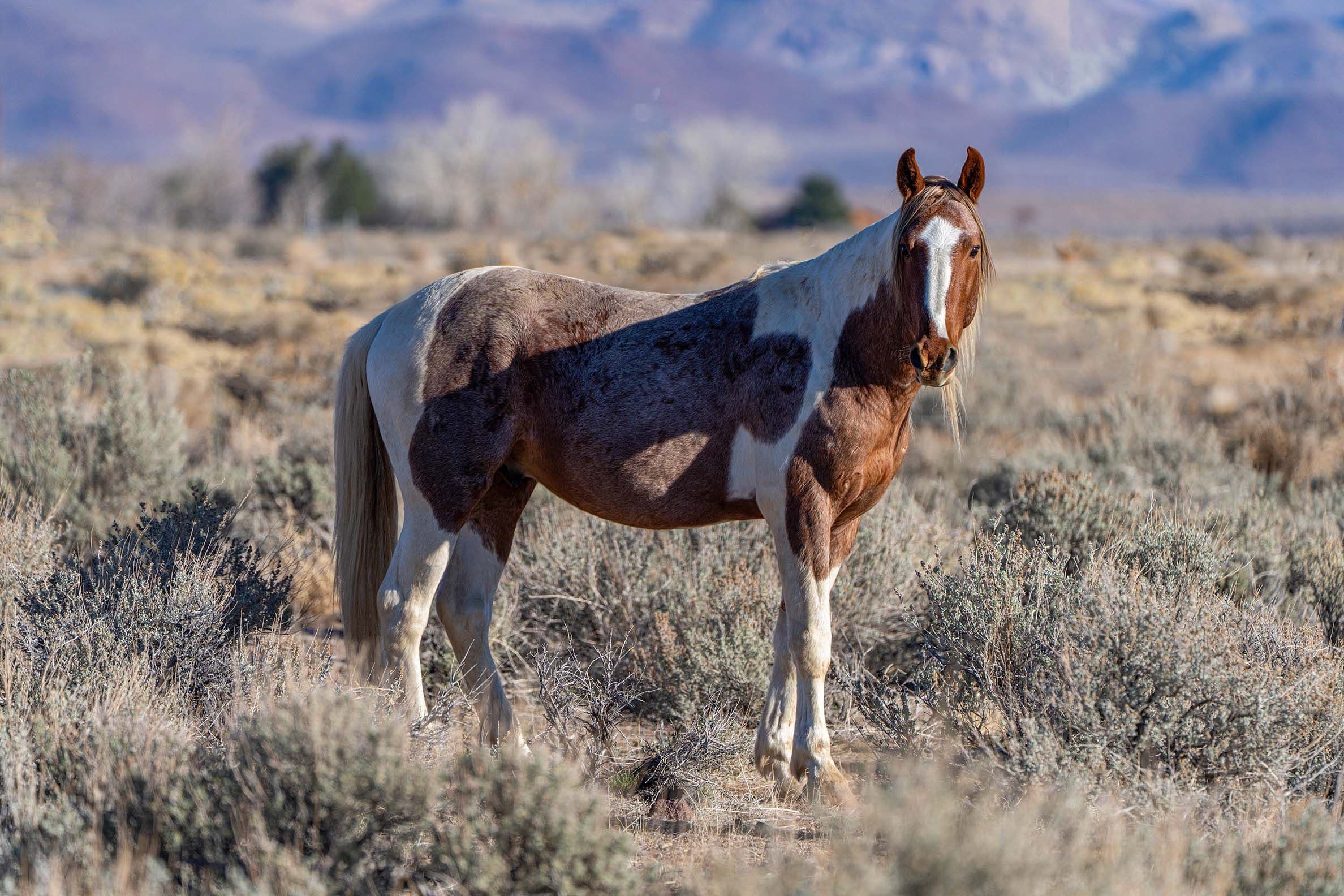
In New Mexico, a legal battle is underway as the Wild Horse Observation Association (WHOA) challenges the New MexicoLivestockBoard's decision to classify wild horses as straylivestock. This classification has led to the roundup and sale of these horses, prompting WHOA to take legal action to protect them.
CARRIZOZO, N.M. (CN) — The New MexicoLivestockBoard classified wild horses as straylivestockand is rounding them up and selling them, and horse-lovers have gone to court to try to stop it.
The Wild Horse Observation Association sued theLivestockBoard on Monday, to stop it from labeling horses born to the wild herd in the Lincoln County area as "estraylivestock" and selling them.
Lincoln County, in south central New Mexico, is best known as the seat of the 1878 Lincoln County War, which made a hero of Billy the Kid.
The New MexicoLivestockBoard is an administrative state agency dominated by "board members who raise and own cattle." It governs thelivestockindustry in the state, according to the complaint in Lincoln County Court.
On Aug. 26, theLivestockBoard took possession of 19 horses, 7 mares and 5 foals from the mustang herd that moves through Lincoln County, and declared that if ownership of the unbranded horses could not be established in five days, they would be sold at auction.
The state Land Board appears to be planning to return the horses to their range rather than selling them.
The core of the controversy is the definition of "livestock." The New MexicoLivestockcode defines it as "all domestic or domesticated animals that are used or raised on a farm or ranch," including horses, according to the complaint.
But theLivestockCode defines a wild horse as "an unclaimed horse on public land that is not an estray."
Estray means anylivestockrunning at large on public or private land with an unknown owner and no clear branding or ownership mark.
New Mexico has specific procedures for handling wild horses, including testing DNA to determine whether it is a Spanish colonial horse, in which case it should be relocated to certain preserves dedicated to protecting the strain.
If a wild horse is found not to be of Spanish colonial stock, the horse "shall be returned to the public land, relocated to a public or private wild horse preserve or put up for adoption by the agency on whose land the wild horse was captured," the complaint states, citing state law.
The Wild Horse Observation Association (WHOA) claims theLivestockBoard baited wild horses off public land onto private land so the horses could be rounded up and sold, and set up corrals with food and water on private land to impound them.
This is not a new fight in New Mexico.
In 1994, then Attorney General Tom Udall issued an opinion on a similar incident involving wild horses on the White Sands Missile Range.
Udall wrote: "Since the wild horses on White Sands Missile Range are not domestic or domesticated and have not been raised or used on a farm or ranch, they are not 'livestock' and are not 'estrays' under theLivestockCode, and theLivestockBoard does not have jurisdiction to take possession of the horses and sell them as 'estrays' under [theLivestockCode]." (Quotation marks and brackets in complaint, which cites Attorney General Opinion 94-06 (1994).)
WHOA wants theLivestockBoard enjoined from selling the horses impounded on Aug. 26, and from rounding up and impounding any more wild horses under "estraylivestock" rules, and declaratory judgment that theLivestockBoard has no jurisdiction to interfere with wild horses, which are notlivestock. It also seeks costs of suit.
Neither party could be reached for comment after business hours Wednesday.
Originally posted by Courthouse News Services
Subscribe to our newsletter: