
Wild Horses Facing Slaughter: New US Government Regulations Threaten Their Survival
Wild Horse Management
Read time: Three Minutes
Published: January 26, 2018
Written by:
AWHC Contributor
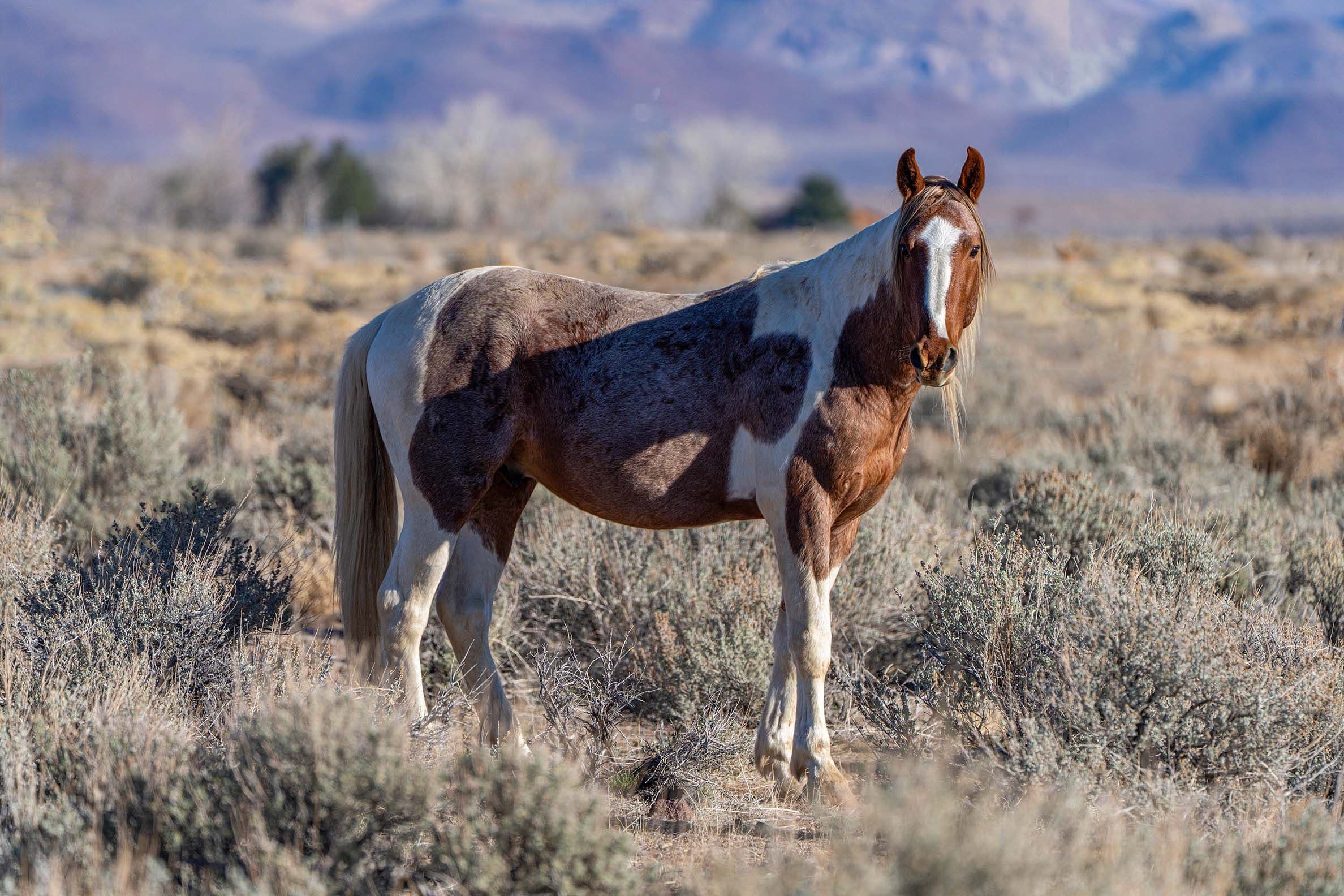
A wild mustang charging across an open plain is a symbol of the untamed majesty of nature. However, the predators chasing these horses are anything but natural.
Controversy has erupted over the U.S.Bureau of Land Management's (BLM) practice of using helicopters to herd horses offpublic lands, sometimes permanently placing them into holding facilities to control their population.
Now, the government is considering culling these animals for the first time in nearly 50 years, putting the lives of thousands of wild horses at stake.
Most of the U.S.'s estimated 75,000 wild horses live onpublic lands, usually vast expanses controlled by the government in the American West.
Jim Schnepel, familiar with Utah's Onaqui Range and its horses, works with a non-profit desperately trying to find a humane and effective way to control the wild horse population.
Although the land seems limitless, theBLMstates that the resources here only allow for the survival of a certain number.
Horses aren't the only animals on the range. Sheep, cows, and otherlivestockalso share the land.
TheBLMcontrols one-eighth of the country's landmass but leases over 60 percent of it to ranchers. Since theirlivestockrely on the same resources as the wild horses, some ranchers want the wild horses pushed off the land entirely.
After the wild horses are rounded up, Schnepel said some will go into the "adoption circuit" where they are domesticated as pets or work horses.
There are over 45,000 wild horses currently in holding areas, costing taxpayers about $50 million annually. It's an expense that the U.S. Department of the Interior sought to address in its 2018 budget by lifting regulations that prevent slaughtering wild horses.
If slaughtering wild horses becomes legal, some animal rights activists are concerned that these horses will become extinct.
ButBLMmaintains that both the activists and the federal agency want what's best for the animals and denies that any of their practices are cruel.
Reid said the agency's goal is to always have healthy horses on healthy rangelands, which is aided by controlling their population. They no longer have many natural predatorsin the wild.
But the key battle for the horses won't be fought in the West. Their fate will be decided inWashington, D.C., whereCongresswill decide if the Department of the Interior's budget allowing for slaughter will be enacted.
Those opposed to wild horses continuing to be free say it costs as much as $1 billion over 10 years, but Minakowski said that number didn't seem reasonable to him.
Advocates say the government also hasn't invested enough in targeting alternate solutions to population control.
Schnepel has tried darting mares with birth control in hopes that it will mean fewer foals. He said the contraceptive and darts they use cost about $30 per horse, which costs much less than keeping them corralled. The horses need a new contraceptive shot every year.
For those horses that are rounded up, a lucky few make it to places like Ellie Price's Montgomery Creek Ranch in California. She is dedicated to turning the wild horses into companion animals and cares for over 200 of them.
Trainers work painstakingly to acclimate these horses to a human's touch.
As for Netherlands, she believes these horses are "our American spirit."
Originally posted by ABC News
Subscribe to our newsletter: