
Wild Horses Released to 2,500-Acre Pasture in Montana
Wild Horse Management
Read time: Four Minutes
Published: June 18, 2013
Written by:
AWHC Contributor
Good fences make good neighbors, or so Greg and Karen Rice hope. The Rices own the Spanish Q Ranch, located just outside of Ennis, Montana, which has become the state's first long-term holding facility for wild horses.
The 710 horses arrived in late February and early March as part of the Bureau of Land Management’sWild Horse and Burro Program. While some neighboring landowners expressed concerns about containing the animals and their impact on local wildlife, others supported the move.
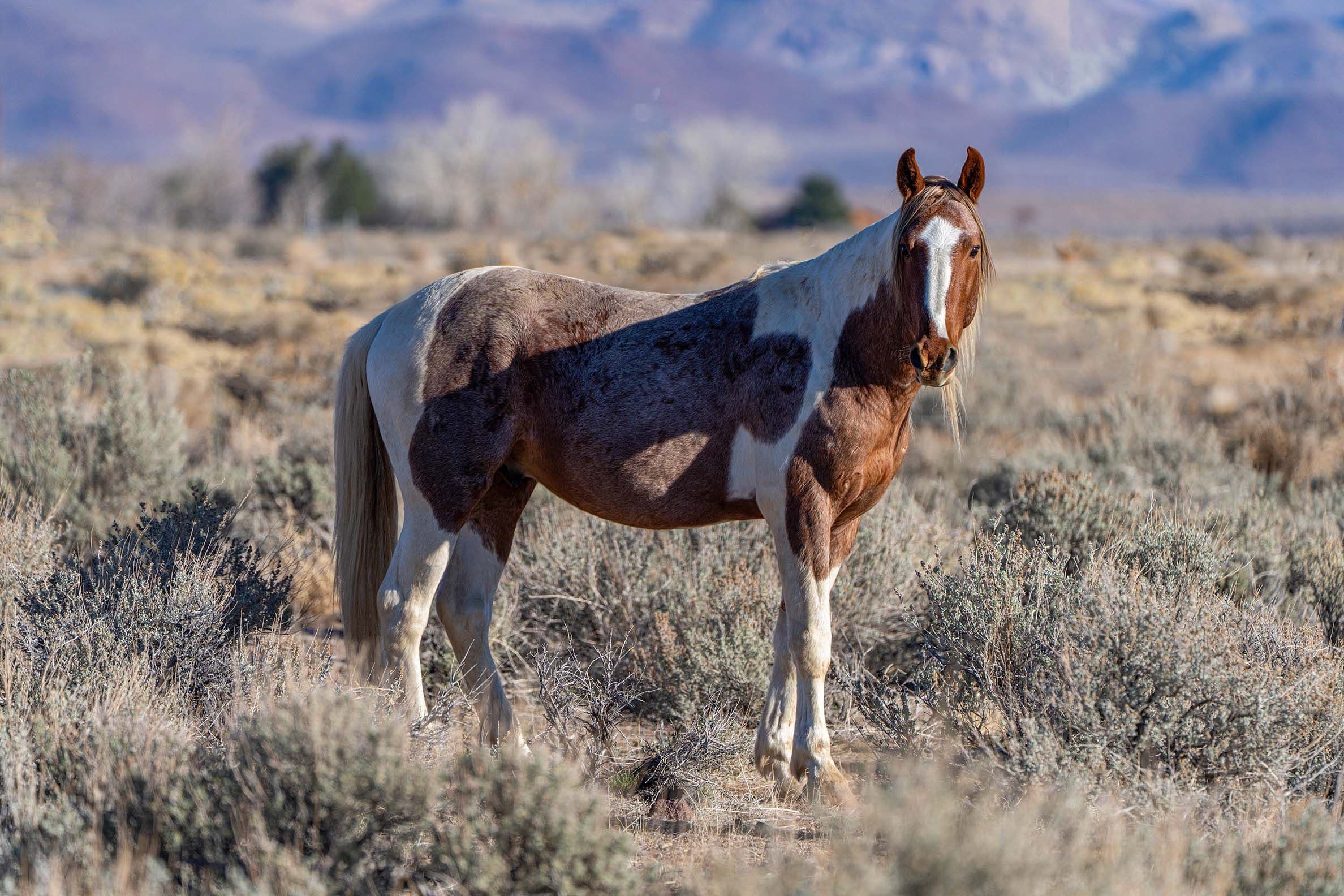
On June 1, the horses were released onto a 2,500-acre pasture. About 300 of these wild horses are two-year-olds, while the rest are five years or older, and all are geldings. Themustangswere initially held on feeding grounds to allow them to acclimate and for necessary fencing to be constructed.
The Spanish Q Ranch plans to eventually use about 12,000 of its approximately 15,000-acre property for horse care. However, the Rices must fence offBLMland they lease from the private land designated for the horses.
TheBLMrequires all fences at the Spanish Q to be at least 48 inches high, exceeding the standard 38-to-42 inch fence. Fences along public land are four-wire fences, with additional space at the top and bottom to facilitate wildlife movement.
Katie Benzel, a wildlife biologist with theBLMoffice in Dillon, noted that fencing along public land must have an 18-inch gap beneath the bottom wire and a 14-inch gap between the first and second wire. Greg Rice opted for five-wire fencing on his private land.
In addition to fencing requirements, theBLMhas established vegetation monitoring stations in the pastures to assess grazing impact. Pat Fosse, a natural resource specialist at theBLMDillon field office, stated that these stations will help determine if the range is overused and if more horses can be accommodated in the future.
“If there is extra grass, perhaps we can bring more horses out,” Fosse explained. “If the grass is too short, beyond the 50-percent utilization by weight mark, we’ll remove some horses. If it’s close, we’ll maintain the current number.”
The Spanish Q’s 10-year contract allows for a maximum holding capacity of 1,150 wild horses. The Rices receive $1.36 per horse per day, covering the cost of new fencing and feed.
“This ain’t a runaway,” Greg Rice remarked. “It’s going to be alright in the end, but the first few years will be challenging.”
The daily cost of $1.36 per horse amounts to $956 per day, or nearly $30,000 per month for the care of 710 horses. Karen Rice mentioned that they took on the wild horses to preserve the ranch, which they have owned since 1969, as fifth-generation ranchers.
“We’re good stewards of the land,” she affirmed. “Greg has dedicated his life to this, and so has our son. We’d never abuse this place. We hope to keep it for our grandchildren, and with a steady income, we can do that.”
The Interior Board of Land Appeals is not expected to rule on the appeals against the Spanish Q soon. Ruth Hughes, a legal assistant with the board, indicated that it could take up to a year for a decision on the horse transfer appeal.
TheBLM’s other long-term facilities are located in Oklahoma, Kansas, Iowa, South Dakota, and Nebraska. Fosse mentioned potential opportunities for other Montana ranchers interested in securing a long-term facility contract.
“It’s up to the ranchers,” Fosse said. “It’s all private land, so they can propose for one of these contracts, and if they meet the requirements, it may happen. It’s an opportunity for them to earn some income.”
Originally Posted By The Montana Standard
Subscribe to our newsletter: