
Wild Horses Under Attack by U.S. Bureau of Land Management – How You Can Help
Wild Horse Management
Read time: Four Minutes
Published: January 18, 2016
Written by:
AWHC Contributor
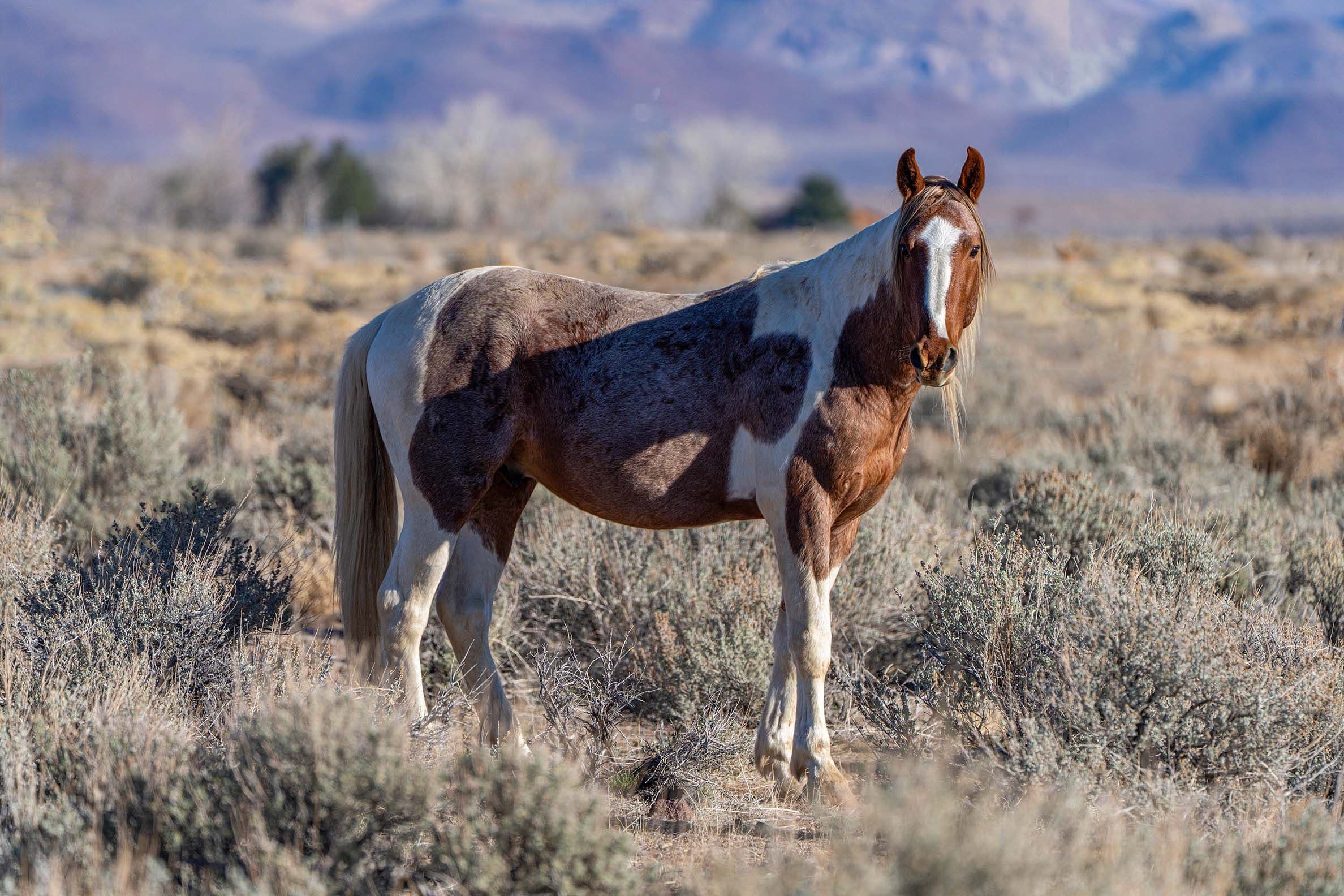
Wild horses capture the American public’s imagination like no other animal. The image of magnificentmustangsrunning wild on the vast Western range embodies the best of America – our independent, free, and untamed spirit. America’smustangsand burros are evenprotected by an act of Congressthat recognizes them as “living symbols of the historic and pioneer spirit of the West” that “enrich the lives of the American people.” So why are these animals beingsystematically eliminatedby our government today?
The Influence of Special Interests
The answer lies in the power ofspecial interest lobbieswhose interests are consistently placed ahead of the will of the people. Responsibility for managing the nation’s wild horses and burros lies with the Bureau of Land Management (BLM), an agency of the Interior Department. For four decades, theBLMhaswaged a war on America’s wild horses.
Even though wild horses occupy just a small fraction (12 percent) of public land available forlivestock grazing, ranchers who influenceBLMpolicy view wild horses as competition forcheap, taxpayer-subsidized livestock grazing on public lands. They want them gone, and theBLMhas been only too happy to comply.
The Cost of Roundups
Using low-flying helicopters to stampede andround up wild horses, the federal government removes them by the thousands frompublic landsin the West each year.
Once removed, the horses are warehoused inholding facilities. TheBLMnow stockpiles nearly 48,000 wild horses and burros in government holding facilities and fewer than 48,000 wild horses and 11,000 burros remain free on the range.
The approach is costly, both to thetaxpayersand to the horses, who lose theirfreedomand families, and sometimes their lives. This fiscal year, the cost of the federal wild horse program is projected to be$80 million. Taxpayers are on the hook for $153,905 every day just to feed the stockpiled horses. And that doesn’t even take into consideration the estimated$500 million annual costto American taxpayers for subsidizing thewelfare ranching systemthat is driving wild horses from the range in the first place!
The Endgame: Slaughter
There is no question about the endgame of this unsustainable and irrational approach to wild horse management: to manufacture a crisis in which slaughter becomes the only possible economic solution.
Americansoverwhelmingly oppose horse slaughter, and we don’t believe that the mass killing of our national icons is the solution to the government’s mismanagement woes.
The agency denies slaughter is the goal. But it’s already happened and was confirmed by a recent Office of Inspector General (OIG) investigation for theBLM’ssale of over 1,700 wild of captured mustangs to a known kill buyer, Tom Davis.
How can theBLMguarantee that no federally protected wild horses will ever again end up being brutally slaughtered when it continues tosell wild horsesfor as little as $10 a piece? It can’t.
Solutions and Hope
This is a solvable issue. Proven alternatives likefertility controlstop the bloodshed, save us money and keep wild horses where they belong: on the range. This is the course our government should be pursuing for its wild horse program. It’s a no-brainer.
That’s why in Nevada, theAmerican Wild Horse Conservation (formerly American Wild Horse Preservation)is implementing humane, community-based management programs that use a proven PZP birth control vaccine to humanely control wild horse numbers and other range measures to keep them out of harm’s way. These precedent-setting programs are establishing a model that proves such programs can work to keep wild horses and burros wild and roaming free.
In Nevada’s Virginia Range, we’re working with the Nevada Department of Agriculture and our local coalition partners to implement what will be thelargest humane management program of its kind in the world. With 2,000 horses on 200,000 acres of land, this program promises to be a game changer for the historic Virginia Range wild horses as well as a model that demonstrates that public/private partnerships for thehumane managementof our wild horses and burros can work to keep these icons wild and free.
Wild horses are making their last stand in the American West. Failure is not an option.Please join the AWHC in our efforts to Keep Wild Horses and Burros Wild.
Originally posted by One Green Planet
Subscribe to our newsletter: