
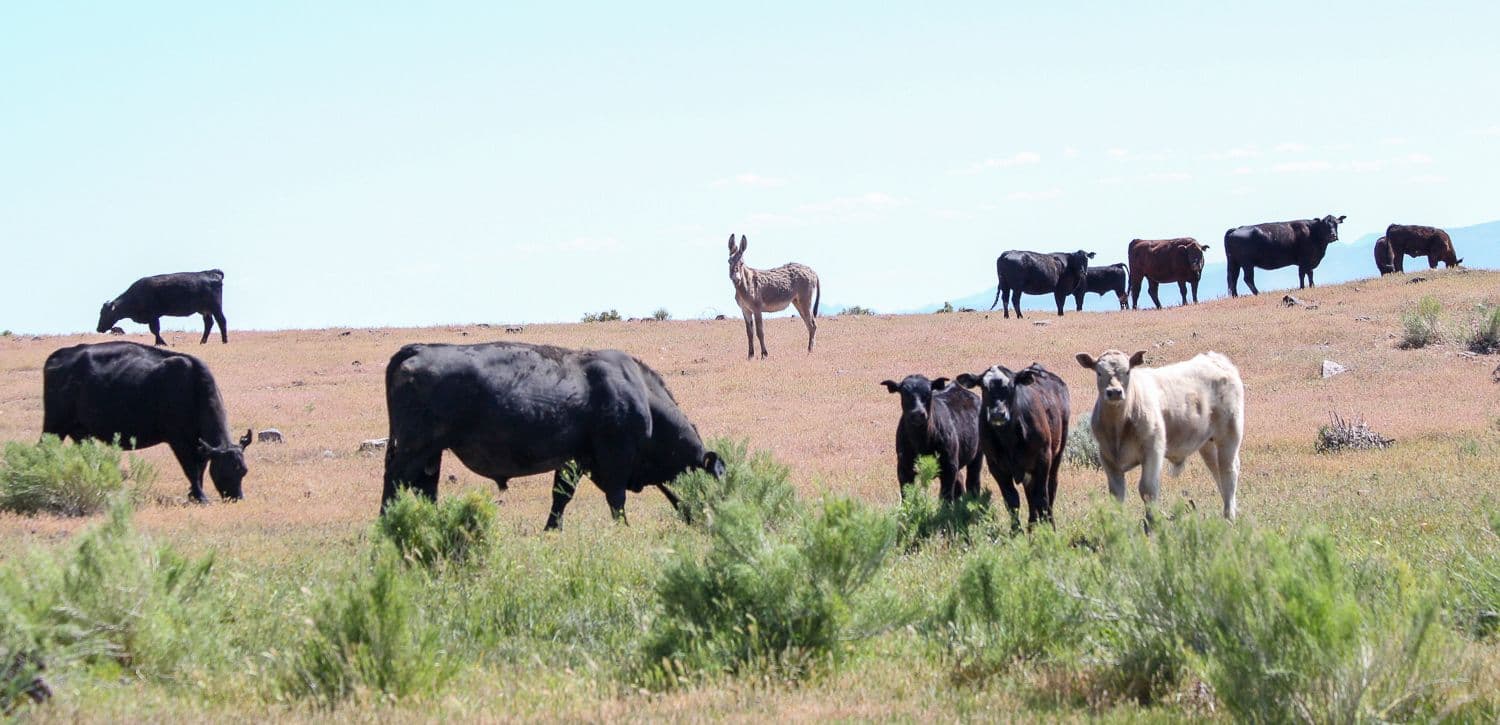
Photo: Steve Paige
Balancing Livestock Grazing and Wild Horse Conservation
Balancing Livestock Grazing and Wild Horse Conservation
Research on public lands grazing is essential for understanding its impact on wild horse habitats and promoting sustainable land management practices.
By studying the interactions between livestock and wild horses, we can develop strategies that ensure the health of our public lands.
Discover how AWHC is advancing this critical research.
The Impact of Public Lands Grazing
Learn about the effects of livestock grazing on wild horse habitats and the importance of sustainable management.
Resource Competition
Livestock grazing on public lands often leads to competition for essential resources such as water and forage. This competition can deplete the resources available to wild horses and result in habitat degradation. Research helps us understand the extent of this competition and develop strategies to manage it.
Habitat Degradation
Overgrazing by livestock can cause significant environmental degradation, including soil erosion, loss of native vegetation, and reduced water quality. These impacts not only harm wild horse habitats but also affect the broader ecosystem. Sustainable grazing practices are essential to mitigate these effects.
Policy and Management
Current policies often prioritize livestock grazing over the needs of wild horses and burros. This imbalance is driven by powerful livestock industry interests and results in inadequate protection for wild horse habitats. Research informs policy reform to ensure fair and sustainable management of public lands.
Financial Costs
Taxpayers subsidize livestock grazing on public lands, which often results in financial burdens without corresponding benefits for wild horses. Redirecting these funds towards habitat conservation and sustainable management practices can provide better outcomes for both livestock and wild horse populations.
Our Commitment to Public Lands Grazing Research
Discover how AWHC is leading efforts to study and promote sustainable grazing practices on public lands.
Sustainable Grazing Practices
AWHC promotes and supports the implementation of sustainable grazing practices that minimize environmental impacts and support healthy ecosystems. These practices benefit both livestock and wild horse populations.
- Best Practices: Encouraging sustainable grazing methods
- Collaborative Efforts: Working with ranchers and land managers
- Research and Education: Providing resources and training on sustainable practices
- Monitoring and Assessment: Tracking the impacts of grazing on public lands
Policy Advocacy and Reform
AWHC advocates for policies that prioritize sustainable land use and fair resource allocation. We work with lawmakers and stakeholders to promote policies that support both livestock grazing and wild horse conservation.
- Policy Influence: Engaging with policymakers to promote sustainable practices
- Legislative Efforts: Advocating for fair resource allocation
- Public Awareness: Raising awareness about the impacts of current policies
- Coalition Building: Partnering with organizations to amplify our advocacy
Stay Informed and Take Action
Learn how AWHC is actively implementing solutions to protect wild horses and burros, ensuring their well-being and preserving their natural habitats.


