
Water Partnership Benefits Wild Horses in Wyoming's McCullough Peaks
Wild Horse Management
Read time: Two Minutes
Published: January 4, 2013
Written by:
AWHC Contributor
For years, water runoff from an oil field moistened Dry Creek, providing water for wild horses,livestock, and wildlife in Wyoming’s McCullough Peaks. This vital water source was a lifeline in an otherwise arid region.
“It was a nice source of water in an otherwise dry area,” said Sarah Beckwith of the Bureau of Land Management’s Cody office.
When Marathon Oil Co., owner of the Oregon Basin oil field, was ordered by the Wyoming Department of Environmental Quality to reduce the water flow into the creek, the company collaborated with theBLMto find an alternative water source for the animals in the Big Horn Basin.
To compensate for the loss, Marathon drilled three exploratory wells, one of which is producing water. The company plans to install a trough in 2013 to ensure a steady water supply for the animals.
“Finding that water was the first big hurdle,” Beckwith said.
Additionally, theBLMcleaned out several reservoirs to capture more snowmelt and plans to construct other water-holding devices on the sagebrush prairie. The groups will also partner with FOAL, a Cody nonprofit wild horseadvocacyorganization, to remove nonnative vegetation around waterways, reducing water consumption by trees like Russian olives and salt cedar.
“This partnership is a proactive step toward looking at alternative ways to provide additional sources of water to the Dry Creek drainage,” said Mike Stewart,BLMCody field manager. “I am so pleased that Marathon came forward with this idea to benefit wild horses, wildlife, andlivestockwhile complying with its permit.”
The work is partially funded through grants secured by Marathon and FOAL.
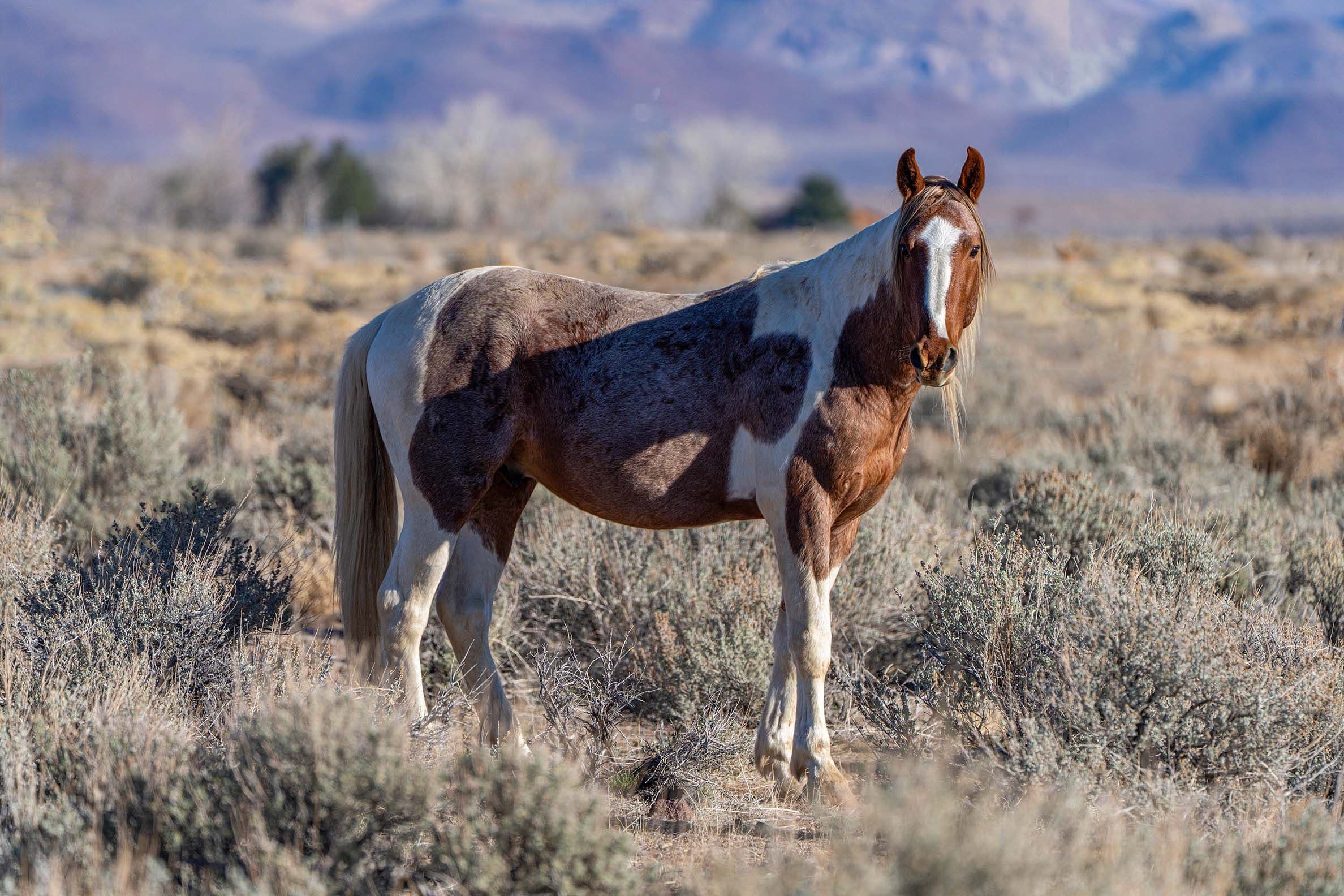
The McCullough Peaks Wild Horse Range is home to about 150 adult horses of mixed heritage, some tracing back to the first North American horses brought from Spain. TheBLMand FOAL aim to maintain the herd at about 100 animals through birth control darting and trapping and removal.
TheBLMplans to remove about 20 horses in April for public adoption on April 26-27, capturing them at water sources.
“Hopefully, by doing this in conjunction with field darting, captures won’t be necessary anymore,” Beckwith said.
Originally posted by The Billings Gazette.
Read theBLM, Cody Field Office Press Release.
Subscribe to our newsletter: